


Dental implants are a popular choice for replacing missing teeth. They are strong and can last a long time. But how long they actually last depends a lot on you.
Your daily habits play a big role in dental implant longevity, and simple changes can help your implants last for decades.
Things like brushing well, eating healthy foods, and skipping cigarettes all make a difference.
The choices you make every day can either help or hurt your implant’s lifespan.
This guide will walk you through the habits that support strong, healthy implants.
You will learn what helps your implant heal, how to protect it from damage, and why regular checkups matter.
By the end, you will know exactly what to do to avoid habits that damage dental implants and protectyour investment.
Key Takeaways
- Good healing after surgery sets the stage for a long-lasting implant.
- Daily habits like brushing, avoiding smoking, and eating well protect your implant over time.
- Regular dental visits help catch small problems before they become big ones.
What Supports a Stable, Long-Lasting Implant
A stable implant depends on a strong foundation, healthy tissue, careful surgery, and the right restoration for your needs.
When these pieces work together, you give your implant the best chance to last for many years.
Osseointegration and the Jawbone Foundation
Your implant needs to fuse with your jawbone in a process called osseointegration. This is what makes your implant feel and function like a real tooth root.
During healing, bone cells grow around the titanium post and lock it into place. This creates the implant stability you need for chewing and speaking without worry.
Your jawbone has to be dense and healthy enough to support this bond. If your bone quality is low, your dentist may recommend extra steps before placing the implant.
Without a solid jawbone foundation, even a well-made implant can loosen or fail over time. This is why bone health plays such a large role in dental implant success.
Why Healthy Gums and Bone Matter
Your gums and bone act like a support system for your implant. Healthy gum tissue keeps bacteria away from the implant site, which lowers your risk of infection.
Bone quality and volume matter just as much. Thin or weak bone can’t hold an implant securely, so your dentist checks this before surgery.
Bone loss is a common problem after losing a tooth. When bone isn’t stimulated by a tooth root, it can shrink over time.
That’s one reason implants are often recommended soon after tooth loss, since they help preserve bone through regular use, much like a natural tooth root would.
The Role of Implant Placement and Surgical Precision
How your implant is placed matters just as much as the implant itself. Your surgeon needs to pick the right angle, depth, and position to match your bone structure.
Good surgical technique reduces stress on the implant and surrounding bone. This helps prevent problems like uneven pressure or nerve damage.
If you don’t have enough bone, your dentist might suggest bone grafting before implant surgery. This procedure adds bone material to areas that need more support.
Over time, your body works to rebuild the area through jawbone regeneration, creating a stronger base for your implant.
Skipping this step when it’s needed can lead to a less stable result.
Implant Posts Versus Implant Restorations
It helps to understand the difference between the implant post and the parts you actually see and use. The implant post is the metal piece placed into your jawbone. It acts like an artificial root.
Restorations are the visible parts that attach to the implant post, including crowns, implant-supported bridges, or dentures.
These are the parts you rely on every day to chew comfortably and smile with confidence.
Compared to traditional dentures, implant-supported restorations tend to feel more secure since they’re anchored directly to your bone.
Choosing the right combination of post and restoration affects your comfort and your results.
When you’re weighing tooth replacement options, ask your dentist how each part contributes to your daily comfort and to the long-term life of your implant.
Protecting Healing After Implant Surgery
The days right after your implant surgery matter a lot, as swelling increases while bruising may appear darker before fading.
What you eat, how you rest, and whether you avoid harmful habits can all affect dental implant healing and your long-term results.
Follow the First-Days Post-Operative Care Plan
Your dentist will give you a post-operative care plan based on your procedure and healing needs.
At The Smile Company, Dr. Thorpe A. Jacob provides clear aftercare guidance to help you protect the implant site during these important first days.
Follow these instructions closely, even if you feel fine.
Ice packs can help bring down swelling in the first 24 to 48 hours. Apply them on and off in short sessions, not for long stretches at once.
For pain management, take any medicine your dentist prescribes as directed. Over-the-counter pain relievers can also help, but check with your dental team first.
Rest is key too. Avoid heavy exercise for a few days so your body can focus on tissue repair.
Try to keep your head elevated when you sleep. This helps reduce swelling and supports better blood flow to the healing area.
Choose Foods That Support Healing
Before your procedure, focus on nutrient-rich foods with enough protein, calcium, vitamin D, and vitamin C to support healthy bone and gum tissue.
After surgery, those nutrients are still important, but you will need to adjust the texture of your meals while the implant site heals.
Start with soft, nourishing foods such as eggs, yogurt, mashed vegetables, and lukewarm soups, and avoid hard, crunchy, or sticky foods until your dentist says they are safe. Good choices include:
- Mashed potatoes
- Scrambled eggs
- Yogurt
- Smoothies (no straw)
- Soup (lukewarm, not hot)
Avoid sticky foods like caramel or chewy candy. These can pull at the surgical site and slow healing.
Also skip hard or crunchy foods, like chips or nuts, until your dentist gives you the go-ahead.
Protein and vitamin-rich foods, such as eggs and leafy greens, can help your gums and jawbone heal faster.
Avoid Tobacco, Alcohol, and Other Healing Setbacks
Tobacco use is one of the biggest risks to implant healing. Nicotine narrows blood vessels, which lowers blood flow to your gums and slows healing.
This applies to all tobacco products, including cigarettes, cigars, and chewing tobacco.
Vaping also contains nicotine, so it carries similar risks even without smoke.
If you smoke, try to avoid it for at least a week after surgery, if not longer. The longer you wait, the better your chances of smooth healing.
Alcohol use can also interfere with healing. It can thin your blood, interact with pain medication, and dry out your mouth, which isn’t good for healing tissue.
It’s best to skip alcohol for at least the first few days after your procedure.
Know When to Contact Your Dental Team
Mild discomfort and slight swelling are normal after implant surgery. But some symptoms mean it’s time to call your dental team.
Reach out if you notice:
| Symptom | Why It Matters |
| Fever | May signal infection |
| Pus or foul taste | Possible sign of infection |
| Severe or worsening pain | Could mean a problem with healing |
| Implant feels loose | May affect long-term stability |
| Bleeding that won’t stop | Needs prompt attention |
Don’t wait if something feels off. Catching problems early gives your dental team the best chance to fix them before they affect your implant’s long-term success.
Build an Everyday Oral Hygiene Routine
Your daily habits matter more than almost anything else for keeping your implant healthy. A few simple steps each day can protect your gums and help your implant last for years.
Brush Gently Along the Gumline
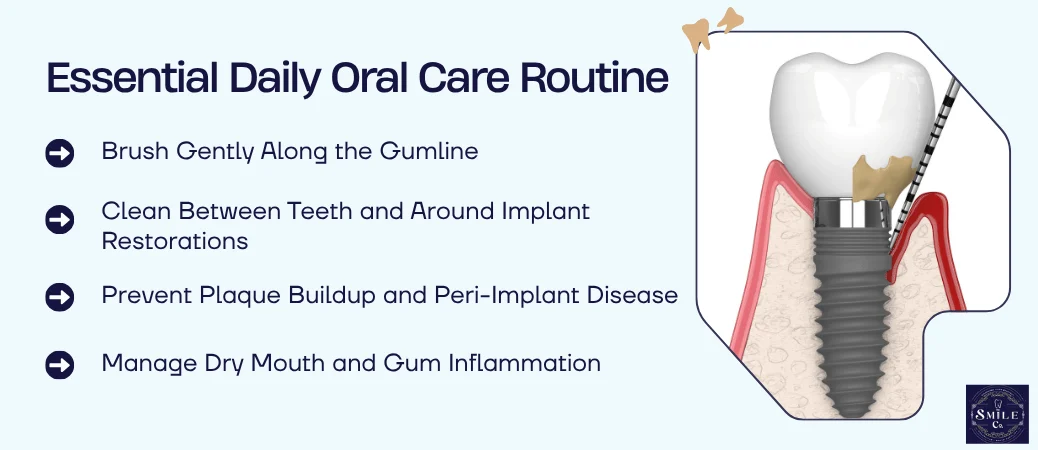
Brushing twice daily is one of the easiest ways to protect your dental implant care routine. Use a soft-bristled toothbrush and hold it at a slight angle toward your gumline.
Gentle, small circles work better than hard scrubbing. Scrubbing too hard can irritate your gums and wear down the tissue around your implant.
Spend extra time near the implant crown, since food particles can hide there. Aim for about two minutes each time you brush, covering every surface of your teeth and implant.
A gentle touch protects both your natural teeth and your implant restoration.
Clean Between Teeth and Around Implant Restorations
Flossing reaches spots your toothbrush can’t. Around implants, floss carefully to avoid snagging on the crown or abutment.
Interdental brushes are also helpful, especially if you have a bridge or multiple implants close together.
They slide between teeth and clean tight spaces without much effort.
Here’s a quick comparison:
| Tool | Best For |
| Floss | Natural teeth and single implants |
| Interdental brushes | Wider gaps and implant restorations |
| Water flosser | Sensitive gums or hard-to-reach areas |
Clean around your implant daily. This habit removes leftover food and bacteria before they can cause problems.
Prevent Plaque Buildup and Peri-Implant Disease
Plaque buildup is one of the biggest threats to your implant. If plaque sits too long, it hardens and irritates your gums, which can lead to gum disease.
Around implants, this problem is called peri-implant disease. It starts as gum inflammation but can turn into peri-implantitis, a more serious infection that affects the bone holding your implant in place.
Regular brushing and flossing lower your risk significantly. Routine dental checkups also help, since your dentist can spot early signs of trouble before they get worse.
Catching problems early keeps your implant health strong and helps you avoid larger repairs down the road.
Manage Dry Mouth and Gum Inflammation
Dry mouth can raise your risk for gum infections. Saliva helps wash away bacteria, so less saliva means more bacteria buildup around your implant.
Certain medications, aging, and dehydration all contribute to dry mouth. Drinking water throughout the day helps keep your mouth moist and supports healthy gums.
Sugar-free gum can also stimulate saliva flow between meals. If dry mouth continues to bother you, talk to your dentist about specific rinses or products designed to help.
Keeping your mouth moist protects your gum health and lowers your chances of developing peri-implant disease.
Reduce Habits That Overload Implants
Too much pressure on your implants can wear them down faster than normal chewing ever would. Small changes to how you handle stress, sleep, and daily habits can protect your implant for years to come.
Address Teeth Grinding and Clenching
If you grind or clench your teeth, you could be putting your implant at risk. This habit, known as bruxism, often happens at night without you even knowing it.
The extra force from grinding puts stress on the implant and the bone around it. Over time, this can loosen the implant or damage the crown on top.
Some signs of bruxism include:
- Jaw pain when you wake up
- Headaches in the morning
- Worn down or flat teeth
- A clicking jaw
If you notice these signs, talk to your dentist. They can check your bite alignment and help you find ways to reduce grinding before it causes damage.
Protect Your Bite With a Custom Nightguard
A custom nightguard is one of the best tools you have against grinding. Unlike store-bought guards, a custom one is made to fit your mouth exactly.
This fit matters because it spreads out the force from clenching more evenly. A well-fitted guard protects both your natural teeth and your implant restorations while you sleep.
Your dentist takes a mold of your teeth to make the guard. This ensures it stays in place all night and doesn’t shift around.
Wearing your nightguard every night, not just some nights, gives your implant the most protection. It’s a simple habit that can add years to your implant’s life.
Avoid Using Teeth as Tools and Biting Hard Objects
Your teeth and implants are not meant to open packages or bottle caps. Using them this way puts sudden, uneven force on the implant.
Hard foods like ice, hard candy, or unpopped popcorn kernels can also cause problems. Biting down on these items can crack an implant crown or loosen the implant itself.
Nail-biting is another habit that adds unnecessary strain. It may seem harmless, but it puts repeated pressure on your front teeth and implants over time.
Try to keep scissors or bottle openers nearby instead of using your teeth. Small changes like these help prevent chips, cracks, and implant failure down the road.
Manage Stress and Improve Sleep
Stress is a common trigger for teeth grinding, even if you don’t notice it during the day. When stress builds up, it often shows up in your jaw muscles at night.
Finding ways to manage stress can lower how often you clench or grind. Some simple options include:
- Deep breathing exercises before bed
- Light stretching or yoga
- Cutting back on caffeine in the evening
- Setting a regular sleep schedule
Better sleep also helps your body relax more fully, which can reduce nighttime grinding.
When you sleep well and manage stress, you protect your implant from unnecessary pressure and give it a better chance to last.
Support Bone and Whole-Body Health
Your body needs the right nutrients and habits to keep your jawbone strong and your implant secure.
Small choices about food, activity, and health conditions can make a real difference in how well your implant holds up over time.
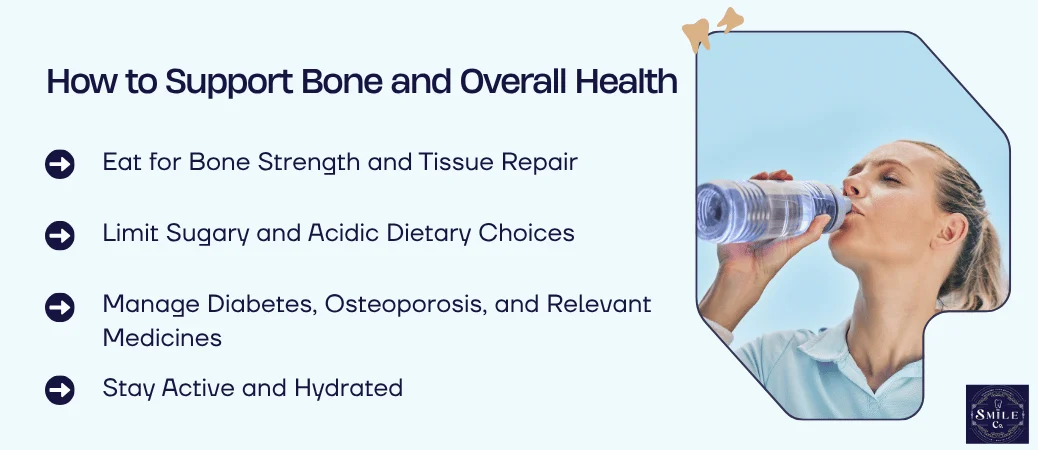
Eat for Bone Strength and Tissue Repair
What you eat plays a big role in keeping your jawbone strong enough to support your implant.
A balanced diet rich in calcium, vitamin D, and protein helps your bone stay dense and heal properly after surgery.
Calcium and phosphorus work together to build strong bone tissue.
Vitamin D helps your body absorb that calcium, so foods like salmon, egg yolks, and fortified dairy are worth adding to your plate.
Don’t forget vitamin C either. It supports collagen production, which your gums and other soft tissue need for repair.
Protein is just as important. Lean meats, beans, and eggs give your body the building blocks it needs for tissue regeneration around your implant.
Limit Sugary and Acidic Dietary Choices
Sugary foods and drinks feed bacteria in your mouth, which can lead to inflammation around your implant. Over time, this raises your risk of gum problems near the implant site.
Acidic foods and drinks are another thing to watch. Sodas, citrus fruits, and vinegar-based dressings can wear down enamel on your natural teeth and irritate soft tissue if eaten too often.
You don’t have to cut these out completely. Just try to enjoy them in moderation and rinse your mouth with water afterward.
Pairing sugary or acidic foods with a meal, instead of snacking on them alone, can also help reduce their impact on your mouth.
Chronic health conditions can affect how well your implant heals and stays stable.
Diabetes and osteoporosis are two conditions that can slow healing and weaken bone quality over time.
Manage Diabetes, Osteoporosis, and Relevant Medicines
If you have diabetes, keeping your blood sugar levels steady helps your body heal faster and lowers your risk of infection.
Osteoporosis affects bone density, which can make it harder for an implant to fuse properly with your jaw. If you take bisphosphonates for osteoporosis, talk to your dentist.
These medicines can sometimes affect bone healing, so your dentist may want to coordinate care with your doctor before or after implant surgery.
Stay Active and Hydrated
Staying active isn’t just good for your heart. Regular physical activity supports healthy blood flow, which helps deliver nutrients to your bone and gum tissue.
Exercise also plays a role in maintaining bone density throughout your body, including your jaw.
Weight-bearing activities like walking or light strength training can be especially helpful.
Hydration matters too. Drinking enough water keeps your mouth from getting too dry, which helps wash away food particles and bacteria that could harm your implant.
Staying active and hydrated works alongside good nutrition to support your implant success over the long run.
Maintain Results With Professional Monitoring
Regular visits to your dental team help catch small problems early and keep your implant working the way it should.
Combined with good habits at home, professional checkups play a big role in long-term implant health.
Schedule Routine Exams and Professional Cleanings
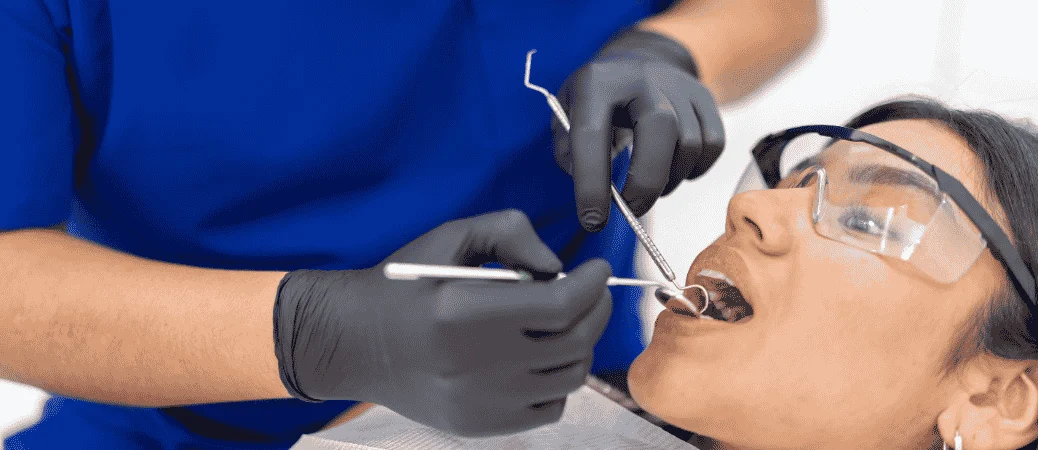
Dental checkups aren’t just for natural teeth. Regular dental check-ups let your dentist check the bone and gum tissue around your implant.
They can spot changes you might not notice on your own.
Professional cleanings also remove plaque and buildup that a toothbrush can’t fully reach, especially around the base of the implant.
Most dentists suggest checkups every six months. If you have a history of gum disease, you may need to go more often.
These visits are one of the easiest ways to protect dental implants for life and support your dental implant success over the years.
Watch for Early Warning Signs Around an Implant
Your implant should feel stable and pain-free once it has healed. If something feels off, it’s worth mentioning to your dentist right away.
Watch for these signs:
- Redness or swelling around the implant
- Bleeding when you brush or floss
- A bad taste or smell near the implant
- Looseness or shifting
These symptoms can point to peri-implantitis, an infection that affects the gum and bone around an implant. Left untreated, it can affect implant stability.
Catching it early gives your dental team the best chance to treat it and protect your implant longevity.
Repair Worn Restorations Before They Affect Stability
The crown or restoration on top of your implant can wear down over time, even though the implant itself stays in place.
Chewing, grinding, and everyday use slowly affect the surface and shape of the restoration.
Small chips or looseness in the crown may not seem urgent, but they can shift how pressure spreads across the implant.
Over time, this added strain can affect implant health below the surface.
Regular dental checkups give your dentist a chance to check and opt for dental restorative treatments before problems grow.
Fixing a worn crown early is often quick and helps keep the entire implant system, from the crown to the bone, working the way it was designed.
Frequently Asked Questions
Lifestyle choices, daily care, and timing all affect how long your dental implants stay healthy and functional.
Here are answers to common questions about keeping your implants strong for years to come.
Can dental implants last 20 years or longer?
Yes, your dental implants can last 20 years or more with good care. The titanium post that sits in your jawbone is built to be permanent, and many people keep theirs for a lifetime.
The crown on top wears down faster than the post underneath it. You may need a new crown after 10 to 15 years, but this doesn’t mean your implant has failed.
Your daily habits play a big role here. Brushing well, avoiding smoking, and visiting your dentist regularly all help your implants go the distance.
What daily habits help dental implants last longer?
Simple daily habits make a big difference for your implants. Brush twice a day with a soft-bristled brush and pay close attention to where your crown meets your gums.
Flossing matters too. Use interdental brushes or a water flosser to clean spaces your toothbrush can’t reach.
Try these habits daily:
- Brush gently around the implant base
- Floss or use a water flosser once a day
- Avoid chewing ice or hard objects
- Wear a night guard if you grind your teeth
- Keep up with regular dental checkups
Skipping these steps can lead to bacteria buildup, which puts your implant at risk over time.
Does smoking or vaping affect dental implant success?
Smoking has a clear negative effect on your implants. It cuts off blood flow to your gums, which slows healing and raises your risk of implant failure.
A systematic review of 33 studies involving 29,519 dental implants found that 25 studies reported a significant link between smoking and increased implant failure rates.
The review also found a dose-response relationship, meaning the risk of implant failure increased with higher daily cigarette consumption.
Vaping isn’t risk-free either. It can still affect blood flow and oral tissue health, even without traditional smoking.
If you smoke or vape, talk to your dentist. Quitting, or even cutting back, can improve your chances of long-term implant success.
Can poor oral hygiene cause dental implants to fail?
Yes, poor oral hygiene is one of the top reasons implants fail. Bacteria can build up around your implant and cause a condition called peri-implantitis, which damages the bone and gum tissue supporting it.
Your implant post itself won’t decay, but the tissue around it can still get infected. This is why daily cleaning and regular dental visits matter so much.
Patients who keep up with maintenance visits have fewer chances of peri-implantitis over five years. Staying consistent with your oral care routine protects your investment.
What foods should I avoid to protect my dental implants?
Certain foods can put your implants at risk. Hard foods like ice, hard candy, and nuts can crack or damage your crown.
Sticky foods, like caramel or taffy, can pull at your crown and loosen it over time. Very sugary foods also feed bacteria, which can lead to gum problems around your implant.
Try to limit:
- Ice and hard candies
- Sticky or chewy sweets
- Acidic drinks and foods, if consumed often
- Foods that require excessive force to bite through
Eating a balanced diet with calcium and vitamin D supports strong bones, which helps keep your implant stable.
Is there an age when dental implants are no longer recommended?
There’s no strict age cutoff for getting dental implants. What matters more is your overall health and bone quality, not just your age.
Older adults can still be great candidates for implants if they have enough healthy bone and manage any health conditions well.
Some people in their 80s and beyond have successful implants.
That said, certain health issues that are more common with age, like osteoporosis or slower healing, can affect your candidacy.
Your dentist will evaluate your bone density and overall health before recommending implants, no matter your age.