


You just spent time and money on a new tooth. Now you want to keep it in good shape. So it makes sense to ask whether you need a night guard after dental implants.
A night guard for dental implants isn’t required for everyone, but it is usually recommended if you grind or clench your teeth while you sleep.
Your dentist will look for signs like worn teeth, a sore jaw in the morning, or a crown that feels loose before making a call.
Here’s why this matters: real teeth sit in your jaw with a small cushion of tissue that softens the pressure of biting.
Dental implants fuse directly to the bone with no cushion at all, so heavy grinding sends that force straight into your crown and the bone around it.
A guard spreads that pressure out and protects the crown and nearby natural teeth, which is one of the simpler parts of good implant maintenance and long-term oral health.
Key Takeaways
- Night guards are most often suggested for implant patients who grind or clench at night.
- Custom guards fit better and spread bite force more evenly than store-bought versions.
- Cleaning your guard and bringing it to checkups helps it keep protecting your implant.
Table of Content
- When an Implant Night Guard Is Recommended
- Why Implants Need Protection From Grinding Forces
- Choosing the Right Guard for Your Bite
- Timing Guard Use Around Implant Treatment
- Protecting Restorations and Maintaining Your Guard
- Frequently Asked Questions
When an Implant Night Guard Is Recommended
Not everyone with an implant needs a night guard, but some people benefit a lot from one.
Your habits, your symptoms, and the type of implant work you had all help your dentist make the call.
Bruxism and Teeth Clenching
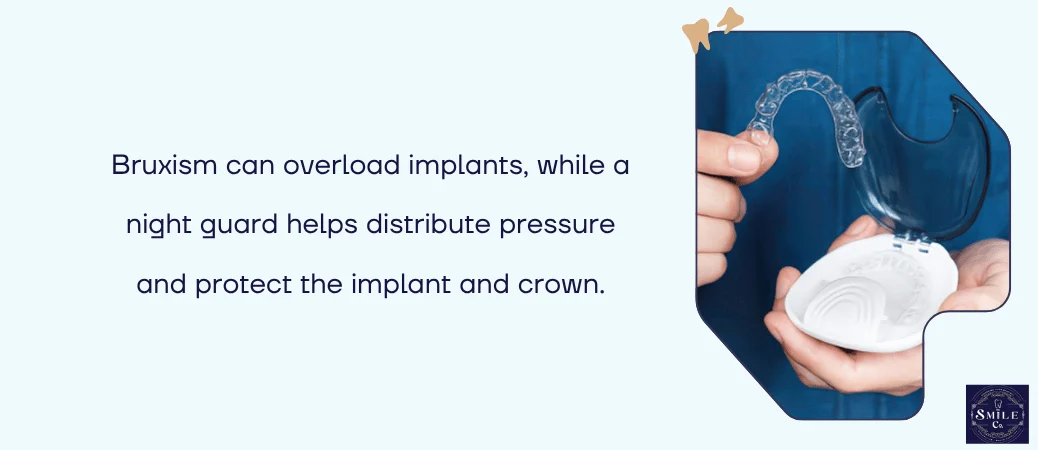
Bruxism is the habit of grinding or clenching your teeth. It can happen while you sleep or while you’re awake, often without you noticing it.
This matters for implants because they don’t cushion pressure the way natural teeth do.
A natural tooth sits in a ligament that gives slightly under force, while an implant is fused straight to bone.
So the force from grinding goes right into the crown, the screw, and the bone around it. If you have severe bruxism, that pressure repeats hundreds of times a night.
A night guard puts a layer between your upper and lower teeth and spreads the bite force more evenly.
Symptoms That Point to Nighttime Grinding
Most people don’t hear themselves grind. Your body usually gives other clues instead.
Watch for these signs:
- Morning headaches, especially near your temples
- Jaw soreness or jaw tension when you wake up
- Ongoing jaw pain or facial aches during the day
- Flat, worn, or chipped edges on your teeth
- Teeth that feel sensitive to cold with no cavity
- A partner who mentions hearing grinding sounds
- Clicking or popping in your jaw joint
Left alone, long-term clenching can lead to tension headaches and TMJ problems along with damage to crowns and restorations.
Bring these symptoms up at your next visit, even if they seem small.
Higher-Risk Implant Restorations
A single dental implant can be a strong, reliable way to replace one missing tooth while preserving the surrounding natural teeth.
Like any implant restoration, however, it still needs proper bite balance and protection from excessive grinding or clenching.
Larger implant cases may require even closer attention because the forces are distributed across multiple implants and restorations.
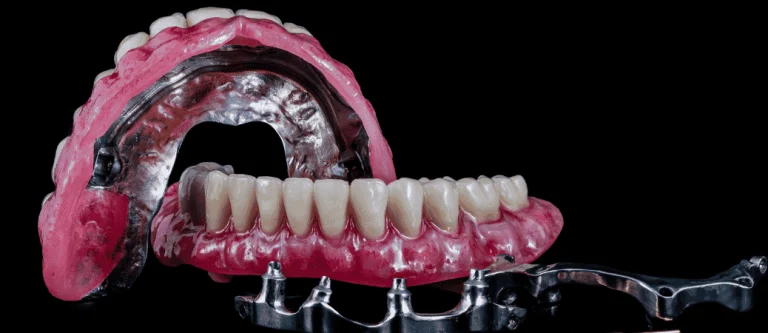
Full-mouth restoration and implant-supported dentures are good examples. These carry your whole bite on a set of fixed points, so a guard helps prevent loosening or failure of the restoration.
Other higher-risk situations include:
| Situation | Why It Adds Risk |
| Full-mouth reconstruction | Many restorations sharing heavy force |
| Implant crowns in the back | Chewing pressure is strongest there |
| Porcelain crowns or veneers nearby | Porcelain can chip under grinding |
| Limited bone support | Less cushion around the implant |
Your dentist may also suggest a guard right after your implant heals, simply as protection for the new crown.
Why Implants Need Protection From Grinding Forces
Dental implants are strong, but they handle pressure differently than the teeth you were born with.
Grinding and clenching can put steady stress on the crown, the screws underneath, and the bone that holds everything in place.
How Implants Differ From Natural Teeth
Your natural teeth sit in the jaw with a thin cushion around each root called the periodontal ligament. That ligament acts like a tiny shock absorber.
It lets the tooth shift a fraction of a millimeter and sends signals to your brain when you bite too hard.
Implants don’t have that. Through osseointegration, the titanium post fuses right to the bone, which makes it very stable but also very rigid.
So there’s no built-in cushioning. Force travels straight from the implant crown into the surrounding bone.
That difference is the main reason a nightguard is often recommended for implant patients who grind.
Pressure on Crowns, Components, and Bone
Grinding at night creates force that can be several times stronger than normal chewing, and it repeats for hours. That adds up.
Here’s what can take the hit:
- Implant crown: Porcelain and ceramic can chip, crack, or wear flat over time.
- Abutment screw: Repeated side-to-side force can loosen it, so the crown feels slightly mobile or clicks when you bite.
- Surrounding bone: Chronic overloading may contribute to gradual bone loss around the post.
- Jaw and muscles: Many people notice morning headaches or a sore, tight jaw.
Because implants are set directly into bone, heavy grinding forces can stress the crown and bone in ways you might not notice until something breaks.
In more serious cases, ongoing overload raises the risk of implant failure.
How Occlusal Guards Spread Biting Force
A guard doesn’t stop you from clenching. What it does is put a smooth barrier between your upper and lower teeth so your teeth can’t lock together and grind.
It also changes the pressure distribution. Instead of one implant crown absorbing the brunt of it, the force spreads across every tooth touching the guard.
A custom guard is adjusted so occlusal contact is even, with no single high spot. Dentists often use dual-layer materials that cushion bite forces for extra comfort.
Store-bought guards can’t match that fit. An uneven guard may load one area harder than the rest, which defeats the purpose.
Choosing the Right Guard for Your Bite
Not every night guard works the same way, and the material and fit matter a lot when you have implants.
The right occlusal guard spreads bite force evenly, feels comfortable enough to wear all night, and won’t put extra stress on your implant crown.
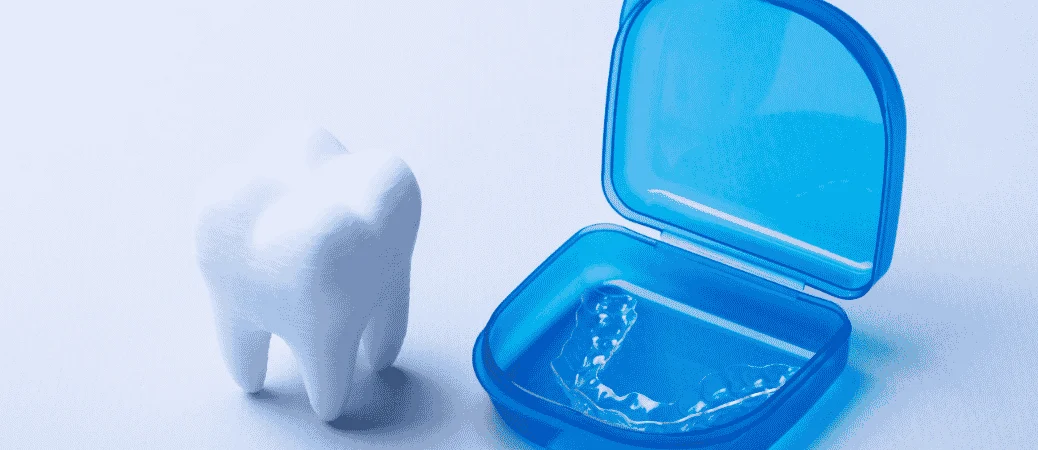
Why a Custom Night Guard Is Usually Best
A custom night guard starts with a scan or impression of your teeth. A dental lab then builds the guard to match your exact bite.
That precise fit is the whole point. A guard made for your mouth cushions impact and keeps your bite aligned, so pressure doesn’t land on one implant crown over and over.
Custom guards are also thinner and less bulky than store-bought ones, which makes them easier to sleep in.
And because a professional dentist checks the fit, small problems get adjusted before they turn into sore spots or a shifted bite.
Yes, they cost more. But they usually last years, not months.
Soft, Dual-Laminate, and Hard Acrylic Options
Custom guards come in three main materials, and your grinding habits help decide which one fits you.
| Type | Feels like | Best for |
| Soft night guard | Flexible, rubbery | Light grinding or clenching |
| Dual-laminate | Soft inside, hard outside | Moderate to heavy grinding |
| Hard acrylic | Rigid, thin | Heavy grinding, wide bite issues |
Soft night guards are comfy but can wear down fast if you clench hard. Some people also chew on them without meaning to.
Dual-laminate guards are a popular middle ground for implant patients because the soft layer adds cushion while the hard layer resists wear.
Hard acrylic guards hold their shape the longest. Just keep in mind that a guard that’s too rigid can push force straight into the implant post, since implants don’t have the ligament that natural teeth use to absorb shock.
Your dentist can help you pick the material that suits your implant restorations.
Why Over-the-Counter Guards Can Be Risky
Drugstore and boil-and-bite guards are cheap and easy to grab. The trade-off is fit.
These guards are made for an average mouth, not yours. When you compare custom guards with boil-and-bite and OTC versions, the store-bought ones tend to be thicker, looser, and quicker to wear out.
A loose guard can slide during the night. That means uneven pressure on your implant crown, or a guard that falls out and does nothing at all.
There’s another concern. A poorly fitting guard can slowly move your teeth or change how your bite comes together, which is a real problem when you’ve invested in implant work.
Timing Guard Use Around Implant Treatment
The right time to start wearing a guard depends on where you are in treatment, right after surgery, while a temporary crown is in place, or once the final crown is seated.
Each stage calls for a slightly different plan, and your bite changes along the way, so a guard that fit last month may not fit today.
After Implant Placement and During Healing
Right after surgery, your implant needs time to fuse with the bone. This process, called osseointegration, usually takes about three to six months.
Your dentist may ask you to skip the guard for the first days or weeks so nothing presses on the surgical site or the stitches.
In other cases, a guard is adjusted to stay off the healing area while still shielding your other teeth.
If you grind, protection during this window matters. Wearing a night guard during the early healing period can help reduce stress on the implant while the bone bonds.
With full-arch cases, a guard is sometimes advised for the first four months of healing.
Always follow the instructions your dentist gives you, since timing and guard type depend on the procedure.
After the Permanent Implant Crown Is Placed
Once the permanent crown is on, your bite is set. This is the point where a custom guard is usually made or remade.
An old guard from before treatment often won’t seat correctly, because the new implant crown has a different shape than the tooth it replaced.
In most cases, a new nightguard needs to be made so pressure spreads evenly across every tooth.
Expect impressions or a digital scan, plus a bite check. Your dentist will fine-tune the contact points so the guard doesn’t push harder on the implant than on your natural teeth.
A well-fitted guard spreads biting forces evenly and helps protect the crown from chips and the screw from loosening.
What to Do With a Temporary Crown
Temporary crowns are made from softer materials and are held in place with weaker cement. They chip, wear, and pop off more easily than the final restoration.
If you grind, ask about a guard while the temporary is in place. It can keep the temporary from cracking and save you an extra visit.
Don’t wait for the temporary to break before speaking up. Many patients start asking about a night guard only after something goes wrong.
One note: a guard shaped around a temporary crown won’t fit the permanent one. Treat it as a short-term step, then plan for a fresh guard once the final implant restoration is seated.
Protecting Restorations and Maintaining Your Guard
A night guard only protects your implant crowns, veneers, and other dental restorations if it stays clean, fits well, and gets checked on a regular schedule.
Simple daily habits, short follow-up visits, and knowing when to replace the guard all play a part.
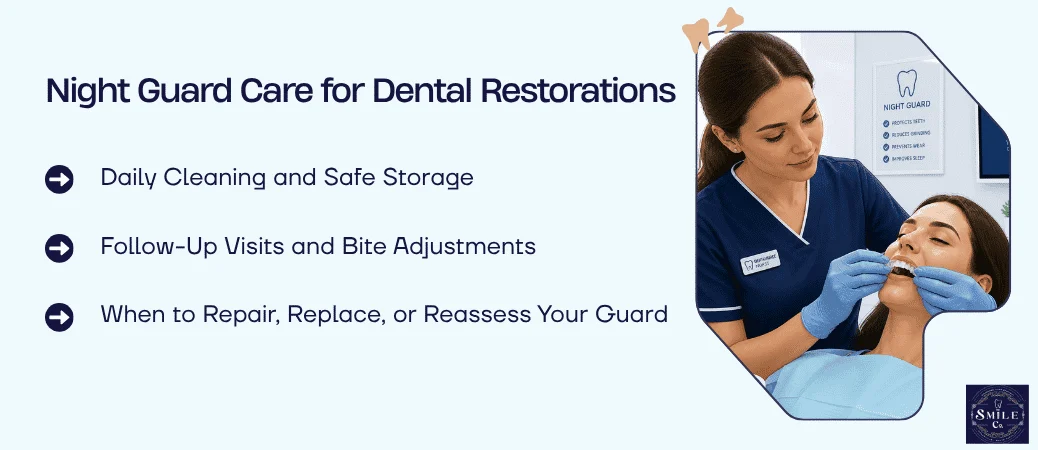
Daily Cleaning and Safe Storage
Rinse your guard in cool water as soon as you take it out each morning. Then brush it gently with a soft toothbrush and a little liquid soap or a cleaner made for dental appliances.
Skip regular toothpaste. The gritty particles scratch the surface, and those tiny scratches give bacteria a place to sit.
Let the guard air dry before you put it away in a case with vent holes. A damp guard in a sealed box can grow bacteria and fungus.
Keep it away from heat, too. Hot water, sunny windowsills, and car dashboards can warp acrylic and ruin the fit.
Your guard is only one part of good oral health. Keep brushing twice a day and cleaning between your implant crowns with interdental brushes, since a guard does nothing about plaque.
Follow-Up Visits and Bite Adjustments
Bring your night guard to every dental checkup. Your dentist can look for wear spots, check the fit, and make sure the pressure is spread evenly across your teeth and implants.
That even pressure matters. Because implants have no cushioning ligament, an unbalanced occlusal contact can push extra force onto one crown instead of sharing it.
Many dentists schedule a review a few weeks after you get a new guard, once your jaw muscles settle into the new biting pattern.
Small adjustments at that visit often solve early soreness.
If you have several implants or a full mouth rehabilitation, your dentist may want to see you every four to six months.
Uneven pressure can slowly shift your bite and cause trouble with crowns, bridges, and implants.
When to Repair, Replace, or Reassess Your Guard
A well-made custom guard usually lasts about two to five years. Heavy grinders wear through them faster.
Call your dental office if you notice any of these:
- Cracks or holes in the biting surface
- A loose or rocking fit when you seat it
- Thin, worn areas where you grind hardest
- A crown that feels different or clicks when you bite
- A lasting smell you cannot clean away
You will also need a new guard after major dental work. An old guard rarely fits over fresh implant crowns, veneers, or new restorations, and a poor fit can create uneven loading.
The same goes for dentures or braces. Those change the shape of your mouth, so your dentist will decide whether a guard still fits into your implant maintenance plan or needs to be remade.
Frequently Asked Questions
Most people with implants can wear a night guard, and a custom hard or dual-laminate guard usually works better than a soft or store-bought one.
Below are answers about timing after surgery, grinding damage to crowns and screws, and habits that put extra pressure on your implant at night.
Can I wear a night guard if I have dental implants?
Yes. You can wear a night guard with crowns, veneers, implants, and bridges as long as it fits well.
One catch: an older guard made before your implant probably won’t fit anymore. The new crown has a different shape, so your dentist will likely take fresh scans or impressions and order a new guard.
How soon after dental implant surgery can I start wearing a night guard?
Timing depends on where you are in treatment. Your gums need to heal, and the implant needs time to fuse with the bone, so your dentist decides when to start wearing a guard after dental work.
In many cases, the final guard is made after your permanent crown is in place. That way the guard matches your finished bite.
If you already grind heavily, your dentist may give you a temporary appliance during healing. Ask about this at your follow-up visit.
Can teeth grinding damage dental implants or implant crowns?
It can. Natural teeth sit in a ligament that cushions pressure, but implants fuse straight to the bone with no periodontal ligament to absorb force, so the pressure goes right to the crown, the screw, and the bone.
Grinding forces are much stronger than normal chewing, and they happen for hours. Over time that can lead to:
- Chips or cracks in the crown
- A loose abutment screw, which may feel like a click when you bite
- Gradual bone loss around the implant
Most of these problems can be fixed when they’re caught early, which is one reason regular checkups matter.
What type of night guard is best for protecting dental implants?
A custom guard made from your own scans is the standard choice.
Hard acrylic guards spread force evenly across your teeth and implant crowns, and some patients do well with dual-laminate guards that are hard outside and soft inside.
Soft guards are a weaker option for heavy grinders. The squishy surface can make some people clench harder, and soft material wears out faster.
Skip the boil-and-bite guards from the drugstore. They don’t fit precisely, and uneven contact can put pressure on one spot instead of sharing it.
If you have a full arch of implants, a night guard helps protect the whole restoration and can lower the risk of parts loosening.
Are there any side effects or downsides to wearing a night guard with implants?
The first few nights can feel odd. Extra saliva, mild jaw soreness, or trouble falling asleep are common at first and usually settle within a week or two.
A poorly fitting guard is the bigger concern, since it can create uneven pressure. Tell your dentist if the guard feels tight, rocks, or hits one tooth first.
You also need to keep it clean. Rinse it each morning, brush it with mild soap instead of toothpaste, let it dry, and store it in a vented case.
And not everyone needs one. Your dentist may skip the night guard if you have no wear on your teeth, no jaw soreness, and no history of grinding.
What should I avoid doing to protect my dental implants while sleeping?
Don’t skip nights with your guard. Grinding comes and goes, so wearing it every night is the simplest way to protect your implant from long-term wear.
Avoid sleeping with a cracked or badly worn guard. Once the biting surface is thin or split, it isn’t doing much.
A few other habits help:
- Keep the guard away from heat, since hot water and car dashboards can warp it
- Brush and clean between your teeth before bed so plaque doesn’t sit under the guard all night
- Mention morning headaches or a sore jaw to your dentist, since these can be signs of grinding after implant treatment
If you play sports, ask about a separate athletic mouthguard. A custom mouthguard for implants is built for impact, while a night guard is built for grinding.