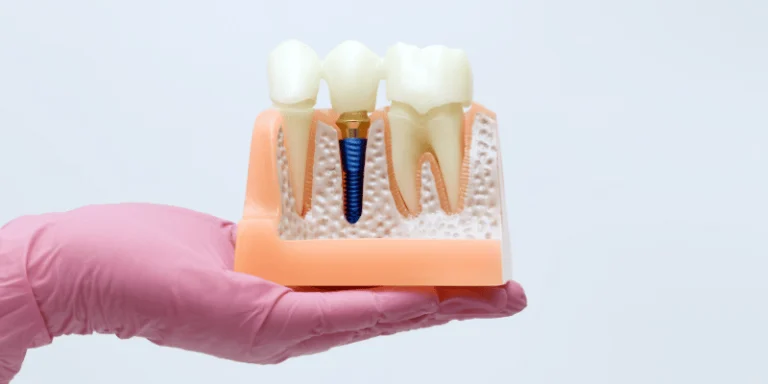



When you lose teeth, replacing them may seem simple, but the solution you choose affects far more than your appearance.
Dental implants help resolve the problems dentures don’t fix, including jawbone loss, gum health issues, and facial changes that traditional dentures cannot prevent.
Dentures sit on top of your gums and can slip around when you eat or talk. They don’t stop your jawbone from shrinking over time. This bone loss can make your face look older and cause your dentures to fit poorly.
Implants work differently because they replace the root of your tooth. They fuse with your jawbone and keep it strong. This prevents many problems you might not even realize until they occur.
Understanding these hidden benefits helps you make a better choice for your long-term health.
Key Takeaways
- Dental implants prevent jawbone loss by stimulating bone growth like natural tooth roots
- Implants stay firmly in place and feel more comfortable than dentures that can slip or cause sore spots
- Maintaining good oral hygiene is easier with implants because you can brush and floss normally
Core Differences Between Dental Implants and Dentures
Dental implants work as artificial tooth roots planted in your jawbone, while traditional dentures rest on top of your gums. These basic design differences affect how stable they feel, how well you can chew, and how long they last.
How Dental Implants Mimic Natural Teeth
Dental implants replace both the root and crown of your missing tooth. A titanium post goes into your jawbone during implant placement and bonds with the bone over several months.
This creates a strong foundation that acts just like your natural tooth root. Once healed, a crown is placed on top, giving you a tooth that looks and functions like the real thing.
The way dental implants bond with your jawbone lets you bite with nearly the same chewing power as natural teeth. You can eat crunchy apples, chewy steak, and sticky foods without worry.
Implants don’t slip or move when you talk or laugh. Your jaw gets the pressure it needs to stay healthy and strong, which keeps your facial shape from changing over time.
Typical Challenges With Traditional Dentures
Traditional dentures sit on your gums and rely on suction or adhesive to stay in place. They don’t replace the tooth root, so they can’t stop your jawbone from shrinking.
As your bone changes shape, dentures get loose and uncomfortable. You might notice clicking sounds when you talk or feel them shift while eating.
Many denture wearers avoid hard or sticky foods because their teeth can’t handle the pressure. Sore spots develop where dentures rub against your gums, making eating painful.
You need to remove them daily for cleaning, and they may require adjustments or replacements every few years.
Some people choose implant-supported dentures or overdentures to get better stability, which uses a few implants to hold dentures more firmly in place.
The Role of Implant Placement in Long-Term Success
Where and how your dentist positions implants is critical to the success of tooth replacement. Your dentist uses 3D scans to map your jawbone and find the safest spots that avoid nerves and sinuses.
Proper implant placement ensures the posts fuse correctly with your bone. This process, called osseointegration, makes implants stable enough to last decades with good care.
All-on-4 implants use just four strategically placed posts to support a full arch of teeth. The angle and depth of each implant affect how well it distributes chewing forces across your jaw.
Poor placement can lead to implant failure, nerve damage, or infections. Working with an experienced dental professional who plans carefully gives you the best chance for a strong, lasting result that feels natural and works well.
Concerned about the problems dentures don’t fix? Make an appointment in Greenville, SC, to explore long-term implant solutions.
Hidden Oral Health Problems Solved by Dental Implants
Dental implants protect your mouth in ways that go far beyond replacing missing teeth. They keep your jawbone strong, shield your gums from disease, and eliminate the painful irritation that dentures often cause.
Prevention of Jawbone Loss and Shrinkage
When you lose a tooth, your jawbone starts to break down because it no longer gets the pressure it needs to stay healthy. Over 25% of jawbone volume can disappear within the first year after tooth loss if nothing replaces the root.
Dentures sit on top of your gums and don’t stop this bone loss. Your jaw continues to shrink, which changes your face shape and makes you look older.
Dental implants work differently. They act like natural tooth roots by anchoring into your jawbone. This creates pressure that keeps your bones active and healthy.
The implant fuses with your bone through a process called osseointegration. This connection maintains jawbone density and preserves bone volume over time.
Your facial structure stays strong because the bone doesn’t deteriorate. This also keeps your other teeth from shifting out of place and maintains proper bite alignment.
Maintaining Gum Health and Preventing Gum Disease
Dentures can trap food particles and bacteria between the appliance and your gums. This buildup increases your risk of infections and inflammation that leads to gum disease.
Dental implants create a tight seal with your gum tissue. This barrier helps keep harmful bacteria out and reduces the chance of chronic gum infections.
When you care for implants properly through regular brushing and flossing, you maintain better oral health overall. Healthier gums mean:
- Less swelling and bleeding
- Lower risk of infection spreading to other areas
- Reduced chance of bacteria entering your bloodstream
The stable connection between the implant and your gums makes it easier to clean around them. You can brush and floss just like you would with natural teeth, which helps you remove plaque more effectively than with dentures.
Reducing Sore Spots and Gum Irritation
Dentures press directly on your soft gum tissue, which often creates painful sore spots. They can shift while you eat or talk, rubbing against your gums and causing constant irritation.
These pressure points make daily activities uncomfortable. You might avoid certain foods or feel self-conscious when speaking because of the pain.
Dental implants eliminate this problem completely. Since they’re anchored in your jawbone, they don’t move around or create friction against your gums. You won’t experience the rubbing and pressure that causes sore spots.
This stability makes eating and speaking comfortable and pain-free. Your mouth stays healthier because there’s no constant irritation that can lead to open wounds or infections.
The natural feel of implants also means you can maintain better oral hygiene without discomfort. You’ll find it easier to keep your mouth clean, which protects your overall gum health and prevents complications from irritated tissue.
Stability, Function, and Comfort: Where Dentures Fall Short
Traditional removable dentures rest on your gums and rely on suction or adhesive to stay in place, which creates ongoing challenges with eating, speaking, and daily comfort. Implant-retained dentures eliminate these issues by anchoring securely to your jawbone.
Everyday Eating and Speaking Confidence
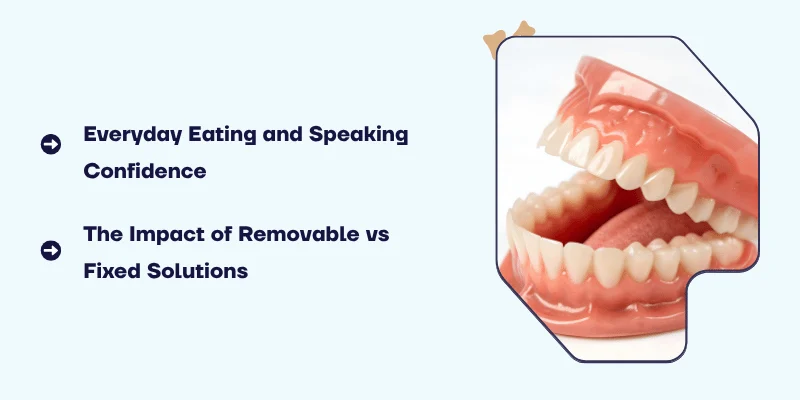
When you wear removable dentures, you probably notice they slip or shift during meals and conversations. This happens because dentures lack the strong stability that comes from being anchored to bone.
Your chewing power drops significantly with traditional dentures. You might avoid foods like steak, apples, or corn on the cob because your dentures can’t handle the pressure. This limits both your enjoyment and nutrition.
Speaking clearly becomes difficult when dentures move around in your mouth. You may find yourself clicking or slurring certain words, which affects your confidence in social situations.
Common denture problems include:
- Slipping while eating or talking
- Clicking sounds during conversation
- Sore spots from rubbing
- Need for messy adhesives
- Fear of embarrassing moments
Implant-retained dentures solve these issues by staying firmly in place, giving you the freedom to eat what you want and speak without worry.
The Impact of Removable vs Fixed Solutions
The difference between removable and fixed solutions goes beyond just convenience. Lower dentures are particularly difficult because your tongue constantly pushes against them, and there’s less surface area for suction.
With removable dentures, you need to take them out daily for cleaning and soaking. This constant removal reminds you that your teeth aren’t permanent.
Fixed implant solutions provide greater chewing power and bite strength, allowing you to eat a full range of foods. You brush them like natural teeth instead of removing them each night.
Your facial structure benefits too. Implants prevent the bone loss that makes removable dentures fit poorly over time, which means fewer adjustments and replacements down the road.
Have questions about dental implants vs dentures? Contact us for clear guidance and personalized recommendations.
Oral Hygiene Advantages of Dental Implants
Dental implants make it easier to maintain oral health than dentures. They allow you to brush and floss as you would with natural teeth, helping prevent infections and keeping your gums in better condition.
Easier Cleaning and Maintenance
With dental implants, you can practice good oral hygiene much more easily than with dentures or bridges. You brush and floss them just like your natural teeth, with no special cleaning solutions or extra steps needed.
Dentures trap food and bacteria underneath them. This makes thorough cleaning more difficult and increases plaque buildup that can harm your gums.
Implants create a tight seal with your gums. This design helps keep harmful bacteria out and makes daily cleaning straightforward.
You don’t need to remove implants for cleaning or soak them overnight. This saves you time and hassle in your daily routine.
The simple maintenance means you’re more likely to keep up with proper oral hygiene habits, which protects both your implants and your remaining natural teeth.
Reducing Risk of Complications and Infections
Dental implants reduce the chance of oral infections compared to dentures because bacteria can’t collect easily in hidden spaces.
Dentures often cause sore spots and irritation, which can lead to gum infections that affect your jawbone.
When you maintain good oral hygiene with implants, your gums stay healthier and the risk of peri-implantitis drops. This condition is similar to gum disease but affects the tissues around your implant.
Implant infections usually happen because of poor oral care or immune system issues. However, regular brushing, flossing, and dental visits help you avoid these problems.
Your dentist will also check for signs of implant infection during cleanings to catch any issues early.
By preventing bacteria buildup, you lower the risk that oral bacteria could enter your bloodstream and cause problems elsewhere in your body.
Durability and Technology Behind Modern Dental Implants
Modern dental implants last decades longer than dentures and use advanced technology to integrate directly with your jawbone.
New imaging systems and surgical techniques have made placement more precise while reducing healing time.

Alt-text: durability-and-technology-behind-modern-dental-implants
Longevity of Dental Restoration Over Time
Your dental implants can last 25 years or more with proper care, while dentures typically need replacement every 5 to 7 years. The key difference lies in osseointegration, where titanium or zirconia materials bond directly with your bone tissue.
Study shows that traditional titanium implants have progressed to include biocompatible alternatives like zirconia and titanium-zirconium alloys. These materials resist corrosion and maintain their structural integrity under constant chewing forces.
The strength and biocompatibility of dental implant materials ensure they remain functional for many years. Surface modifications like sandblasting and acid etching help your bone cells attach more quickly to the implant.
This reduces implant failure rates and shortens your recovery period.
Hydroxyapatite coatings and bioactive glass surfaces further enhance bone growth around your implant. These advances mean your dental restoration becomes more stable over time rather than loosening like dentures often do.
Innovations in Implant Surgery and Imaging
Research shows that computer-aided design and cone-beam computed tomography have dramatically enhanced diagnostic precision for implant planning.
Your dentist can now see your exact bone structure in three dimensions before surgery begins.
3D imaging technology lets your dental team create custom surgical guides that fit your mouth perfectly. These guides improve placement accuracy and reduce your operating time by up to 30%.
Digital planning tools show exactly where your implant will go and how it will integrate with surrounding bone. This means fewer complications and better long-term results for your dental restoration.
Modern implant surgery benefits include:
- Virtual surgical planning using 3D scans
- Custom-printed surgical guides
- Real-time navigation during placement
- Reduced tissue trauma and faster healing
The combination of advanced materials and digital technology has made implant surgery more predictable than ever before.
Looking for a more secure alternative to dentures in Greenville, SC? Contact our dental team to discuss implant options.
Frequently Asked Questions
Dental implants provide stability and protect your jawbone in ways dentures cannot. They also keep your remaining teeth from shifting and make daily life more comfortable.
What are some unexpected benefits of choosing dental implants over traditional dentures?
Dental implants help preserve your facial structure by preventing the sunken look that often happens with dentures. When you lose teeth, your jawbone can shrink, which changes how your face looks over time.
Implants also let you taste food better. Dentures that cover the roof of your mouth can block taste receptors, making meals less enjoyable.
You won’t need to use messy adhesives with implants. They stay firmly in place all day, so you can eat, laugh, and speak without worry.
How do dental implants improve jawbone health in ways that dentures do not?
Dental implants act like natural tooth roots by stimulating your jawbone when you chew. This pressure keeps the bone strong and healthy.
Without this stimulation, your jawbone can lose more than 25% of its density within the first year after tooth loss. Dentures sit on top of your gums and don’t provide any bone stimulation.
Over time, this bone loss causes dentures to fit poorly. You’ll need adjustments or replacements every few years as your jaw changes shape.
Can dental implants enhance my overall oral health more than dentures?
Yes, implants make cleaning your teeth much easier. You can brush and floss around them as you would natural teeth, which helps remove plaque and bacteria more effectively.
Dentures can trap food and bacteria, increasing your risk of gum disease and infection. The buildup of bacteria under dentures can lead to chronic inflammation in your mouth.
Implants create a tight seal with your gums that helps keep harmful bacteria out. This reduces your chance of developing gum infections or more serious oral health problems.
In what ways do dental implants offer a better fit and comfort compared to dentures?
Implants are anchored directly into your jawbone, so they never slip or move around. This stability means no clicking sounds when you talk or eat.
Dentures rest on your gums and often cause sore spots from rubbing and pressure. These sore spots can make eating painful and speaking uncomfortable.
You won’t experience the irritation and discomfort that many denture wearers face daily. Implants feel and work like your natural teeth, making everyday activities easier and pain-free.
What long-term oral health advantages do dental implants provide that I won’t get with dentures?
Dental implants can last many years or even a lifetime with proper care. Dentures typically need to be replaced or relined every five to seven years.
Implants protect your remaining natural teeth by not requiring them for support. Partial dentures use metal clips that can damage healthy teeth over time.
They also reduce your risk of bone infections and nerve damage. The secure fit prevents the chronic irritation that can lead to tissue damage and infection in your mouth.
How do dental implants help prevent the shifting of remaining teeth, an issue commonly associated with dentures?
When you lose a tooth, the empty space lets nearby teeth drift out of position. This shifting can cause bite problems and make it harder to chew properly.
Implants fill these gaps and provide support that keeps your other teeth in their correct positions. They maintain the natural spacing and alignment of your smile.
Dentures don’t stop this shifting because they don’t replace the tooth root. Your remaining teeth can still move, which affects both your appearance and how well you can bite and chew.