


Many patients wonder what does sedation dentistry feels like when preparing for a dental implant procedure. The good news is that sedation dentistry helps you stay calm, comfortable, and relaxed throughout treatment.
Most patients report a warm, floaty sensation, a slowed perception of time, and often little to no memory of the procedure afterward. Your experience depends on which type of sedation your dentist recommends.
With oral sedation, you’ll feel deeply calm but stay awake. IV sedation creates a more profound relaxation where the appointment often feels like it’s over in just minutes.
Nitrous oxide offers mild sedation with quick onset and recovery, while general anesthesia is reserved for severe cases.
Understanding what to expect can help ease your worries about dental implant surgery.
This guide walks you through the physical sensations, emotional effects, and recovery process so you know exactly what sedation dentistry feels like from start to finish.
Key Takeaways
- Sedation creates a relaxed, comfortable state where you feel calm and often have limited memory of the procedure
- Different sedation types offer varying levels of relaxation, from mild with nitrous oxide to deeper states with IV sedation
- The experience is safe and predictable, with most patients recovering within a few hours and describing it as life-changing
What Sedation Dentistry Feels Like for Implant Patients
Patients describe sedation during dental implants as deeply relaxing, with sensations ranging from a warm, floaty feeling to having little awareness of time passing.
Most people experience significant emotional relief and often have minimal memory of the procedure afterward.
Common Sensations During Sedation
When you receive sedation dentistry for your dental implants, you’ll likely feel a deep sense of calm wash over you. Many patients describe a warm, floaty sensation that makes them feel comfortable and unconcerned about the procedure.
Your perception of time changes dramatically under sedation. What might be a two-hour implant dentistry procedure often feels like just minutes have passed.
You’ll remain awake during most sedation options but in a deeply relaxed state. Your body feels heavy and comfortable in the chair. Some patients report a tingling sensation or feeling like they’re drifting.
The procedure often feels like it’s over quickly, and you won’t feel the drilling or tissue work that normally causes discomfort. Your sedation dentist carefully monitors you throughout to ensure you stay comfortable and safe.
Emotional Relief and Reduced Anxiety
Your dental anxiety melts away once the sedation takes effect. The racing thoughts and worry that kept you from getting dental procedures simply fade into the background.
You’ll feel emotionally detached from what’s happening. The sounds and sensations that normally trigger fear don’t bother you anymore. This emotional relief is one of the most common benefits patients report after their experience.
Many people with severe dental phobias find that sedation dentistry helps them feel calm, relaxed, and comfortable throughout their entire implant surgery.
Your muscles relax instead of tensing up. Your heart rate stays steady rather than racing.
This calm state lets your dentist work efficiently. You’re cooperative but not anxious, which makes the whole process smoother for everyone.
Awareness and Memory After Sedation
Your level of awareness during dental implants depends on which sedation options your dentist uses. With lighter sedation, you might remember parts of the appointment. With deeper sedation, you’ll have very little recollection.
Most patients experience what’s called the amnesia effect. You might respond to questions during the procedure but have no memory of it afterward. After sedation, patients often have little to no memory of the appointment.
You’ll feel drowsy for a few hours after your procedure ends. This is normal and expected. You won’t be able to drive yourself home, so you’ll need someone to accompany you.
Some patients describe the experience as “waking up from a nap” with their dental work already complete. Recovery is typically smooth, with sedative effects wearing off gradually over several hours.
Feeling anxious about your implant procedure? Make an appointment today to discuss sedation options and stay calm throughout treatment.
Understanding Dental Anxiety and Its Impact on Implant Treatment
Dental anxiety stems from various triggers and can significantly affect your willingness to pursue implant treatment.
Understanding these fears and how sedation addresses them helps you make informed decisions about your dental care.
Causes of Dental Anxiety
Dental anxiety develops from several common sources. Past negative experiences at the dentist often create lasting fear, especially if you felt pain or discomfort during previous procedures.
Fear of needles ranks among the top triggers for dental phobia. Many people avoid dental work simply because they can’t handle the thought of injections in their mouth.
Loss of control bothers some patients more than the procedure itself. Lying back in a dental chair with someone working in your mouth can feel vulnerable and uncomfortable.
Sensory sensitivities play a major role for many anxious patients. The sounds of dental tools, bright overhead lights, and clinical smells can overwhelm your senses.
A strong gag reflex makes dental work particularly challenging and increases anxiety about choking or being unable to breathe properly.
Some people worry about judgment from their dentist, particularly if they’ve avoided dental care for years. This embarrassment can prevent you from seeking the treatment you need.
How Anxiety Affects Implant Candidates
Dental implant anxiety often causes patients to delay or completely avoid treatment. When you postpone implant procedures, your oral health problems typically get worse over time.
Bone loss accelerates when missing teeth aren’t replaced. The longer you wait, the more bone deteriorates in your jaw, which can make implant placement more difficult or require additional procedures.
Nearly 75% of adults experience dental anxiety, with concerns intensifying around surgical procedures like implants. You might worry about the length of treatment, pain levels, or complications during surgery.
This avoidance creates a difficult cycle. Your anxiety prevents treatment, your condition worsens, and then the needed treatment becomes more complex, which increases your anxiety even further.
Benefits of Sedation for Anxious Patients
Sedation dentistry bridges the gap between your fears and the treatment you need. It calms your nerves and eliminates discomfort throughout the entire implant process.
Key benefits include:
- Reduced awareness of sights, sounds, and sensations during treatment
- Little to no memory of the procedure afterward
- Better management of your gag reflex
- Ability to complete multiple procedures in one visit
- Decreased physical tension and muscle soreness
Sedation makes your experience feel effortless, regardless of whether you’re nervous about pain, past trauma, needles, or simply the surgical nature of implants.
Many patients report that appointments feel like they’re over in just minutes, making a stress-free implant journey possible even for those with severe dental phobia.
Types of Sedation Used in Implant Dentistry
Dentists offer several sedation methods to help you feel calm during dental implant procedures, ranging from mild relaxation with laughing gas to complete unconsciousness with general anesthesia.
Your dentist will choose the best sedation technique based on your anxiety level, medical history, and how complex your procedure is.
Nitrous Oxide (Laughing Gas)
Nitrous oxide is the mildest form of conscious sedation available for dental implants. You breathe it in through a small mask that fits over your nose while you sit in the dental chair.
The effects start within minutes. You’ll feel relaxed and maybe a little lightheaded, but you’ll stay awake and able to respond to your dentist’s questions. Many patients describe a warm, floaty feeling.
Benefits of nitrous oxide include:
- Wears off quickly after the mask is removed
- You can drive yourself home
- Works well for mild to moderate anxiety
- Has very few side effects
This sedation option is perfect for straightforward implant procedures when you just need to take the edge off your nerves. The gas doesn’t put you to sleep, so you’ll remember the entire procedure.
Oral Sedation and Benzodiazepines
Oral sedation involves taking a pill before your appointment, usually about an hour before you arrive at the dental office. Your dentist will prescribe benzodiazepines like Valium or Halcion to help you relax.
You’ll feel drowsy and calm during the procedure. This type of oral conscious sedation keeps you awake but deeply relaxed. Some patients doze off but can be easily woken up.
The medication makes many people feel groggy and affects your memory of the procedure. You won’t be able to drive, so you’ll need someone to take you home.
Key points about oral sedation:
- Takes effect in 30-60 minutes
- Creates moderate to deep relaxation
- Effects can last several hours
- Requires fasting before the appointment in some cases
Oral sedation works well for patients with moderate anxiety who need more help relaxing than nitrous oxide provides. Your dentist will adjust the dosage based on your weight and anxiety level.
IV Sedation and Intravenous Sedation
IV sedation dentistry delivers medication directly into your bloodstream through a small needle in your arm or hand. An anesthesiologist or specially trained dentist monitors you throughout the entire procedure.
This sedation technique works faster than oral sedation because the medication enters your bloodstream immediately. Your dentist can also adjust the level of sedation during the procedure if needed.
You’ll be in a twilight state where you’re technically conscious but deeply relaxed. Most patients don’t remember anything about the procedure afterward. You can still respond to requests like “open wider” but you won’t feel anxious or uncomfortable.
What to expect with IV sedation:
- Continuous monitoring of vital signs
- Little to no memory of the procedure
- Quick onset and recovery
- Same-day discharge with a responsible adult
This deeper level of sedation is recommended for longer procedures or patients with severe dental anxiety. You’ll need someone to drive you home and stay with you for several hours.
Have questions about what sedation dentistry feels like? Contact us to speak with our Greenville team and get personalized guidance.
General Anesthesia in Complex Cases
General anesthesia puts you into a completely unconscious state during your dental implant surgery. You won’t feel anything, hear anything, or be aware of the procedure.
An anesthesiologist administers the medication and monitors your breathing, heart rate, and other vital signs throughout the surgery. You’ll be asleep and unable to respond to any stimuli.
This sedation method is typically reserved for complex cases like full mouth dental implants or patients with severe medical conditions. The procedure takes place in a hospital setting or surgical center rather than a regular dental office.
Recovery takes longer than other types of sedation. You’ll wake up slowly in a recovery room where medical staff will monitor you until you’re stable enough to go home with a caregiver.
The Sedation Process: Before, During, and After Implant Surgery
Your sedation experience involves careful preparation steps, monitoring throughout the procedure, and specific recovery protocols to ensure your safety and comfort.
Understanding what happens at each stage helps reduce anxiety about your dental implant surgery.
Alt-text: dental-implant-sedation-process
Preparing for Sedation Dentistry
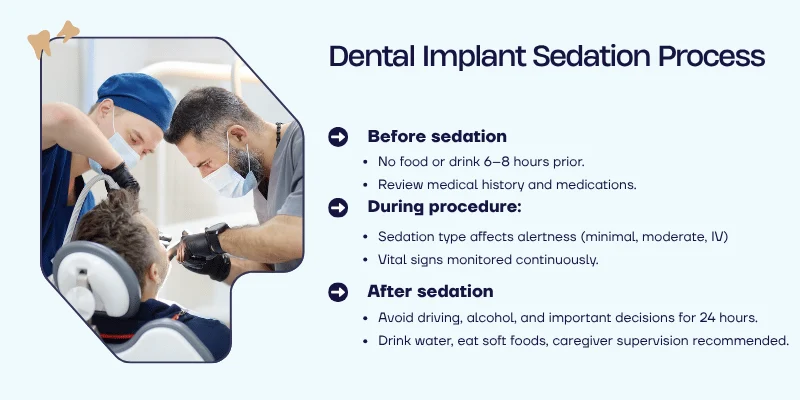
You’ll need to follow specific instructions before your appointment to ensure your safety. Most dental offices require you to avoid eating or drinking for 6-8 hours before sedation.
Your dentist will review your medical history and current medications. Certain drugs can interact with sedation medications, so you must provide a complete list of everything you take.
You’ll need to arrange for someone to drive you home after the procedure. You cannot drive yourself because the sedation effects can last several hours.
Your escort should plan to stay with you for at least the first few hours after you get home.
Wear comfortable, loose-fitting clothing to your appointment. Avoid wearing jewelry or contact lenses. Your dental team may ask you to remove these items before the procedure starts.
During Your Implant Procedure
The type of sedation you receive determines how you’ll feel during implant surgery. With minimal sedation, you stay awake but feel relaxed. Moderate sedation puts you in a drowsy state where you might not remember the procedure.
Your dental team monitors your vital signs throughout the surgery. They continuously monitor your heart rate, blood pressure, and oxygen levels. Local anesthesia numbs the surgical area even when you’re sedated, so you won’t feel pain.
IV sedation creates a twilight-like state where you’re deeply relaxed and unlikely to remember the procedure. You can still respond to verbal commands, but time seems to pass quickly.
Most patients report feeling like only a few minutes went by, even though the surgery took much longer.
What Happens After Sedation
You’ll rest in a recovery area while the sedation wears off. The dental team continues monitoring you until you’re alert enough to leave safely. This usually takes 30 minutes to an hour.
You might feel groggy, dizzy, or slightly confused for several hours. These are normal aftereffects of sedation and will fade as the medication leaves your system.
Don’t operate machinery, sign legal documents, or make important decisions for at least 24 hours. Your judgment may be impaired even if you feel normal. Avoid alcohol and take only medications your dentist approves.
Rest at home for the remainder of the day. Drink plenty of water and eat soft foods when you feel ready. Your caregiver should check on you regularly during the first few hours after you return home.
Who Should Consider Sedation Dentistry for Implants?
Sedation dentistry works for dental implants when you experience dental anxiety, have specific medical needs, or require complex procedures.
Understanding whether you’re a good candidate helps you make informed decisions about your comfort during treatment.
Ideal Candidates for Sedation
You might benefit from sedation if you have a dental phobia that prevents you from seeking necessary care. Many people avoid getting dental implants for years because of fear, but sedation removes that barrier completely.

Alt-text: dental-implant-phobia
Sedation is often recommended for implant procedures if you feel anxious or have a low pain tolerance. You’re also an ideal candidate if you have a strong gag reflex that makes dental work difficult.
Patients who need multiple implants in one visit often choose sedation because it allows the dentist to complete extensive work efficiently.
People who typically benefit from sedation include those with:
- Severe anxiety about dental visits
- Previous traumatic dental experiences
- Difficulty sitting still for long periods
- Sensory sensitivities to sounds, lights, or instruments
- Complex medical histories requiring careful monitoring
If you have trouble getting numb with regular local anesthesia, sedation combined with numbing agents provides better pain control.
Medical Considerations and Safety
Your sedation dentist will review your complete medical history before recommending any sedation type. You need to share all current medications, allergies, and health conditions during your consultation.
Certain medical conditions require extra caution or modified sedation approaches. If you have cardiovascular disease, respiratory issues, or take specific medications, your dentist may work with an anesthesiologist to ensure safety.
Research shows that patients undergoing implant surgery are often at a relatively high age and have systemic diseases at a higher rate.
Your vital signs get monitored continuously during sedation. The dental team tracks your heart rate, blood pressure, and oxygen levels throughout the procedure.
This monitoring ensures your safety and allows immediate response if any issues arise.
Most healthy adults qualify for standard sedation options. However, pregnant women, people with certain neurological conditions, or those with severe obesity may need specialized care.
Communicating With Your Sedation Dentist
Open communication with your dentist helps create a personalized sedation plan. Share your specific fears and concerns during the initial consultation so your dentist understands what matters most to you.
Ask about the different sedation options which are safest for implant procedures given your unique situation. Your dentist should explain each option clearly, including how you’ll feel during and after treatment.
Tell your dentist about past experiences with sedation or anesthesia. If you’ve had negative reactions before, this information helps them choose the best approach for you.
You should also discuss recovery time and arrange for someone to drive you home if needed.
Important questions to ask include:
- What sedation level do you recommend for my case?
- How long will the effects last?
- What are the potential side effects?
- Will I remember the procedure?
Don’t hesitate to express any worries, no matter how small they seem. A good sedation dentist takes your concerns seriously and adjusts the treatment plan accordingly.
Curious about the different ways sedation can make your implant procedure easier? Explore everything you need to know about sedation dentistry at The Smile Company.
Key Benefits and Takeaways of Sedation for Implant Patients
Sedation dentistry transforms how you experience implant procedures by addressing physical discomfort and emotional stress.
The right sedation options create a pathway to successful treatment while protecting your well-being throughout the process.
Enhanced Comfort and Reduced Pain
You’ll notice the most immediate benefit of sedation dentistry is how it eliminates anxiety and physical discomfort during your procedure.
When your dentist combines local anesthesia with sedation, you remain pain-free even during lengthy implant placements.
Sedation helps you in multiple ways:
- Blocks pain signals while keeping you relaxed
- Reduces muscle tension in your jaw and neck
- Minimizes your gag reflex during treatment
- Creates time distortion so procedures feel shorter
Your comfort level directly affects how well your dentist can work. When you’re calm and still, your dental team can focus entirely on precise implant placement instead of managing your anxiety.
This is especially important during full-mouth reconstruction or multiple-implant procedures that require extended chair time.
Better Clinical Outcomes
Your implant success rate improves when sedation keeps you comfortable and cooperative throughout the procedure. Dentists achieve more accurate implant positioning when you remain still and relaxed during critical placement steps.
Sedation allows your dental team to complete complex work in fewer appointments. Instead of breaking treatment into multiple anxiety-filled visits, you can often finish extensive implant dentistry in one or two sessions.
This consolidated approach reduces your overall healing time and gets you to your final results faster.
Your body also responds better to treatment when stress hormones stay low. Reduced anxiety means lower blood pressure and heart rate during surgery, which creates ideal conditions for healing and integration of your implants.
Improving Overall Patient Experience
You’ll find that sedation options make dental implant treatments more comfortabl1u7e from start to finish. Many patients report little to no memory of their procedure, which eliminates traumatic associations with dental work.
Your recovery often feels easier after sedated procedures because you didn’t experience the physical and emotional strain of anxious awareness.
This positive experience increases your likelihood of keeping follow-up appointments and maintaining the dental care you need over the long term.
The psychological benefits extend beyond the procedure itself. When you know effective sedation is available, you’re more likely to pursue necessary implant treatment instead of avoiding it due to fear.
Ready to experience stress-free dental implants? Schedule your appointment now and see how sedation dentistry keeps you relaxed.
Frequently Asked Questions
Many patients want to know what sedation will actually feel like and whether it’s the right choice for their dental implant procedure.
Understanding the sensations, safety measures, and what to expect at each stage can help reduce anxiety before your appointment.
Can you describe the sensations I might experience during sedation dentistry?
Most patients report feeling deeply relaxed during sedation dentistry. You’ll likely notice a warm, floaty sensation that makes you feel calm and unconcerned about the procedure.
With IV sedation, you remain awake and able to respond to your dentist. However, you’ll feel so relaxed that time seems to pass quickly or not at all.
Many patients describe having little or no memory of the procedure afterward. You might feel aware of what’s happening but you won’t feel anxious or distressed about it.
Your body will feel heavy and comfortable. Some patients compare it to the drowsy feeling you experience just before falling asleep.
What types of sedation are available for dental implant procedures, and how do they differ?
Oral sedation involves taking a tablet 30 to 60 minutes before your treatment. This creates a deep sense of calm while you remain awake but very relaxed.
IV sedation is the most popular choice for anxious implant patients. It works faster than oral sedation, and your dentist can adjust the level throughout your procedure.
Nitrous oxide, also called gas and air, provides mild sedation. It has a quick onset and wears off quickly, making it good for patients with mild anxiety.
General anesthesia puts you completely to sleep. This option is rarely needed but might be used for severe dental phobia or very complex surgical cases.
Each type differs in how deeply you’re sedated and how long the effects last. Your dentist will help you choose based on your anxiety level and the length of your procedure.
How safe is sedation dentistry for patients who feel anxious about dental work?
Sedation dentistry is very safe when provided by trained professionals. Your dentist will screen your medical history before recommending any sedation option.
During your procedure, your dental team monitors your breathing, pulse, and oxygen levels closely. They use approved medications and follow strict safety protocols.
Your dentist tailors the sedation depth to your specific needs. This careful approach ensures you stay comfortable while remaining safe throughout the treatment.
Most patients recover quickly without complications. Serious side effects are extremely rare when sedation is administered by qualified dental professionals.
What should I expect before, during, and after my sedation dentistry appointment?
Before your appointment, your dentist will review your medical history and any medications you take. You’ll need to avoid eating for several hours before IV sedation.
Arrange for someone to drive you to and from your appointment. You won’t be able to drive yourself home after sedation.
During the procedure, you’ll feel calm and relaxed. The dental team will monitor you continuously to ensure your safety and comfort.
After treatment, you’ll feel slightly drowsy for a few hours. You must not drive for 24 hours after IV sedation.
Most patients can relax comfortably at home the same day. You’ll receive clear aftercare instructions to follow as you recover.
How can I manage my anxiety leading up to a dental implant procedure with sedation?
Talk openly with your dentist about your specific fears and concerns. Sharing what triggers your anxiety helps them create a personalized treatment plan that addresses your needs.
Practice deep breathing exercises in the days before your appointment. Taking slow, deep breaths can help calm your nervous system.
Avoid caffeine on the day of your procedure. Caffeine can increase feelings of nervousness and make it harder to relax.
Focus on the positive outcome rather than the procedure itself. Think about how your dental implants will improve your confidence and quality of life.
Remember that with sedation, many patients have no memory of the treatment at all. Knowing this can help reduce worry about what you’ll experience.
Are there any side effects I should be aware of after undergoing sedation for dental implants?
Drowsiness is the most common side effect after sedation. You’ll likely feel tired and want to rest for several hours after your appointment.
Some patients experience mild nausea, though this is not common. Your dentist can provide medication if nausea occurs.
You might feel slightly confused or disoriented immediately after waking up. This feeling typically passes within an hour or two.
Dry mouth can occur after sedation. Drinking plenty of water helps relieve this symptom.
These side effects are temporary and resolve on their own. Contact your dentist if you experience any symptoms that concern you or last longer than expected.