


Getting dental implants can feel scary, especially when you think about surgery and recovery time. Many people worry about pain and how long it will take to heal.
The good news is that sedation dentistry helps reduce stress during surgery, which can lead to faster and more comfortable healing afterward.
Sedation dentistry changes implant surgery recovery by keeping your body relaxed during the procedure, which reduces stress hormones that can slow down healing and helps minimize pain and swelling after surgery.
When you stay calm during your implant placement, your body can focus its energy on healing instead of dealing with anxiety and tension. This means you might feel better sooner and get back to normal activities faster.
Understanding how different sedation options work for dental implants can help you make the best choice for your situation.
From light sedation with laughing gas to deeper sedation options, each type offers different benefits for your comfort and recovery.
This guide will walk you through everything you need to know about how sedation affects your healing process.
Key Takeaways
- Sedation during implant surgery reduces stress and anxiety, which helps your body heal faster after the procedure
- Different types of sedation are available based on your anxiety level and the complexity of your implant surgery
- A relaxed state during surgery leads to less pain, reduced swelling, and a smoother overall recovery experience
Book a Sedation Dentistry Visit in Greenville South Carolina Today
How Sedation Dentistry Impacts Dental Implant Surgery
Sedation dentistry fundamentally changes how patients experience implant surgery by addressing both physical and mental barriers to treatment. It creates a calm environment that benefits anxiety management, pain control, and surgical precision.
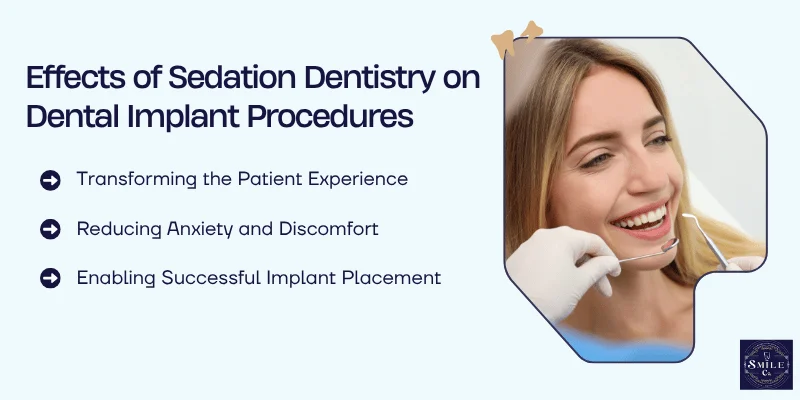
Transforming the Patient Experience
Sedation dentistry transforms your dental implant surgery from a stressful event into a manageable procedure. You remain conscious with most sedation options, but you feel deeply relaxed throughout the treatment.
Your dentist can choose from several sedation methods based on your needs. Nitrous oxide provides mild relaxation for simple cases. Oral sedation offers deeper calm for longer procedures.
IV sedation gives your dentist precise control over your comfort level during complex surgeries.
The personalized approach means your dental team considers your anxiety levels and medical history. They adjust the sedation to match your specific situation, creating a tailored experience that addresses your concerns.
Reducing Anxiety and Discomfort
Dental anxiety and dental phobia affect many people seeking dental implant surgery. Sedation for dental implants directly addresses these fears by calming your nervous system before the procedure starts.
You feel less aware of sounds, sensations, and time passing during surgery. This reduced awareness prevents the buildup of stress that often occurs during dental procedures.
Your body stays relaxed, which prevents tension-related discomfort.
Pain perception decreases significantly under sedation. While local anesthesia blocks pain signals, sedation reduces your awareness of pressure and movement.
You experience minimal discomfort during the surgery and often have little memory of the procedure afterward.
Enabling Successful Implant Placement
Your cooperation during implant surgery directly affects the outcome. Sedation keeps you still and calm, allowing your surgeon to work with greater precision.
Involuntary movements and anxiety-related muscle tension disappear under sedation.
Your dentist can complete complex procedures more efficiently when you’re relaxed. They spend less time managing your anxiety and more time focusing on accurate implant placement.
This efficiency benefits your restored smile by ensuring optimal positioning of each implant.
Sedation for implant surgery also allows your surgeon to perform multiple implant placements in one visit. You avoid the stress of scheduling several appointments, and your treatment timeline shortens significantly.
Complete Your Patient Form Before Your Sedation Consultation in Greenville South Carolina
Types of Sedation Techniques for Implant Procedures
Dental implant procedures offer multiple sedation options ranging from mild relaxation with nitrous oxide to complete unconsciousness with general anesthesia.
Your dentist will recommend the best choice based on your anxiety level, the complexity of your surgery, and your medical history.
Nitrous Oxide and Laughing Gas
Nitrous oxide, commonly called laughing gas, is the mildest form of sedation available for dental implants. You breathe in the gas through a small mask placed over your nose, and within minutes you’ll feel relaxed and calm.
The effects wear off quickly once the mask is removed. This means you can drive yourself home after your appointment.
Laughing gas works well for patients with mild anxiety who need simple implant placement. You stay awake and aware during the entire procedure while local anesthesia numbs the surgical area.
The main advantage is that nitrous oxide lets you return to your normal activities immediately after treatment. However, it may not provide enough relaxation for complex surgeries or if you have severe dental anxiety.
Oral Sedation and When It’s Used
Oral sedation involves taking a prescribed pill before your implant appointment. You’ll take the medication about an hour before your procedure, and it helps you feel drowsy and relaxed throughout the surgery.
This type of conscious sedation keeps you awake but deeply relaxed. Many patients don’t remember much about the procedure afterward.
Oral sedation works best for:
- Patients with moderate anxiety
- Single or multiple implant placements
- People who prefer not to have IV needles
You’ll need someone to drive you to and from your appointment since the effects can last several hours. The medication stays in your system longer than nitrous oxide, so plan to rest at home for the remainder of the day.
IV Sedation and Intravenous Medications
IV sedation is often the preferred method for dental implant procedures because it provides precise control over your sedation level.
Your dentist administers medications like midazolam or propofol directly into your bloodstream through a small needle in your arm or hand.
This intravenous sedation puts you in a deeply relaxed state where you may drift in and out of sleep. You can still respond to instructions, but most patients have little to no memory of the surgery.
Your vital signs are monitored throughout the entire procedure. The dentist can adjust your sedation level instantly if needed.
IV sedation creates a relaxed and pain-free experience while allowing you to breathe on your own. Recovery from IV sedation takes a few hours, and you must arrange for someone to drive you home and stay with you for the rest of the day.
General Anesthesia for Complex Cases
General anesthesia puts you completely unconscious during your implant surgery. You won’t be aware of anything happening and will have no memory of the procedure.
This sedation option is typically reserved for extensive implant work, such as full mouth reconstructions or bone grafting procedures.
Deep sedation is preferred for full mouth dental implants because these surgeries take several hours to complete.
An anesthesiologist or nurse anesthetist administers and monitors your anesthesia throughout the surgery. They control your breathing with a tube, and all your vital signs are closely watched.
General anesthesia requires more preparation than other sedation types. You’ll need to avoid eating or drinking for several hours before your appointment.
Recovery takes longer too, and you may feel groggy or nauseous for the rest of the day.
Start Your Comfortable Implant Journey Today
The Recovery Process After Implant Surgery With Sedation
The hours and days following implant surgery involve careful monitoring and specific steps to ensure your body heals properly.
Sedation dentistry affects how you experience this recovery period, from the immediate effects you’ll notice to how your body manages pain and stress during osseointegration.
Immediate Effects and Monitoring
After your implant placement, you’ll spend time in a recovery area where dental professionals monitor your vital signs. The type of sedation you received determines how long this monitoring lasts.
If you had nitrous oxide, you’ll feel alert within minutes. Oral sedation takes longer to wear off, usually one to two hours. IV sedation requires the most recovery time, and you’ll need someone to drive you home.
Your dental team checks your blood pressure, heart rate, and oxygen levels during this time. They watch for any unusual reactions to the sedation or the implant surgery itself.
You might feel drowsy, dizzy, or slightly confused as the medication leaves your system.
Common immediate effects include:
- Grogginess lasting 2-4 hours
- Mild nausea in some patients
- Dry mouth or thirst
- Temporary memory gaps about the procedure
Pain Management and Comfort
Sedation minimizes pain perception during and after your dental implants procedure. You’ll receive specific pain medication instructions before leaving the office.
Most patients take prescription pain relievers for the first 24-48 hours. After that, over-the-counter medications usually work well.
The sedation helps because your body stays relaxed during the procedure, which means less tissue trauma and swelling.
Ice packs reduce swelling during the first 24 hours. Apply them for 15 minutes on, then 15 minutes off. Switch to warm compresses after the first day to promote healing.
Your jawbone needs time to fuse with the dental implants through osseointegration, so managing discomfort helps this process.
Avoid hard foods for several days. Stick to soft foods like yogurt, smoothies, and mashed potatoes. If you had bone grafting or a sinus lift along with your implant placement, your recovery guidelines will be more specific.
Minimizing Stress for Faster Healing
Sedation accelerates recovery by relieving stress during and after dental procedures. Your body heals better when you’re calm and relaxed.
Stress hormones can slow down healing and increase inflammation around your dental implants. The calming effects of sedation dentistry continue to benefit you even after the medication wears off.
You’ll likely feel less anxious about follow-up appointments too.
Rest is essential for the first 24-48 hours. Avoid strenuous exercise for at least three days. Your body directs energy toward healing the implant surgery site when you’re relaxed and resting.
Keep your head elevated while sleeping to reduce swelling. Take prescribed antibiotics exactly as directed to prevent infection.
The combination of proper rest and reduced anxiety creates ideal conditions for successful osseointegration to occur over the coming weeks.
Personalizing Sedation and Ensuring Patient Safety
Safe sedation starts with understanding your unique health needs and matching them to the right type of anesthesia.
Your medical history and the complexity of your implant procedure work together to guide which sedation approach protects you best.
Patient Screening and Medical History
Your dentist needs a complete picture of your health before choosing a sedation plan. This includes current medications, allergies, and any heart or lung conditions.
Patient screening catches potential risks early. If you have cardiovascular disease, your dentist may avoid certain local anesthetics that contain adrenaline. These vasoconstrictors can affect your heart rate and blood pressure.
Your age matters too. Older patients often process medications differently and may have multiple health conditions. The screening process helps your dental team adjust drug doses and monitor you more closely during surgery.
Be honest about anxiety levels and past experiences with sedation. Some patients need deeper sedation because of severe dental fear. Others do fine with minimal sedation and local anesthesia alone.
Choosing the Right Sedation for Each Case
Your sedation level depends on how long your surgery will take and how anxious you feel. Simple single-implant procedures might only need local numbing. Complex full-mouth reconstructions often require deeper sedation.
Common sedation options include:
- Minimal sedation – You stay awake but relaxed
- Moderate sedation – You may not remember the procedure
- Deep sedation – You’re on the edge of consciousness
- General anesthesia – You’re completely unconscious
The type of local anesthetic also gets personalized. If you have heart problems, your dentist might choose mepivacaine without vasoconstrictors instead of lidocaine with adrenaline.
For longer procedures, they might use ropivacaine or bupivacaine because these last longer.
Your dental team considers drug interactions too. Some sedatives don’t mix well with medications you already take.
Sedation dentistry safety requires monitoring your vital signs throughout the entire procedure to catch any problems quickly.
Practical Tips for a Smooth Recovery After Sedation and Implants
Getting ready before your procedure and knowing how to care for yourself afterward can make a big difference in how quickly you heal.
The right steps help you manage discomfort and protect your investment in your restored smile.

Pre-Surgery Preparation
Planning ahead makes your recovery easier and safer. Arrange for someone to drive you home after surgery since sedation affects your ability to operate a vehicle for several hours.
This person should stay with you for at least the first few hours after you get home.
Stock your kitchen with soft foods before your appointment. Good choices include yogurt, applesauce, mashed potatoes, smoothies, soup, and scrambled eggs. Avoid shopping when you’re uncomfortable.
Set up a comfortable recovery space at home with extra pillows to keep your head elevated. Have ice packs ready in your freezer and fill your prescriptions before surgery day.
Keep your phone charger, medications, and water within easy reach of where you’ll be resting.
Tell your dentist about all medications and supplements you take. Some products can affect bleeding or interact with sedation medications.
Post-Operative Care and Aftereffects
Sedation during implant surgery can leave you feeling drowsy or groggy for several hours. Avoid making important decisions, signing documents, or using heavy machinery for at least 24 hours after your procedure.
Apply ice packs to your face for 15 minutes on and 15 minutes off during the first 24 hours to reduce swelling. After the first day, switch to warm compresses if your dentist recommends it.
Take all prescribed medications exactly as directed. Pain medication works best when taken before discomfort becomes severe. Rinse your mouth gently with warm salt water starting 24 hours after surgery to keep the area clean.
Keep your head elevated even while sleeping for the first few nights. This position reduces swelling and bleeding. Avoid touching the surgical site with your fingers or tongue.
What to Expect in the First Week
Most people recover within 7 to 10 days according to recovery guidelines for dental implants. You’ll likely experience mild discomfort, swelling, and minor bleeding during the first few days.
These symptoms should gradually improve.
Stick to soft foods for at least the first week. Gradually add firmer foods as you feel comfortable. Avoid hard, crunchy, spicy, or very hot foods that could irritate the implant site or damage the healing tissue.
Skip strenuous exercise and heavy lifting for at least three days after surgery. Physical activity increases blood pressure and can cause bleeding or swelling. Light walking is fine and can actually help your recovery.
Don’t smoke or use straws during recovery. The sucking motion can dislodge blood clots and slow healing.
Watch for signs of infection like fever, excessive pain, or unusual discharge, and call your dentist immediately if these occur.
Frequently Asked Questions
Sedation dentistry offers comfort during implant surgery while supporting faster healing through stress reduction and pain management.
Understanding the different sedation options and recovery expectations helps you make informed decisions about your dental care.
Can you describe the benefits of sedation dentistry during dental implant recovery?
Sedation dentistry reduces stress and anxiety, which allows your body to focus its energy on healing. When you’re relaxed, your body produces fewer stress hormones that can slow down the recovery process.
Sedation also minimizes pain perception during and after your procedure. This means you’ll experience less discomfort as your implants integrate with your jawbone.
The calming effect of sedation helps improve patient cooperation during surgery. This allows your dentist to work more efficiently and precisely, which contributes to better surgical outcomes and smoother recovery.
What types of sedation are commonly used in implant surgery, and how do they impact the healing process?
Nitrous oxide, also called laughing gas, provides mild relaxation for shorter procedures. It wears off quickly and allows you to drive yourself home after your appointment.
Oral sedation involves taking a prescription medication before your procedure. This option creates a deeper state of relaxation and works well for longer treatments.
IV sedation delivers medication through a vein and offers controlled sedation levels. General anesthesia induces a deep sleep and ensures you have no awareness of the procedure, which is suitable for extensive surgeries or high anxiety.
Each sedation type helps your body stay relaxed, which promotes natural healing processes. Less stress during surgery means less inflammation and faster recovery afterward.
How does sedation dentistry improve the overall comfort for patients recovering from implant surgery?
Sedation creates a calm atmosphere that eases dental anxiety from the start. You’ll feel more relaxed throughout your entire surgical experience, which makes the process less intimidating.
The reduced anxiety and discomfort transforms your dental experience into one marked by relaxation and peace of mind. This emotional comfort is just as important as physical comfort during recovery.
When you’re not fighting anxiety, your body can dedicate more resources to healing. The mental relief you experience contributes to a more positive recovery journey overall.
Are there any specific post-operative care instructions when sedation is used for dental implant surgery?
You’ll need someone to drive you home after your procedure if you receive oral sedation, IV sedation, or general anesthesia. Plan to have a responsible adult stay with you for several hours after your appointment.
Avoid making important decisions or operating machinery for at least 24 hours after sedation. The medication can affect your judgment and reaction time even after you feel alert.
Follow your dentist’s instructions about eating and drinking after sedation. Start with soft foods and stay hydrated, but wait until the numbness wears off to prevent accidentally biting your cheek or tongue.
Rest is essential after sedated dental procedures. Give yourself permission to take it easy for the remainder of the day and avoid strenuous activities.
How long does recovery typically take when sedation is used during dental implant procedures?
The immediate effects of sedation usually wear off within a few hours to a full day. However, you might feel drowsy or slightly foggy for up to 24 hours after your procedure.
Sedation accelerates the overall healing process by reducing stress factors that can slow down natural recovery. Your implant site typically heals faster when your body isn’t dealing with excess anxiety and tension.
The complete integration of dental implants with your jawbone takes several months regardless of sedation type. But the initial healing phase tends to be more comfortable and manageable when sedation is used during surgery.
Can sedation dentistry reduce the likelihood of complications after dental implant surgery?
Sedation helps reduce complications by keeping you calm and still during surgery. When you’re relaxed, your dentist can work with greater precision and accuracy.
Lower stress levels mean less inflammation in your body. Reduced inflammation decreases your risk of infection and other healing complications after surgery.
Studies from the American Dental Association confirm that sedation dentistry significantly improves patient comfort and satisfaction. Better cooperation during surgery and reduced anxiety afterward both contribute to fewer post-operative issues.
Your dental team carefully screens your medical history before administering sedation. This thorough preparation ensures the chosen sedation method aligns with your health needs and promotes a safe experience.