

Being told you are “not a candidate” for dental implants can feel like a door closing.
If the bone at the back of your upper jaw has thinned out, or your sinus has expanded downward after years of missing teeth, a standard implant plan may not work the way it would for someone with healthy bone.
That does not always mean fixed teeth are off the table.
Pterygoid implants for upper jaw bone loss reach past thin, resorbed bone in the back of the upper jaw and anchor into a denser bony area, which may make a fixed restoration possible without posterior grafting in some cases.
However, they are not right for everyone, and they are not a shortcut. Placement takes specific training, careful 3D planning, and honest screening.
What follows should help you ask better questions at your next consultation and understand whether this path is worth exploring for your own anatomy.
Key Takeaways
- Bone loss in the back of the upper jaw and a low-hanging sinus are the two most common reasons regular implants get ruled out.
- Pterygoid implants anchor in dense bone behind the upper jaw, which can support the back of a full-arch bridge without posterior grafting.
- A cone beam CT scan and an experienced implant surgeon determine whether this approach fits your anatomy and health history.
Why Upper Jaw Bone Loss Can Rule Out Regular Implants
Regular implants need a certain amount of bone height and width to hold steady, and the back of the upper jaw is the area most likely to fall short.
Two things work against you there: bone that shrinks after teeth are lost, and a sinus cavity that expands into the space left behind.
How Missing Teeth, Gum Disease, and Dentures Affect Bone Support
Bone in your jaw stays healthy partly because tooth roots stimulate it every time you chew. Once a tooth is gone, that stimulation stops and the bone slowly shrinks.
Gum disease speeds this up by destroying bone support around the teeth before they are even lost.
Long-term upper denture wear adds pressure on the ridge without replacing the missing stimulation, so jawbone loss after tooth extraction keeps quietly progressing under the plate.
None of this is your fault. It is simply what bone does when the roots that used to hold it are no longer there.
Why the Maxillary Sinus Limits Implant Placement in the Back of the Mouth
The maxillary sinus is an air-filled space that sits directly above your upper molars. When those teeth are removed, the sinus tends to expand downward into space, a process called pneumatization.
The result is a thin shell of bone between your gum and the sinus floor, sometimes only a few millimeters thick. Placing a standard implant there risks pushing into the sinus.
When Conventional Implants May Not Have Enough Bone Height
Conventional implants are placed vertically into the ridge, so they depend entirely on the bone directly under the missing tooth. When that bone is short, an implant either will not fit or will not have enough grip to stay stable while it heals.
Your dentist measures this on a 3D scan before recommending anything.
Insufficient posterior bone height is one of the main reasons not to get dental implants using the standard vertical approach, and it is usually the point where sinus grafting or an angled technique enters the conversation.
How Pterygoid Implants Support Fixed Teeth Without Posterior Grafting
Pterygoid implants work by aiming the implant toward bone that is already dense, past the area where bone has been lost.
Because they engage several layers of hard bone at once, they can hold a fixed bridge at the back of the arch where a vertical implant would have nothing to grip.

Where the Pterygoid Region and Pterygoid Plates Are Located
Picture the very back corner of your upper jaw, behind where a wisdom tooth would sit.
Just behind and above that spot is the pterygomaxillary region, where the upper jaw meets the pterygoid process of the sphenoid bone at the base of the skull.
This angled path is designed to use posterior bone while avoiding the need to place a conventional implant directly into the limited bone beneath the sinus.
Why Dense Cortical Bone Can Improve Primary Stability
Cortical bone is the hard outer layer of bone, and the pterygoid area has plenty of it.
Because of the angle and depth, the implant often passes through the tuberosity, the pterygoid process of the palatine bone, and the pterygoid plates of the sphenoid.
That multi-layer grip is what gives these implants strong primary stability, meaning they feel solid the day they are placed. This stability holds up even when bone quality elsewhere in the arch is poor.
How Posterior Anchoring Supports a Full-Arch Bridge
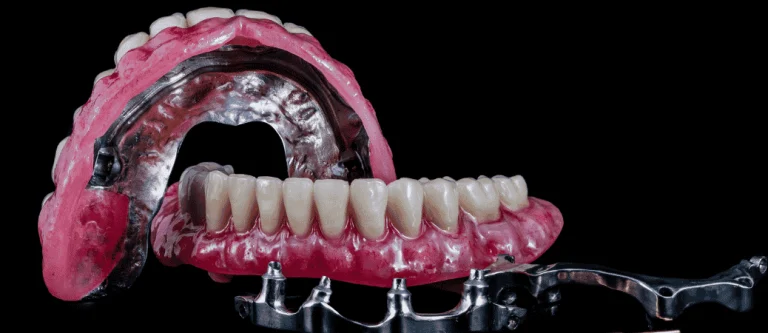
A full-arch bridge needs support at both ends, the same way a shelf needs brackets at each side. Front implants alone leave the back of the bridge cantilevered, which limits how far back you can safely place chewing teeth.
Adding pterygoid dental implants at the rear gives the prosthesis a back anchor point. That often means more molar contact, better chewing balance, and less strain on the front implants.
Who May Be a Candidate for Pterygoid Implant Treatment?
Good candidates are adults with an atrophic maxilla who want fixed teeth, still have usable bone in the pterygoid region, and are healthy enough for a longer surgical appointment.
Confirming all of that takes imaging and a careful medical review, never a guess based on symptoms alone.
What a Cone Beam CT Scan Reveals About Your Anatomy
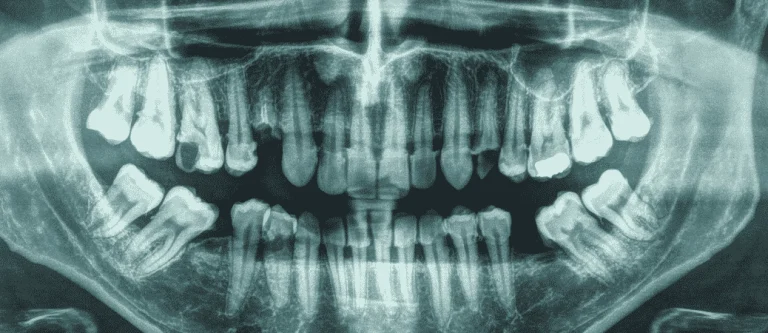
A cone beam CT scan builds a 3D map of your jaw, sinuses, and the pterygoid region. It shows the width, height, and density of the bone your surgeon would be aiming for.
It also shows what to avoid. The pterygoid area sits near the pterygoid venous plexus and branches of the maxillary artery, so the scan guides both the entry point and the trajectory.
That data feeds into digital dental implant planning, where the angle and depth are mapped out before anyone picks up an instrument. Some cases also use a surgical guide made from that plan.
Health Factors That Can Affect Eligibility and Healing
Active infection in the mouth needs to clear before any implant goes in. Chronic sinusitis, sinus cysts, or previous sinus surgery that changed the local anatomy call for closer evaluation, though they do not automatically disqualify you.
Uncontrolled diabetes, bleeding or clotting disorders, and medications that affect bone metabolism all influence both healing and surgical risk. Smoking and inconsistent oral hygiene raise the odds of implantitis later on.
Bring your full medication list to the consultation. It is one of the most useful things you can do to speed up the planning conversation.
Why an Experienced Implant Surgeon Matters
Pterygoid placement is a specialist technique, and it does not carry over automatically from routine implant surgery. Outcomes track closely with the surgeon’s specific experience and the quality of the pre-surgical plan.
It is completely reasonable to ask how many of these an implantologist or oral and maxillofacial surgeon has placed. Adding that to your list of questions to ask an implant dentist is a fair, ordinary request.
What Happens During Surgery, Healing, and Restoration?
Procedure time varies based on the number of implants, your anatomy, and the complexity of the full treatment plan.
Planning the Angle and Depth of Pterygoid Implant Placement
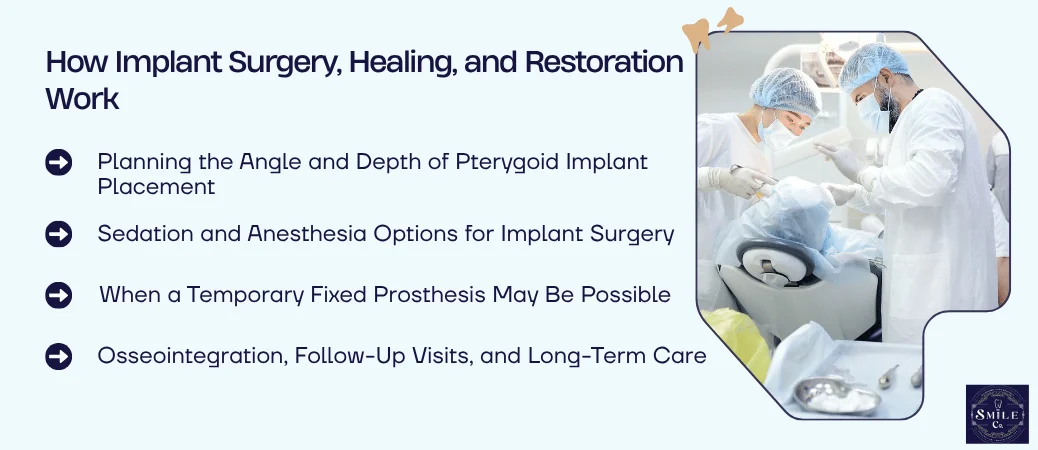
The implant is placed at a carefully planned angle toward dense posterior bone. Your surgeon maps the trajectory using CBCT imaging before surgery to determine the appropriate position, depth, and angle for your anatomy.
One study of medium-term outcomes found a mesio-distal inclination around 58 degrees produced an excellent survival rate.
Your surgeon sets that trajectory on the CBCT beforehand. During surgery, the goal is matching the plan closely enough that the implant tip lands in the dense bone identified on the scan.
Sedation and Anesthesia Options for Implant Surgery
Anesthesia and sedation options depend on the complexity of the procedure, your health history, and your comfort needs.
Talk through the choices honestly. Comfort during a complex posterior implant procedure is worth planning for, and reviewing how to prepare for dental implant surgery ahead of time can make the day smoother.
When a Temporary Fixed Prosthesis May Be Possible
Because pterygoid implants often achieve strong initial stability, many patients leave with a temporary fixed bridge attached the same day.
Whether that happens depends on how solid the implants feel at placement, not on a promise made beforehand.
The temporary is intentionally lighter than your final prosthesis. Reading about temporary teeth during implant treatment helps set expectations for how they look and what you can chew.
Osseointegration, Follow-Up Visits, and Long-Term Care
Osseointegration is the process of bone fusing to the implant surface, and it takes a few months. During that window you eat softer foods and keep the area clean.
Some bleeding and swelling after surgery is normal, and the pterygoid region has a rich blood supply your surgeon manages during placement. Report anything unusual, especially sinus pressure or drainage.
After the final bridge goes on, maintenance is ongoing: daily cleaning under the prosthesis with a water flosser or interdental brushes, plus regular hygiene visits.
Poor plaque control around the implant is the main driver of implantitis and one of the recognized early dental implant failure causes.
Pterygoid Implants vs. Grafting, Zygomatic Implants, and All-on-4
These four approaches solve overlapping problems in different ways, and plenty of treatment plans combine them.
The right choice depends on how much bone you have, where it is missing, and whether you want to avoid a graft healing period.
| Pterygoid implants | Sinus lift + graft | Zygomatic implants | All-on-4 | |
| Anchors into | Pterygoid plates behind upper jaw | Rebuilt sinus floor bone | Cheekbone | Front upper jaw bone |
| Grafting needed | No, in most cases | Yes | No | No |
| Typical wait before implants | None | 4 to 9 months | None | None |
| Bone loss severity | Severe posterior loss | Moderate posterior loss | Severe widespread loss | Mild to moderate |
| Surgical complexity | High | Moderate | Highest | Moderate |
When a Sinus Lift and Bone Grafting May Still Be the Better Choice
Grafting rebuilds your own bone volume, which is valuable if you want individual implants in specific molar positions instead of a full-arch bridge.
Materials include your own bone (autograft), donor bone (allograft), or animal-derived bone (xenograft).
The tradeoff is time. Sinus grafting typically requires four to nine months of healing before implants can be placed.
How Zygomatic Implants Use the Cheekbone in More Severe Cases
Zygomatic implants are very long implants anchored in the zygomatic bone, your cheekbone, bypassing the upper jaw almost entirely.
They are used when bone loss is severe across the whole upper arch, including the front.
Pterygoid implants handle the back corners; zygomatic ones handle widespread loss. Some full-arch cases use both, and zygomatic dental implants involve a more complex surgery with their own risk profile.
Why an All-on-4 or All-on-X Plan May Need Additional Posterior Support
A standard All-on-4 dental implants plan places four implants in the front and mid-arch, with the two rear ones tilted to gain length. When posterior bone is severely resorbed, that tilt alone may not reach far enough back.
Adding pterygoid implants extends support toward the molars. In All-on-X dental implants planning, that extra posterior anchor lets the bridge carry more chewing teeth with less cantilever.
The Right Surgical Plan Can Restore Fixed Teeth Despite Bone Loss

Severe upper jaw bone loss narrows your options, but it rarely closes them completely.
Pterygoid implants give surgeons a way to reach solid bone behind the sinus, which can make a fixed restoration realistic for people who were told grafting was their only path.
The honest part is that candidacy comes down to your specific anatomy and health, visible only on a CBCT scan and reviewed by a surgeon who places these regularly.
Some people are better served by a sinus lift, some by zygomatic anchorage, some by a combination.
If you have been turned away before, book a consultation with The Smile Company and bring any prior scans, treatment plans, and your medication list.
That evaluation, rather than choosing a technique on your own, is what determines which dental implants approach fits your case.
Frequently Asked Questions
Can I get dental implants if I have severe upper jaw bone loss?
Often yes, though the technique will likely differ from standard implant placement.
Angled approaches such as pterygoid implants, or cheekbone-anchored zygomatic implants, are designed for exactly this situation, and a 3D scan determines which one your anatomy can support.
Do pterygoid implants eliminate the need for a sinus lift or bone graft?
In many posterior upper jaw cases, yes, because the implant bypasses the sinus and anchors in bone that has not resorbed. Some patients still need grafting elsewhere in the arch, so this is decided case by case after imaging.
Are pterygoid implants used with All-on-4 treatment?
Yes, they are frequently added to full-arch plans when the standard tilted rear implants cannot reach far enough back. The pterygoid implants anchor the back of the bridge while front implants support the anterior section.
What is the difference between pterygoid and zygomatic implants?
Pterygoid implants anchor in the dense bone behind the upper jaw, while zygomatic implants anchor in the cheekbone.
Pterygoid implants address posterior bone loss specifically; zygomatic implants are used when bone loss affects the entire upper arch.
How long do pterygoid implants take to heal?
Osseointegration generally takes a few months, similar to conventional implants.
Many patients receive a temporary fixed bridge much sooner when the implants achieve enough initial stability, with the final prosthesis fitted after healing is confirmed.
Are pterygoid implants harder to clean than regular implants?
They sit farther back, so reaching them takes a bit more effort with a water flosser or angled interdental brush. Your hygienist will show you the specific technique for your bridge, and consistent daily cleaning is what keeps the surrounding tissue healthy.