

When you lose teeth and plan for dental implants, you still need something to fill the gap while your mouth heals. You can choose removable temporary dentures or implant-supported temporaries that attach to implants.
Temporary dentures rest on your gums and come out for cleaning, while implant-supported temporaries connect to implants and stay more secure in your mouth.
That one difference affects how you eat, speak, clean your teeth, and feel each day.
If you want comfort, stability, and simple care during healing, you need to know how each option works. The right choice depends on your treatment plan, budget, and how much stability you want while you wait for your final teeth.
Key Takeaways
- Removable temporaries sit on your gums, while implant-supported options attach to implants for added stability.
- Each option has clear benefits and limits in comfort, function, and cost.
- Proper care and follow-up visits help protect your healing implants and gums.
Understanding Temporary Dentures and Implant-Supported Temporaries
When you replace missing teeth, you often need a short-term solution while your mouth heals. You may choose removable temporary dentures or fixed teeth that attach to dental implants, depending on your treatment plan and bone health.
What Are Temporary Dentures?
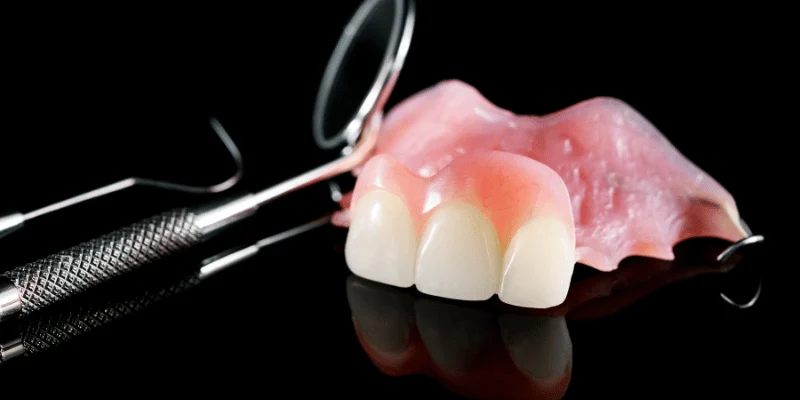
Temporary dentures are removable teeth that fill gaps after extractions or during implant treatment. Dentists also call them interim or transitional dentures.
You wear them while your gums heal and while your dental implants bond with your jawbone.
These dentures usually sit on top of your gums. They do not attach to implants. You take them out to clean them and to let your tissues rest.
Many dentists explain that temporary dentures protect healing tissue and help you keep basic function.
Key points:
- Removable
- Rest on gums
- Used for several weeks to months
- Adjusted often as swelling goes down
Your dentist may reline or reshape them as your gums change.
Defining Implant-Supported Temporaries
Implant-supported temporaries connect directly to dental implants. Instead of resting only on your gums, they attach to implant posts placed in your jaw.
This design gives you more stability. You feel less movement when you speak or chew soft foods.
Some systems allow you to receive fixed teeth soon after surgery. You can learn more about how this works in All-on-4, where a temporary bridge attaches to several implants.
Implant-supported temporaries are:
- Secured to implants
- More stable than removable temporary dentures
- Often used in full-arch cases
Your dentist will decide if your bone strength and health support this option. Not every patient qualifies for same-day fixed teeth.
Immediate Dentures and Healing Phases
Immediate dentures are a type of temporary denture placed the same day your teeth are removed. You do not leave the office without teeth.
They help control swelling and protect extraction sites. However, your gums shrink as they heal, so you will need adjustments.
Healing after dental implants happens in stages. The key stage is osseointegration, when the implant fuses with your bone. This process can take three to six months.
During this time, you may wear removable immediate dentures or implant-supported temporaries. A dentist monitors your progress and checks that your implants stay stable.
If healing goes well, you move to permanent implant-supported dentures once the bone fully supports the implants.
Key Differences Between Temporary Dentures and Implant-Supported Temporaries
Temporary dentures and implant-supported temporaries both replace missing teeth during healing, but they differ in stability, materials, and how they fit into your treatment plan.
Understanding these differences helps you know what to expect during full mouth reconstruction.

Purpose and Function in Oral Rehabilitation
You use temporary dentures as a short-term solution after tooth removal or implant surgery. They rest on your gums and protect the surgical area while your mouth heals.
Many dentists place them right away so you can speak and eat soft foods during recovery.
Temporary dentures mainly protect tissue and restore appearance. As explained in this guide on the difference between temporary and permanent dentures, they act as an interim step before your final restoration.
In contrast, implant-supported temporaries attach to dental implants. Your dentist secures them to implant posts, which gives you more stability.
They also help guide gum shape and support proper bite alignment while osseointegration takes place.
Because they connect to implants, these temporaries play a more active role in long-term oral rehabilitation. They prepare your mouth for permanent dentures or a fixed implant bridge.
Material and Construction
Temporary dentures often use acrylic resin. Labs design them before or right after extractions, so they may feel thicker or less precise. As your gums shrink during healing, you may need adjustments or relines.
Implant-supported temporaries also use acrylic in many cases. For example, temporary All-on-4 restorations often use acrylic, while permanent versions use stronger materials like zirconia or ceramic.
The key difference is support. Traditional temporary dentures rely on gum contact. Implant-supported temporaries anchor to metal implants embedded in bone. This support reduces movement and often improves comfort.
Duration of Use and Treatment Timeline
You usually wear temporary dentures for several months. During this time, your gums and bone reshape after extractions or implant placement.
Once healing finishes, your dentist replaces them with permanent dentures designed for a precise fit.
Implant-supported temporaries stay in place while osseointegration occurs. This process allows the implant to fuse with your jawbone. It often takes three to six months, depending on your health and the implant site.
After osseointegration, your dentist removes the temporary restoration and places your final implant-supported dentures or fixed bridge.
Because the implants already sit in stable bone, the permanent restoration fits more securely and lasts much longer than a removable temporary denture.
Types of Temporary Restorations During Dental Implant Treatment
You have several ways to replace missing teeth while your implant heals. Each option affects how you eat, speak, clean your teeth, and manage daily life during the 3 to 6 month healing period.
Removable Partial Dentures and Flippers
Removable partial dentures and flipper dentures are common short-term solutions. A flipper is a light acrylic appliance that holds one or more temporary teeth and rests against your gums.
Dentists often use it after an extraction or during early implant healing.
You can take it out at night and clean it with a denture brush. This makes it easy to maintain, but it can feel bulky at first.
Key features:
- Low cost compared to fixed options
- Quick to make, often within a few days
- Easy to adjust if your gums change shape
Flippers work best when you replace one or two teeth, especially in the front. However, they may move when you eat or speak. You should avoid sticky or hard foods to prevent cracks.
Traditional removable partial dentures can replace several teeth at once. They often use small metal clasps for added grip, which can make them more stable than a simple flipper.
Essix Retainers and Clear Temporary Teeth
An Essix retainer is a thin, clear plastic tray that fits over your teeth. It holds a built-in replacement tooth in the empty space. Many patients choose this option for front teeth because it looks natural.
The clear material blends with your smile. It does not use metal clasps, so it stays discreet.
What you should know:
- You must remove it before eating or drinking anything except water
- Heat can warp the plastic
- It requires regular cleaning to prevent odor and buildup
Some practices describe these as temporary tooth options while waiting for a dental implant that balance appearance and comfort.
Essix retainers feel thinner than flipper dentures. However, because they cover several teeth, they may trap saliva and need frequent rinsing.
Snap-On and Overdentures Options
Snap-on dentures and overdentures attach to implants instead of resting only on your gums. Your dentist places special connectors on the implants, and the denture “snaps” into place.
This design gives you more stability than regular removable partial dentures.
Benefits include:
- Better chewing strength
- Less slipping while talking
- More secure fit than traditional dentures
Some offices use digital planning to place immediate temporary prostheses in full-arch cases.
You still remove snap-on dentures for cleaning. Overdentures can cover a full arch and rest partly on implants and partly on gum tissue, which helps protect healing areas while improving comfort.
These options work well if you replace many teeth or an entire arch and want more support during healing.
Benefits and Limitations of Each Temporary Solution
Your temporary teeth do more than fill a gap. They affect how you look, how your gums heal, and how well you can eat and speak each day.
Aesthetics and Comfort Levels
Temporary dentures replace several missing teeth at once. They restore your smile right after extractions, which helps you avoid walking around without teeth.
Many people choose them because they are ready quickly and improve appearance right away.
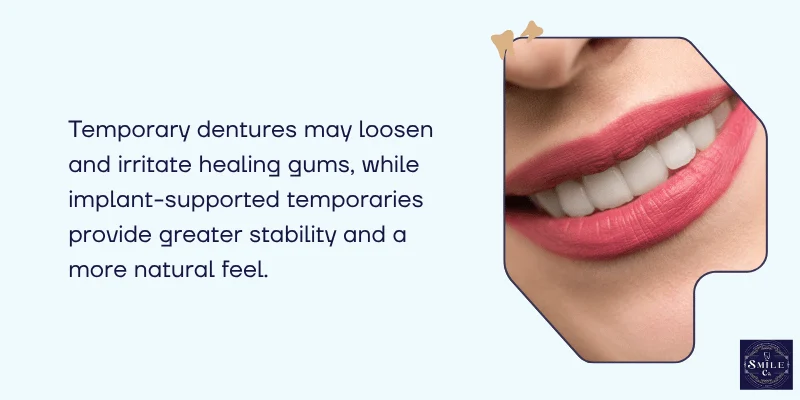
However, temporary dentures rest directly on healing gums. As swelling goes down, the fit can loosen. You may feel sore spots or rubbing, especially during the first few weeks.
An implant-supported temporary tooth attaches to implants or connects over healing abutments. Because it does not press on the gums the same way, it often feels more stable. It usually looks more natural at the gum line.
Still, you may feel mild pressure around each healing abutment during early healing. Your dentist may need to adjust the bite to keep you comfortable.
Support for Healing Gums and Implants
Temporary dentures can act as a protective cover after extractions. They help shield the gum tissue while it closes. In some cases, they also shape the gum as it heals.
But dentures place pressure on the surgical site. If they fit too tightly, they can irritate tissue and slow healing. Your dentist may ask you to limit wear time during the first few days.
Implant-supported temporaries work differently. A temporary tooth attached to implants or placed over a healing abutment avoids direct pressure on the gums. This helps protect the implant while the bone bonds to it.
Healing abutments guide the gum tissue to form a natural collar around the future crown. This step supports a better long-term fit. You must still follow strict cleaning steps to prevent infection around the implants.
Impact on Everyday Functionality
Temporary dentures let you chew soft foods and speak more clearly than having no teeth. They are removable, so you clean them outside your mouth. This makes hygiene simple but adds a daily routine.
You may need adhesive for better grip. Hard or sticky foods can cause movement, and your bite strength stays limited.
An implant-supported temporary tooth feels more secure. Because it anchors to implants, it does not shift during meals or conversations. You can often chew with more force compared to temporary dentures.
However, you still need to protect the implants during healing. Your dentist may limit very hard foods until the implants fully integrate.
Considerations and Best Practices for Care
You protect your results when you clean your temporary teeth the right way and follow clear food and hygiene rules. Good habits lower the risk of infection, damage, and delays before you move to permanent dentures.
Caring for Temporary Restorations
You need to clean both removable dentures and implant supported denture temporaries every day. Plaque can build up fast, especially after a recent tooth extraction.
For removable dentures:
- Take them out at night unless your dentist tells you not to.
- Brush them with a soft brush and non-abrasive cleaner.
- Soak them in a denture solution to reduce odor and bacteria.
Rinse your gums and gently brush your tongue and any natural teeth.
For implant-supported temporaries:
- Use a soft toothbrush around the implant posts.
- Clean under the temporary bridge with floss threaders or a water flosser.
- Avoid hard or sticky foods that can loosen screws or crack acrylic teeth.
Choose soft foods like eggs, fish, pasta, and yogurt during early healing. Chew on both sides to spread out pressure.
Potential Risks and Complications
Temporary restorations can shift, crack, or irritate your gums. Removable dentures may rub and cause sore spots, especially as your gums shrink after tooth extraction.
Call your dentist if you notice:
- Ongoing pain that lasts more than a few days
- Swelling, pus, or a bad taste
- A loose implant supported denture
- A broken or missing tooth on the temporary
Do not try to fix cracks with store glue. That can trap bacteria and harm the implant site.
Bone and gum tissue change shape as you heal. This can make your temporary feel loose. Your dentist may need to adjust the fit to protect the implants and keep pressure off healing areas.
Transitioning to Permanent Solutions
Your mouth needs time to heal before you receive permanent dentures or a final implant bridge. Implants often require several months to bond with bone.
During this time, your dentist checks:
- Implant stability
- Gum shape and contour
- Bite alignment
- Signs of infection
Temporary teeth also help shape your gums. This step supports a natural look once the final crown or implant supported denture is placed.
Keep all follow-up visits. Small changes in fit or bite can affect how your permanent dentures feel and function. Careful monitoring helps you move to your final restoration with fewer problems and better long-term comfort.
Frequently Asked Questions
You may wonder how these options differ in cost, comfort, and daily care. Clear answers help you choose what fits your health needs and budget.
What are the main differences between temporary dentures and permanent dentures?
Temporary dentures replace missing teeth while your gums heal or while you wait for implants. Dentists often make them from acrylic, and you remove them for cleaning.
Permanent dentures use stronger materials and aim to last for many years. They may rest on your gums or attach to implants for added support.
Temporary dentures focus on short-term use. Permanent dentures focus on long-term fit, strength, and function.
How do the costs of implant-supported temporaries compare to traditional permanent dentures?
Implant-supported temporaries usually cost more than traditional removable permanent dentures. You pay for the implant surgery, parts, and lab work.
Traditional permanent dentures often cost less upfront. However, they may need relines or replacements over time as your gums change shape.
Your total cost depends on how many teeth you replace and whether you need bone grafts or extra procedures.
Can temporary dentures serve as a long-term solution for missing teeth?
Temporary dentures can last several months and sometimes up to a year. Dentists design them for short-term healing, not for years of daily wear.
Over time, they may loosen, stain, or crack. If you wear them long term, you may face sore spots or gum irritation.
If you need a longer solution, talk with your dentist about permanent dentures or implants.
What are some common issues patients experience with temporary dentures?
You may notice movement when you talk or eat. This can happen because temporary dentures do not always fit as tightly as final restorations.
Sore spots and mild gum swelling are also common, especially in the first few weeks. Your dentist can adjust the denture to improve comfort.
Some people also struggle with chewing hard or sticky foods. Soft foods often feel easier during healing.
How do permanent dentures and implant-supported temporaries differ in terms of maintenance and care?
You remove most permanent dentures and clean them daily with a soft brush and denture cleanser. You should also clean your gums and tongue.
Implant-supported temporaries may stay fixed in place. You clean around them with special floss, small brushes, or a water flosser.
Both options require regular dental visits. Your dentist checks fit, gum health, and the condition of the denture or implant parts.
Are there any significant advantages of choosing implant-supported temporaries over other forms of dentures?
Implant-supported temporaries often feel more stable than removable dentures. They reduce movement when you chew or speak.
They also help protect the implant site during healing.
If you want added stability during healing, implant-supported temporaries may offer better support than traditional removable temporary dentures.