

Taking care of your smile does not stop once your implant is in place.
The best way to keep your dental implant healthy is to brush twice a day with a soft brush, floss gently around the crown, and rinse with an antimicrobial mouthwash.
This simple routine helps stop plaque from building up and keeps your gums strong.
You might think dental implant cleaning is the same as caring for natural teeth, but there are a few key differences you need to know.
Your implant does not have enamel, and the gum tissue around it needs gentle, careful attention to stay healthy. Learning how to clean dental implants the right way can help you avoid painful problems down the road.
Good oral hygiene habits protect your investment and keep your smile looking great for years to come. Whether you have a single implant or a full set, the right tools and daily habits make all the difference.
This guide will walk you through everything you need to know to keep your implants clean, healthy, and problem-free.
Key Takeaways
- Cleaning your implants daily with the right tools helps protect your gums and prevent infection.
- Your care routine may need to change based on the type of dental implant you have and whether you are still healing.
- Regular dental visits and watching for warning signs help catch problems early before they become serious.
Your Daily Implant Cleaning Routine
A good daily routine keeps plaque away from your implant and protects the gum tissue around it.
You’ll want to brush, clean between teeth, flush out food particles, and finish with a rinse. Each step plays its own role in keeping your implant clean and your gums healthy.
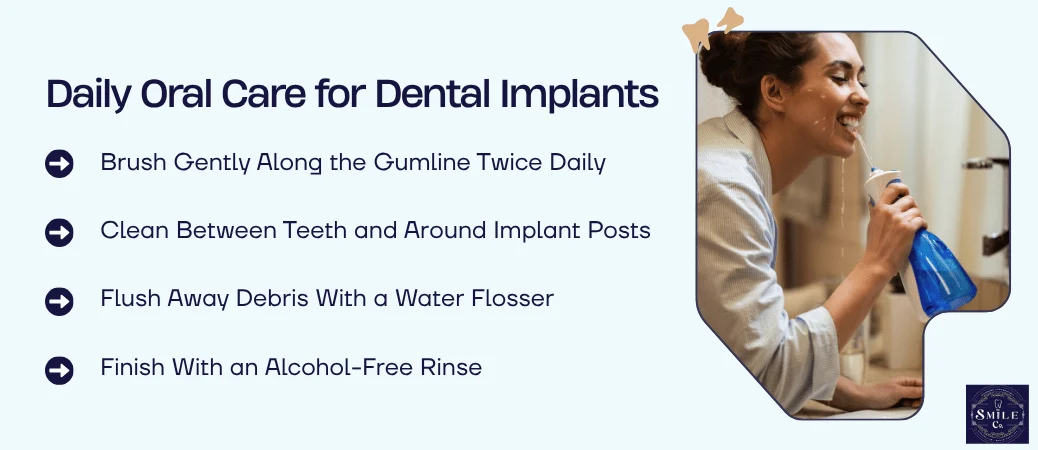
Brush Gently Along the Gumline Twice Daily
Start your routine with a soft-bristled toothbrush or an electric toothbrush. Brush in small circles right along the gumline where your implant meets your gum tissue.
Use a light touch. You don’t need to scrub hard to get your implant clean.
Pick a non-abrasive or low-abrasive toothpaste too. Rough or gritty toothpaste can scratch the surface of your crown over time.
Brush for about two minutes, twice a day. Morning and night works well for most people.
Pay extra attention to the back side of your implant. It’s easy to miss, but plaque builds up there just like anywhere else.
Clean Between Teeth and Around Implant Posts
Brushing alone won’t reach the tight spaces around your implant. That’s where flossing comes in.
Regular dental floss works for some people, but implant-specific floss is often a better choice. It’s designed to wrap around the implant post and clean areas a regular toothbrush can’t reach.
Interdental brushes are another good option. These small brushes slide between teeth and around implant posts to remove plaque and food debris.
Try this simple routine:
- Slide floss or an interdental brush gently between your implant and the neighboring tooth
- Curve it slightly around the base of the implant
- Move it up and down a few times before switching sides
Do this once a day, ideally before bed.
Flush Away Debris With a Water Flosser
A water flosser adds another layer of cleaning that string floss can miss. These devices use a steady stream of water to flush out food particles and loosen plaque around your implant.
A Waterpik is one popular brand, but many water flossers work well for implant care. Aim the tip along your gumline and around the base of your implant post.
Water flossers are especially helpful if you have a bridge, an All-on-4 restoration, or tight spaces that are hard to reach with floss. The water pressure gets into small gaps without putting stress on your implant.
Use your water flosser once a day, either before or after brushing. It works well as a follow-up step after regular flossing too.
Finish With an Alcohol-Free Rinse
End your routine with a rinse to cut down on bacteria in your mouth. Choose an alcohol-free mouthwash since alcohol-based rinses can dry out and irritate your gum tissue.
An antibacterial or antimicrobial mouthwash helps reduce the bacteria that lead to plaque buildup.
Some dentists also recommend an antiseptic mouthwash if you’re at higher risk for gum problems.
Swish for about 30 seconds, then spit it out. Don’t rinse with water right after, since that can wash away the active ingredients before they’ve had a chance to work.
This final step supports healthy gums and helps protect the tissue surrounding your implant long term.
Choose Safe Tools and Techniques
The right tools can make a big difference in how well you care for your implants. Some products clean gently and protect your gums, while others can cause scratches or irritation over time.
Use the Right Toothbrush and Toothpaste
A soft-bristled toothbrush is your best friend when it comes to implant care. It cleans away plaque without scratching the implant surface or hurting your gums.
If you like using an electric toothbrush, that works too. Just make sure it has a soft brush head and a gentle mode.
For toothpaste, stick with non-abrasive toothpaste or low-abrasive toothpaste. These types clean well but won’t wear down the implant crown.
Skip whitening toothpaste with harsh grit, since it can scratch the surface and make it easier for bacteria to stick.
Pick Floss and Interdental Brushes That Fit Comfortably
Flossing around implants takes a little extra thought. Implant-specific floss is designed to slide gently around the implant without shredding or catching on parts.
Super floss is another great option. It has a stiff end that helps you get under bridges or connected implants, plus a spongy middle section that cleans wider spaces.
If you have a bridge or hard-to-reach area, a floss threader can help guide floss where your fingers can’t easily go.
You might also try interdental brushes. These small brushes fit between teeth and implants to clear away food and plaque.
Just pick a size that fits snugly but doesn’t feel tight or forced.
Set Water Flossers to a Gentle Pressure
A water flosser can be a helpful part of your daily routine. It uses a stream of water to rinse away leftover food and plaque around your implant.
If you use a Waterpik or similar device, start on the lowest pressure setting. High pressure can irritate your gums or push bacteria into spaces you don’t want it to reach.
Aim the tip at an angle, right along the gumline. Move slowly around each implant so the water has time to clean properly. This small habit supports better oral hygiene without putting stress on your gum tissue.
Avoid Abrasive Products and Metal Tools
Some tools that work fine on natural teeth aren’t safe for implants. Metal picks, scalers, or hard-bristled brushes can scratch the implant surface, even if you don’t notice right away.
These scratches create tiny grooves where bacteria can hide. Over time, that buildup can lead to gum irritation or a more serious issue called peri-implantitis.
Stick with tools made from plastic, nylon, or silicone. These materials are gentle enough for daily use but still strong enough to keep your implant clean and healthy.
Adjust Care for Your Type of Restoration
The way you clean your dental implants depends a lot on what kind of restoration sits on top of them.
A single crown needs different care than a full bridge or a set of implant-retained dentures, so it helps to match your routine to your specific setup.
Caring for a Single Implant
A single dental implant is the easiest restoration to care for because it acts a lot like a natural tooth.
Brush it twice a day with a soft-bristled brush and a low-abrasive toothpaste so you don’t scratch the surface.
Floss around it daily just like you would with your other teeth. Slide the floss gently under the gumline to remove any plaque that builds up there.
Watch for puffy or bleeding gums around the implant. This can be an early sign of irritation, and catching it early helps protect the implant underneath.
Cleaning Under an Implant Bridge
An implant bridge, including a zirconia bridge, sits slightly above your gum tissue, which creates a small gap that regular floss can’t always reach.
You’ll want to use implant-safe threaders or a floss threader to guide floss underneath the bridge each day.
Super floss, which has a stiff end for threading and a spongy middle for scrubbing, works well here too.
A water flosser on a low setting can also flush out food particles and plaque you might miss with floss alone.
Take your time under a bridge. Skipping this step can lead to gum inflammation, even though the bridge itself feels solid and secure.
Maintaining All-on-4 and Full-Arch Restorations
All-on-4 dental implants and other full-arch setups replace a full mouth restoration with just a few implants holding everything in place.
Because there’s more surface area and more gaps to clean, you’ll need a few extra tools in your routine.
Interdental brushes can slide between the implants and under the restoration to clear away plaque. Pair these with a water flosser to reach spots your toothbrush can’t touch.
Since these restorations carry more of your bite force, keep an eye out for any looseness or shifting.
Mention anything unusual to your dentist right away so it can be checked before it becomes a bigger problem.
Cleaning Implant-Retained Dentures and Overdentures
Implant-retained dentures and overdentures usually snap onto a set of implants, and most types come out for cleaning.
Take yours out daily and brush the underside with a soft brush, paying close attention to the attachment points where it connects to the implants.
An implant denture tip attachment on a water flosser can help clean around the implant abutments while the denture is out.
Soak the denture overnight in a cleaner made for this purpose to keep it fresh and free of buildup.
Don’t forget to brush the implants themselves once the denture is removed. This keeps the gum tissue underneath healthy and helps the restoration stay secure.
Care for Implants During the Healing Period
The first few weeks after surgery are important for your dental implants to heal correctly. Taking the right steps now helps protect the surgical site and sets you up for long-term success.
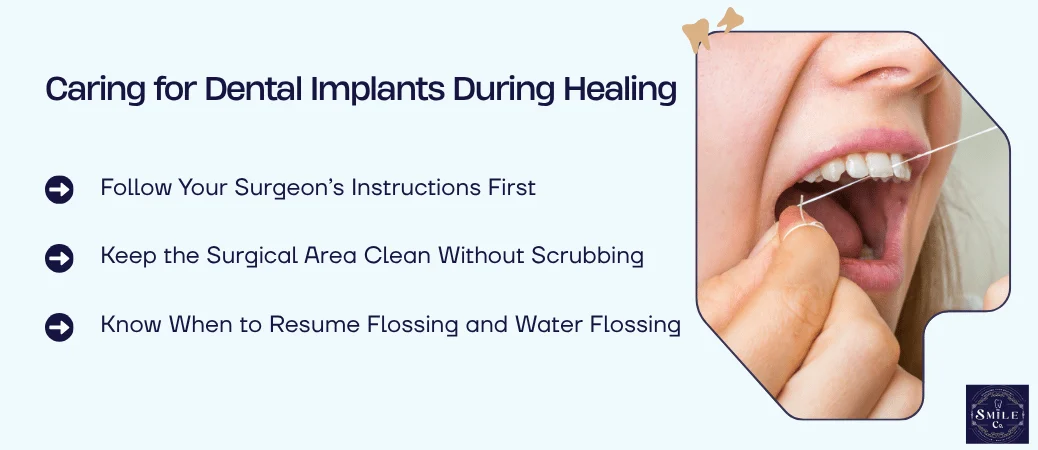
Follow Your Surgeon’s Instructions First
Your surgeon knows your case best, so always follow the specific instructions they give you.
They may recommend a certain rinse schedule, diet, or activity level based on how your surgery went.
Every mouth heals a little differently. Some patients need extra care around the gum line, while others may have a straightforward recovery.
If your surgeon gives you written care instructions, keep them handy for the first two weeks.
Call the dental clinic if you notice anything unusual, like ongoing pain or swelling. It’s always better to ask a quick question than to guess.
Your surgeon can also tell you when it’s safe to switch to using an antimicrobial mouthwash to help prevent infection during healing.
Keep the Surgical Area Clean Without Scrubbing
You still need to clean your mouth after surgery, but you have to be gentle. Use a soft-bristled toothbrush and lightly brush the outside surfaces of your teeth, avoiding the surgical site itself for the first week.
Rinsing helps too. Warm salt water rinses, done a few times a day, can support healing without irritating the area.
Avoid direct pressure or scrubbing near your dental implants after surgery, since this can disturb the healing tissue. Skip mouthwash with alcohol, since it can dry out or irritate healing gums.
Stick to plain water or salt water rinses unless your surgeon says otherwise.
Keeping things simple and gentle protects your gum health while your body does the important work of healing underneath the surface.
Know When to Resume Flossing and Water Flossing
Most people need to wait about one to two weeks before flossing near the implant site. Flossing too soon can disrupt healing tissue and slow down recovery.
A water flosser can be a helpful tool once your surgeon gives the go-ahead. It’s gentler than string floss and can reach areas that are harder to clean by hand.
When you do start flossing again, go slowly and pay attention to how your gums respond. If you notice bleeding or discomfort that doesn’t go away quickly, ease up and check in with your surgeon.
Once your mouth has fully healed, regular flossing and water flossing become key parts of your daily implant care routine.
Prevent Gum Problems and Implant Complications
Healthy gums keep your implant secure and working well for years to come.
Knowing how plaque builds up, spotting early trouble signs, and protecting the bone and tissue around your implant can help you avoid pain, infection, and implant failure.
Understand Plaque Buildup Around Implants
Plaque forms on your implant just like it does on natural teeth. It’s a sticky film of bacteria that builds up along your gum line and between teeth.
If you don’t remove it daily, plaque hardens into tartar. This can lead to gum inflammation and bleeding gums.
Around implants, plaque buildup is especially risky. There’s no natural tooth root to help fight off infection, so bacteria can spread faster to the tissue and bone below.
Using tools like interdental brushes and water flossers helps you clean spots a regular toothbrush can’t reach.
This lowers your risk of plaque-related problems around your implant crown.
Recognize Early Signs of Peri-Implantitis
Peri-implantitis is an infection that affects the gum and bone around your implant. It’s similar to gum disease, but it targets implants instead of natural teeth.
Early signs include red or swollen gums, bleeding when you brush, and mild discomfort around the implant. You might also notice a bad taste or smell coming from that area.
If you catch these signs early, treatment is usually simple. Your dentist may recommend a deep cleaning or antimicrobial mouthwash to reduce bacteria and calm inflammation.
Ignoring these symptoms can let the infection spread. Over time, this raises your risk of bone loss and implant failure.
Protect Supporting Bone and Gum Tissue
Your implant relies on healthy bone and gum tissue for support. Without that support, your implant can loosen or fail.
Brushing gently with a soft-bristled toothbrush protects the tissue around your implant. Using a low-abrasive toothpaste also helps prevent scratches that let bacteria in.
Diet matters too. Foods high in sugar feed the bacteria that cause gum disease, so cutting back can protect your gum health.
Regular checkups let your dentist track bone levels around your implant with X-rays.
Catching small changes early can prevent bigger problems, like loose implants or the need for additional surgery.
Smoking is another major risk factor. It slows healing and increases your chances of bone loss around implants, so quitting can make a big difference for long-term implant success.
Contact Your Dentist if an Implant Feels Loose
A loose implant is never something to ignore. It could mean the bone or gum tissue supporting it has weakened.
Common causes include untreated gum inflammation, bone loss, or an ill-fitting implant crown. Sometimes, grinding your teeth at night can also loosen an implant over time.
Don’t wait to see if it gets better on its own. Contact your dentist as soon as you notice any movement, discomfort, or changes in how your bite feels.
Your dentist can examine the implant and determine the cause. Quick action can often save the implant and prevent more serious damage to your gum and bone health.
Keep Up With Professional Maintenance
Home care handles most of your daily needs, but your dentist plays a big role too.
At The Smile Company, our dental team can check your implants, gums, and supporting bone for changes that may not be noticeable at home.
Schedule Regular Implant Checkups and Cleanings
Your dentist can spot problems long before you feel them. Plan on visiting every six months, or more often if your dentist suggests it.
During these visits, your dentist checks the health of your gums and bone around the implant. They also use special tools to clean spots your toothbrush and floss can’t reach.
This kind of dental implant cleaning removes hardened plaque, called tartar, that builds up over time. If it’s left alone, it can lead to gum irritation or bone loss.
Skipping these appointments puts your implant at risk. Catching small issues early is always easier than fixing bigger ones later.
Ask Your Dental Team About Personalized Rinses
Not every mouthwash works the same way for implants. Ask your dentist which rinse fits your specific needs.
Some people benefit from an antibacterial mouthwash that targets the bacteria known to cause gum disease.
Others may need an antimicrobial mouthwash with a slightly different formula to control plaque buildup.
In some cases, your dentist might recommend a diluted bleach rinse for short-term use if you’re dealing with infection risk.
This isn’t something to try on your own, though. It should only be used with clear instructions from your dental provider.
Using the wrong rinse, or the wrong strength, can irritate your gums. Always check with your dentist before adding a new product to your routine.
Build Habits That Support Long-Term Implant Health
Good implant hygiene doesn’t stop with brushing and rinsing. It’s also about the small choices you make every day.
Here are a few habits worth building:
- Brush twice a day with a soft-bristle brush
- Floss or use interdental brushes daily around the implant
- Avoid chewing on hard items like ice or pen caps
- Limit sugary snacks that feed bacteria
- Don’t smoke, since it slows healing and raises infection risk
Strong oral hygiene habits protect not just your implant, but your natural teeth and gums too. Over time, these small daily actions add up.
Dental implants are built to last, but they still need consistent care.
Pairing your at-home routine with professional support gives your implant the best chance at staying healthy for the long run.
Frequently Asked Questions
Cleaning your dental implants at home involves a few simple habits and the right tools, but you probably still have questions about the details. Here are answers to the most common ones.
What is the best way to clean dental implants at home?
The best way to clean your dental implants is to brush them twice a day with a soft-bristled toothbrush and clean around them daily with floss or a water flosser.
This keeps plaque and food particles from building up along your gumline.
You should also rinse with an antiseptic mouthwash to help control bacteria. Sticking to this routine every day protects your gums and helps your implants last longer.
What tools should I use to clean around my dental implants?
You want tools that clean well without scratching your implant surface. A soft-bristled toothbrush is a good starting point, along with implant-specific floss designed to slide gently around the base of your implant.
You can also use interdental brushes to reach tight spaces between your implant and natural teeth. Many dentists recommend adding a water flosser to your routine since it flushes out debris that brushing alone might miss.
Can I use a Waterpik to clean dental implants?
Yes, you can use a Waterpik to clean your dental implants, and many dentists recommend it. It works like a small pressure washer, pushing out food and bacteria that get trapped around your implant and under your bridge.
You should start on a low setting, around 2 to 3, and slowly increase the pressure as your gums adjust. Using it twice a day works well for long-term implant care, especially when paired with regular brushing.
How do I remove plaque from dental implants safely?
You can remove plaque safely by brushing gently along the gumline with a soft-bristled toothbrush. Avoid pressing too hard, since this can irritate your gums without actually cleaning better.
Flossing with implant-safe floss or using a water flosser also helps break up plaque before it hardens.
If you notice plaque buildup that won’t come off at home, it’s best to let your dentist handle it during a professional cleaning.
How should I clean All-on-4 dental implants?
All-on-4 implants need a bit more attention since food can get stuck underneath the bridge. Brushing the outer surface of your teeth is a good start, but you’ll also want to clean underneath the bridge daily.
A water flosser with an angled or hook-shaped tip works well for this, since it can reach under the bridge and along the gumline.
Your dentist may also suggest a diluted rinse every couple of weeks to help keep bacteria under control.
Can I clean dental implants properly without a Waterpik?
Yes, you can still keep your implants clean without a Waterpik. Brushing twice a day with a soft-bristled toothbrush, flossing carefully around your implants, and rinsing with an antiseptic mouthwash can go a long way.
Interdental brushes are another helpful option for reaching small gaps. A Waterpik makes cleaning easier, but consistent brushing and flossing can still protect your implants and gums.