

Getting dental implants is a great way to replace missing teeth and get your smile back. But after surgery, what you eat can make a big difference in how well you heal.
Soft, cool foods help protect the implant site, while hard, sticky, or hot foods can slow healing or even cause problems.
Your mouth needs time to recover, and the right diet can support that process every step of the way.
This guide walks you through the foods to avoid with dental implants, what to eat, what to avoid, and when you can get back to your normal meals.
You will also learn simple tips to help protect your dental implants and support long-term implant success.
Key Takeaways
- Your food choices play a direct role in how well your mouth heals after surgery.
- Soft foods are best at first, and you can slowly add more variety as healing continues.
- Avoiding hard, sticky, hot, or acidic foods for a while helps protect your results and supports good oral health.
Table of Content
- Why Food Choices Matter During Healing
- What to Eat in the First Days After Surgery
- Building a Soft Diet as Recovery Progresses
- Foods and Drinks to Avoid While the Area Heals
- Returning to Regular Meals and Protecting Results
- Frequently Asked Questions
Why Food Choices Matter During Healing
What you eat after getting a dental implant can make a big difference in how well you heal.
The right foods protect the surgery area, support bone healing, and help lower your risk of problems like infection or implant failure.
Protecting the Implant Site
Right after surgery, your implant site is fragile. A blood clot forms over the area, and this clot is what starts the healing process.
If you eat hard, crunchy, or sticky foods too soon, you can knock the clot loose or hurt your gum tissue.
This can lead to pain, bleeding, and a slower recovery. Soft foods put less pressure on the area and give your gum tissue time to close up and heal.
Think of the first few days as a time to go gentle. Foods like yogurt, mashed potatoes, and scrambled eggs won’t disturb the site.
Save crunchy snacks and chewy foods for later, once your dental team gives you the green light.
Osseointegration and Implant Stability
Your implant needs to fuse with your jawbone in a process called osseointegration. This is what makes the implant feel and act like a real tooth.
It can take weeks to months for this bond to fully form, so your food choices during this time really matter.
Chewing on tough or hard foods too early can put stress on the implant before it’s ready. This can shift the implant and disrupt the bond that’s trying to form with your bone.
Nutrients also play a role here. Foods with calcium, vitamin D, and protein support bone strength and healing, which helps your implant become more stable over time.
Preventing Inflammation, Infection, and Delayed Healing
Certain foods can make inflammation worse or raise your risk of infection. Sugary snacks, spicy foods, and alcohol can irritate the surgery site or feed harmful bacteria in your mouth.
This can lead to swelling, redness, or even infection, all of which slow down healing. If left untreated, infection can even lead to implant failure.
On the other hand, foods rich in vitamin C and zinc, like certain soft fruits or leafy greens, support your immune system and help your body fight bacteria naturally.
Staying away from foods that irritate your gums or feed bad bacteria gives your body a better chance to heal quickly and without complications.
What to Eat in the First Days After Surgery
Right after your implant procedure, your mouth needs gentle, easy-to-swallow foods that won’t put pressure on the surgical site.
Focus on cool or room-temperature options that require little to no chewing for the first day or two.

Liquids and No-Chew Options
For the first 24 hours, stick to liquids and foods you can drink or sip slowly. Smoothies and protein shakes are great choices because they give you nutrients without any chewing.
Pureed soups also work well, as long as they’ve cooled down a bit. Hot foods can irritate the surgical area, so let everything cool first.
Applesauce is another easy option since it slides down without effort. Just remember to skip the straw.
Sucking through a straw can create suction that disturbs the healing site, so use a spoon instead.
Keep portions small and eat slowly. You don’t want to strain your jaw or gums while things are still tender.
Liquid smoothies and juices are recommended during this early stage.
Soft, Protein-Rich Foods
Your body needs protein to heal, so once you’re ready for slightly thicker textures, add soft protein sources to your meals.
Scrambled eggs are a solid pick because they’re soft, filling, and packed with protein.
Mashed potatoes are another good option. They’re easy to eat and can be mixed with butter or gravy for extra calories if you need them.
Hummus is smooth and protein-rich, and you can eat it plain with a spoon. Tofu is also gentle on the mouth and blends well into soups or smoothies for added protein.
Mashed bananas and avocado are soft, nutrient-dense, and require almost no chewing. They’re easy to prepare and give your body helpful vitamins while you heal.
Gentle Dairy and Comfort Foods
Dairy products are usually fine to eat after surgery unless your dentist says otherwise.
Yogurt and Greek yogurt are especially helpful because they’re soft, cool, and have probiotics that may support healing.
Cottage cheese is another mild option that’s easy to eat without chewing much. Milk can be added to smoothies or enjoyed on its own for extra calcium and protein.
Pudding and custard are gentle comfort foods that go down easily and don’t irritate the surgical site.
Ice cream can feel soothing too, since the cold may help with swelling, but skip any with nuts, chips, or crunchy toppings.
These soft foods help protect the implant site while still giving you something satisfying to eat during recovery.
Building a Soft Diet as Recovery Progresses
As your mouth heals, you can slowly add more variety to your meals while still keeping textures soft and gentle on your gums.
Focus on foods that give you the nutrients you need without putting stress on the implant site.
Easy-to-Chew Fruits and Vegetables
Soft fruits are a great choice while you heal. Bananas and peaches are easy to chew and packed with vitamins that help your body recover.
Cooked vegetables work well too. When you steam or boil vegetables until they are soft, they become much easier to eat than raw versions.
Try soft-cooked vegetables like carrots, squash, or green beans. These give you fiber and nutrients without requiring much chewing.
Fruits and vegetables also provide vitamins A and C, which support gum tissue healing. You can mash or blend these foods if your mouth is still sensitive.
Stick to ripe, soft produce and skip anything crunchy or fibrous until your dentist says it’s okay.
Soft Grains and Starches
Grains and starches can fill you up while staying gentle on your healing gums. Oatmeal is a good breakfast option because it’s warm, soft, and easy to swallow.
Soft-cooked rice is another good pick. Cook it a little longer than usual so it becomes tender and mushy.
Pasta is easy to eat when it’s cooked well. Soft pasta with a light sauce gives you carbs for energy without any hard edges to worry about.
These foods are simple to prepare and pair well with other soft foods, making it easier to build full meals. You can mix in soft vegetables or ground meats for more nutrition.
Just be sure to let hot dishes cool slightly before eating, since sensitive gums can react to heat.
Tender Proteins for Balanced Meals
Protein helps your body repair tissue after implant surgery, so it should be part of every meal. Fish is one of the best options because it’s naturally soft and cooks quickly.
Tender chicken, if cooked slowly and cut into small pieces, is also easy to manage. Ground meats work well too, since they don’t require much chewing at all.
These proteins help you stick to a balanced diet while you recover. Protein-rich foods also support wound healing and help maintain muscle strength during recovery.
Don’t forget iron, which helps your blood carry oxygen to healing tissue. Ground meats and fish are good sources of iron.
Protein also plays a role in bone health, which matters as your implant settles into place. Eating a mix of these tender proteins gives your body the tools it needs to heal properly.
Foods and Drinks to Avoid While the Area Heals
Right after your implant surgery, your mouth needs gentle care while it heals.
Some foods put too much pressure on the site, some stick to your gums, and some drinks or flavors can irritate the tissue that’s trying to repair itself.

Hard and Crunchy Foods
Hard foods put direct pressure on your implant before it has a chance to bond with your jawbone.
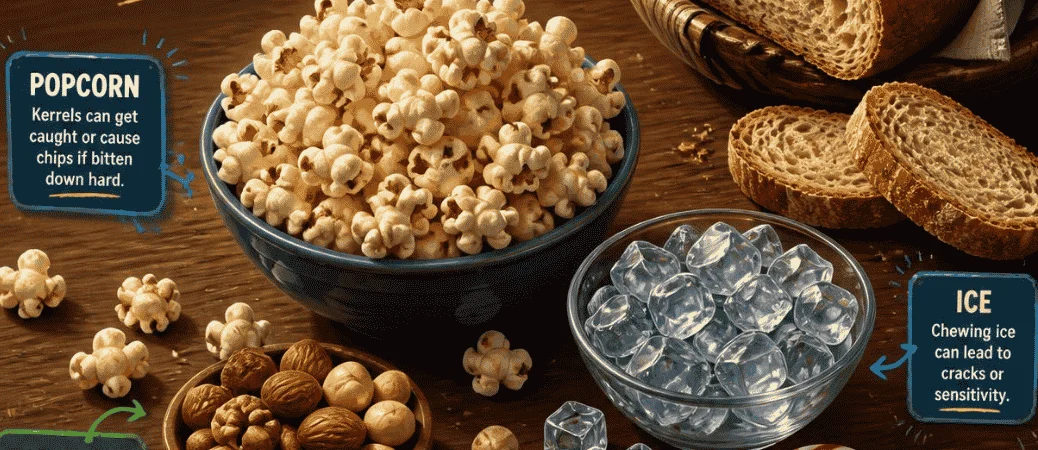
This includes nuts, ice cubes, hard candies, chips, and popcorn, since popcorn kernels can get stuck right at the surgical site.
Raw vegetables like carrots and celery are also tricky because they need a lot of chewing force.
The same goes for apples, crusty bread, and baguettes, which can put unwanted pressure on the healing site.
Give your mouth a break from anything crunchy for at least the first week or two. Once your dentist says it’s safe, you can slowly bring these foods back into your diet.
Sticky, Chewy, and Tough Foods
Sticky foods like caramel, taffy, and chewing gum can pull at your stitches and cling to the healing gum tissue. That makes it harder to keep the area clean, which can lead to irritation or infection.
Chewy foods, including dried fruits, take a lot of jaw work to break down. This can strain the surgical site before it’s ready for that kind of pressure.
Tough meats like steak are also worth skipping for now. They need a lot of chewing, which can shift the implant or bother nearby gum tissue that’s still healing.
Stick to soft proteins instead until your dentist gives you the green light.
Irritating Temperatures, Flavors, and Beverages
Acidic foods like citrus fruits and tomatoes can sting sensitive tissue and slow down healing.
Spicy foods cause a similar problem, since they can irritate the surgical area and make you feel uncomfortable while eating.
Hot foods and drinks, including hot soup, hot coffee, and hot tea, can increase blood flow to the area.
This can lead to more swelling and even bleeding, so it’s best to let your food and drinks cool down first.
Soda and other sugary drinks feed bacteria, which is the last thing your healing gums need. Alcohol can thin your blood and slow healing too.
Frozen treats might feel soothing, but very cold temperatures can also irritate the surgical site, so enjoy them in moderation once you’re a few days into recovery.
Returning to Regular Meals and Protecting Results
Once your mouth feels ready, you can start adding firmer foods back into your diet.
Going slow and paying attention to your comfort level will help protect your implant crown and support long-term implant success.
How to Reintroduce Firmer Textures Safely
You don’t need to rush back to your old diet. Start with foods that are only slightly firmer than what you’ve been eating, then move up from there.
Try foods like:
- Steamed vegetables
- Soft cooked meats
- Whole grain bread
- Ripe fruit
If you feel any pain, pressure, or sensitivity when chewing, that’s a sign to slow down. Give your mouth more time before trying that food again.
Everyone heals at a different pace, so let your comfort guide you instead of a set timeline.
Long-Term Caution With High-Risk Foods
Even after you’re fully healed, some foods are still worth eating carefully. Hard foods and sticky foods put extra stress on your implant and can loosen or damage the crown over time.
Foods to watch include:
| Food Type | Examples | Why It’s Risky |
| Hard | Ice, hard candy, nuts | Can crack or loosen the crown |
| Sticky | Caramel, taffy, gum | Can pull at the implant or dentures |
| Chewy | Tough meats, bagels | Adds extra pressure while biting |
Try to avoid using your teeth as tools, like opening packages or biting your nails. These habits can wear down your implant faster than normal chewing.
Daily Care and Follow-Up Visits

Good oral hygiene is one of the best ways to protect your implant. Brushing twice a day and flossing daily helps prevent plaque buildup around the implant and your natural gum health stays strong too.
A balanced diet also plays a role here. Foods with vitamins and minerals help keep your gums and bone tissue healthy around the implant.
Don’t skip your regular dental visits, even if everything feels fine. Your dentist can catch small issues early, like plaque buildup or gum irritation, before they turn into bigger problems.
These checkups are just as important for implants as they are for natural teeth or dentures.
Frequently Asked Questions
Diet plays a big role in how well your implant heals and lasts. Here are answers to common questions about what to eat and avoid.
What foods should I avoid after getting dental implants?
You should stay away from hard, crunchy, sticky, and spicy foods for at least 1 to 2 weeks after surgery. Nuts, chips, and raw vegetables can put too much pressure on the healing site.
Acidic foods like citrus and tomatoes can also irritate your gums. Try to skip these until your dentist gives you the go-ahead.
Can hard or crunchy foods damage dental implants?
Yes, hard and crunchy foods can hurt your healing gums and even disturb stitches. Foods like popcorn and crusty bread can irritate the surgical area and slow down your recovery.
It’s best to wait until your dentist says it’s safe before eating these foods again. Chewing on the opposite side of your mouth can help protect the implant while you heal.
Which foods help support healing and long-term implant health?
Soft, nutrient-rich foods help your body heal faster after implant surgery. Foods high in protein like eggs and soft fish help rebuild gum tissue.
Calcium-rich foods, such as dairy products, support bone health around your implant. Vitamin-rich foods like bananas and mashed sweet potatoes can also help your immune system during recovery.
Is it safe to eat sticky foods with dental implants?
No, sticky foods are not safe right after surgery. Caramel and chewy candy can pull at the healing tissue and even loosen your implant.
Sticky foods can also get stuck around the implant site, which makes it harder to keep clean. It’s best to avoid these foods until your mouth has fully healed.
Can sugary or acidic foods affect the gums around dental implants?
Yes, sugary and acidic foods can irritate your gums and slow healing. Acidic foods like citrus fruits and tomatoes can cause discomfort in the surgical area.
Too much sugar can also lead to plaque buildup around your implant over time. Cutting back on these foods can help protect your gums long after surgery.
When can I return to eating my normal diet after implant surgery?
Most people can start easing back into a normal diet within a few weeks as swelling goes down and healing continues. You’ll likely start with liquids, move to soft foods, then slowly add firmer foods back in.
Full healing and bone integration can take a few months. Always check with your dentist before eating foods that require a lot of chewing.