

Dental implants are widely used to replace missing teeth, with usage growing rapidly across the U.S.. Overall long-term survival of implants is high – typically on the order of 94–97% over five to ten years.
For example, one large retrospective U.S. cohort found a 96.9% five-year implant survival, while a meta-analysis reported an average 94.6% survival at about 13 years.
This means failure rates are generally in the single-digit percentages.
However, absolute failure rates vary with time and patient factors; many studies distinguish “early” failures (during healing) from “late” failures (after loading), with early failures reported around 0.5–5.2% and late failures around 0.5–7.8%.
Surveys of U.S. adults (e.g. NHANES) show implant prevalence rising – e.g. from 0.7% of middle-aged adults in 2000 to over 5% by 2015–16 – meaning more people are exposed to small failure risks.
In Greenville and across South Carolina, no comprehensive public registry exists, but available data suggest implant use follows national trends.
Market reports estimate over 3.7 million implants placed nationwide in 2022, reflecting the industry boom noted even in Greenville-area media.
Thus, while exact state-by-state failure rates are not published, the national figures and trends set the context for local practice and planning.
Schedule a Dental Implant Evaluation in Greenville South Carolina at The Smile Company
Major Risk Factors for Implant Failure
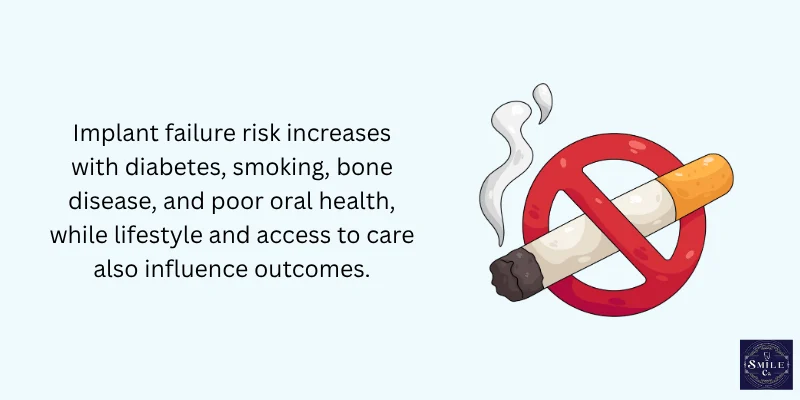
Implant failure is multifactorial. Patient-related factors like age, health and habits play a key role.
Age can influence outcomes: very elderly patients may heal more slowly or have bone loss, while younger patients (teens) are often still growing.
However, studies show good long-term results even in older adults when health is managed.
Medical comorbidities are important: for example, diabetes (especially uncontrolled) significantly raises failure risk.
A recent meta-analysis found implants in diabetic patients had ~1.78× higher odds of failure (about 78% higher risk) than those in non-diabetics.
The risk was even higher for type I diabetes. (This analysis pooled nearly 6,000 implants in diabetics and over 62,000 in non-diabetics.)
Likewise, systemic osteoporosis and other conditions that weaken bone or impair healing (e.g. steroid use, HIV/AIDS, certain cancers) are known risk factors, as are poor nutritional status and vitamin D deficiency.
In Greenville/SC, where diabetes and prediabetes affect over half the adult population and smoking remains common, these systemic risks are particularly relevant.
Lifestyle habits also matter. Smoking is one of the strongest negative factors: implants in smokers fail far more often than in non-smokers.
A large review found smokers had an odds ratio of ~2.40 for implant failure (about 2.4× the risk, or 140% higher risk) compared to non-smokers. This risk held true in both the upper (maxilla) and lower (mandible) jaws.
Smoking impairs bone healing and immune response, so implant integration is compromised. Other habits such as heavy alcohol use or chronic bruxism (teeth grinding) are also linked to higher failure.
History of periodontitis (gum disease) is widely recognized as a risk factor: patients with severe periodontal disease tend to have higher rates of peri-implantitis and implant loss, reflecting a hostile bacterial environment around implants.
Demographic and socioeconomic factors can have indirect effects. Sex differences are minor, though some studies suggest slightly better outcomes in women than men.
Ethnic or racial disparities in implant use are known (e.g. lower implant prevalence among Black or low-income Americans), but direct impact on failure rates is less clear.
However, related factors like poorer access to care, lower dental maintenance, or higher smoking rates in certain subgroups can drive higher failure risk.
Talk With a Greenville South Carolina Implant Dentist About Implant Success Rates
Surgical and Prosthetic Factors
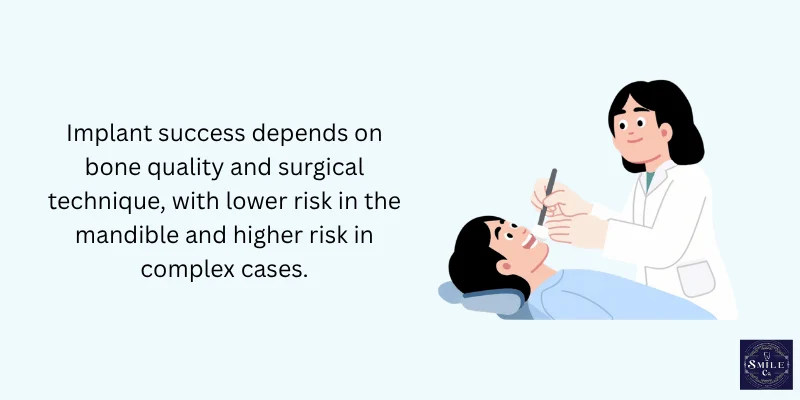
Technical aspects of implant surgery and restoration also influence outcomes.
Surgical technique and site: Implants placed into dense, healthy bone (often in the lower jaw) tend to heal better than those in softer bone (e.g. in the upper posterior jaw).
Indeed, the same diabetes meta-analysis found the difference in failure risk was statistically significant in the maxilla (OR ~1.97) but not in the mandible, underscoring the challenge of upper jaw cases.
Complicated sites requiring bone grafts or sinus lifts pose higher risk: one study noted that implants placed with major grafting had more failures, reflecting the added healing complexity.
Surgeons’ experience matters too; errors such as overheating the bone during drilling, improper angulation, or contamination can cause early implant loss.
Timing and loading: Implants placed immediately into fresh extraction sites sometimes have higher early failure rates than those placed after healing.
Similarly, implants loaded with a crown or bridge immediately (or too soon) after surgery can experience overload.
Gradual loading (giving time for bone to integrate) tends to be safer, especially in high-risk patients.
Prosthetic design: The restoration attached to an implant must be engineered carefully. Oversized or off-axis crowns can exert excessive force.
Over time, mechanical failures (loosening screws, fracture of parts, chipping of the crown) can compromise the implant or surrounding bone. In contrast, designs that distribute force well (e.g. splinted crowns, adjustable occlusion) are protective.
Cemented vs. screw-retained crowns is debated: excess cement can irritate tissues, but screw access openings can create micro-movements. Current consensus emphasizes proper fit and retrievability.
Overall, unfavorable prosthetic factors (malalignment, poor hygiene access, uneven occlusion) were identified as key contributors to later failures.
In summary, risk factors span patient health (age, smoking, diabetes, osteoporosis, periodontitis history), surgical conditions (bone quality, grafting, technique), and prosthetic design (force distribution, material, hygiene).
Control of modifiable factors – smoking cessation, good diabetic control, treatment of gum disease, meticulous surgical protocol, and precise prosthetic planning – greatly improves success rates.
Get Expert Guidance on Preventing Dental Implant Failure
State Comparisons and Focus on Greenville, SC
Nationally, detailed state-by-state failure statistics are lacking, as implants are privately provided and not tracked like some public health measures. However, general patterns emerge.
Northern states with older populations may have higher absolute implant numbers; socioeconomic factors also play a role.
For example, NHANES data suggests implant prevalence was higher among college-educated or privately insured adults, hinting that states with higher income/education might see more implants (and thus more opportunities for failure events).
Conversely, states with poorer dental health may have fewer implants placed in the first place.
South Carolina has some of the nation’s worst adult health indicators (high diabetes, obesity, tobacco use). Over half of SC adults now have diabetes or prediabetes, a red flag for implant risk.
Tobacco use also exceeds the national average. Therefore, one can infer that Greenville-area patients may face elevated implant failure risk compared to healthier regions, unless strict preventive measures are taken.
A 2024 investigative report in Greenville News (by KFF Health News/CBS) highlighted local trends: it noted the booming industry (with millions of implants placed nationally per year) and warned of aggressive implant practices in the Greenville area.
Experts in that report emphasized that implants are not “bulletproof” and require maintenance. They warned that removing treatable natural teeth for implants can lead to avoidable failures.
While the report focused on overuse issues, it underscores the fact that complications do occur and that patient selection is critical.
No formal study has specifically measured implant failure rates in Greenville or South Carolina, but given national data and local health demographics, dental professionals and health officials in Greenville can expect roughly the same ~5% failure rate overall, with hotspots of risk in smokers and diabetics.
Dental offices should track their own outcomes and compare to benchmarks: for example, an implant clinic in South Carolina might audit five-year survival in their high-risk patients vs. the ~90–97% expected survival from the literature.
Retreatment Trends and Management Strategies
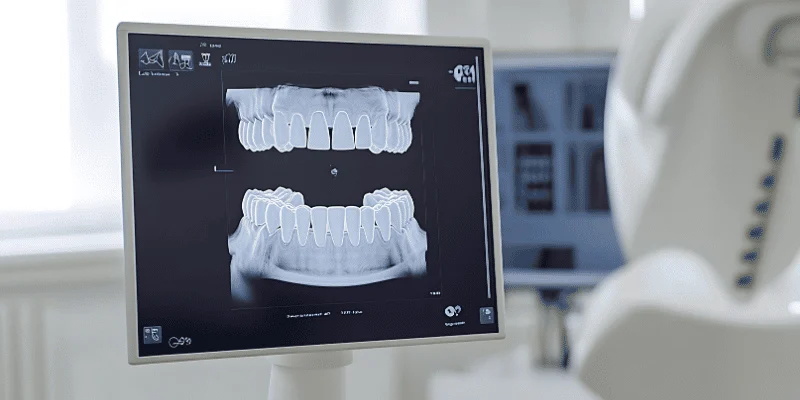
When an implant fails or complications arise, clinical management is critical.
Prevention and monitoring are first steps: peri-implant mucositis (inflammation of the gums) can often be reversed with thorough cleaning and risk-factor control (antimicrobial rinses, improved hygiene).
Regular maintenance visits can catch bone loss early. If peri-implantitis (bone loss with inflammation) occurs, the treatment escalates.
Consensus guidelines (AO/AAP 2024) recommend that early peri-implantitis begin with nonsurgical debridement plus antibiotic/antiseptic adjuncts, but advanced cases often require surgical intervention (flap surgery to debride, possibly bone regeneration or soft-tissue grafting).
Supportive maintenance afterward (frequent cleanings, good plaque control) is essential to prevent recurrence.
If an implant must be removed, the trend is toward atraumatic techniques. Classic methods include trephine burs (cylindrical drills that core out bone around the implant) or reverse torque devices (un-threading the implant).
Newer methods like ultrasonic piezo surgery or even lasers can remove implants with minimal bone loss. A 2025 scoping review noted that success rates for atraumatic retrieval techniques ranged from 70–100% across studies.
After removal, clinicians can choose to replace the implant or pursue alternate solutions.
Re-implantation: Fortunately, many sites of prior failure can accept a new implant.
A large multicenter retrospective study (BigMouth consortium) of over 50,000 implants found that re-implanted implants (placed in sites of a previous failed implant) still had high survival: 96.1% for first-time replacements and 91.7% for a second replacement.
These were slightly lower than initial implants (98.6% survival) but still very good. The same study found that each successive reimplant had a higher failure risk than the original.
In practice, many clinicians will wait 3–6 months after removing a failed implant (to let bone heal) before placing a new one in the same spot.
Sometimes the new implant can be immediately restored, but often it is delayed. Clinicians may also incorporate bone grafting at the same time as reimplant or at a prior stage if bone loss was significant.
If re-implantation is not feasible (e.g. due to infection, severe bone loss, or patient preference), alternatives include fixing a bridge to adjacent teeth, using a removable partial denture, or switching to an implant-supported overdenture.
The choice depends on remaining teeth, bone volume, and patient factors.
Outcomes of retreatment: Fortunately, even when initial implants fail, patients often do well after retreatment.
The BigMouth study did not identify any specific patient factor (age, smoking, etc.) that predicted reimplant failure, suggesting that careful technique and planning can overcome many initial problems.
In summary, while implant failure is a setback, salvage rates are generally high with modern techniques and retreatment planning.
Clinical Management and Best Practices
Key clinical strategies to minimize failures and manage them include:
- Risk assessment: Screen patients for smoking and control it aggressively (counseling, nicotine replacement). Optimize diabetes control before and after surgery. Treat periodontal disease fully before implant placement.
- Careful planning: Use CBCT imaging to assess bone volume. Plan grafting or alternative sites if bone is borderline. Use guided surgery when appropriate to avoid critical structures.
- Sterile surgical technique: Maintain strict asepsis, gentle tissue handling, and adequate implant cooling during drilling. Ensure good primary stability without excessive torque.
- Appropriate loading: Follow evidence-based loading protocols. For high-risk patients or grafted sites, consider delayed loading.
- Maintenance protocols: Educate patients on cleaning implants (interdental brushes, water flossers, etc.). Schedule periodic professional cleanings and radiographic checks (often yearly).
- Managing complications early: If any sign of implant mobility, infection, or bone loss appears, intervene promptly. Small bone losses may be treatable with antibiotics and chlorhexidine; larger defects may need guided bone regeneration.
- Implant retrieval and replacement: If removal is needed, choose the least traumatic method. After healing, plan reimplantation with possibly different implant type/size or position, and consider splinting implants if single-implant stability is borderline.
Recent guidelines highlight these principles. In Greenville and beyond, dentists should follow the AO/AAP flowcharts for peri-implant disease management and stay updated on new retrieval technologies.
Public health officials can note that retreatment (such as reimplantation) has success rates near primary placement, but prevention remains preferable.
Trends: Research on implant failure and management has surged in the past decade. Clinicians increasingly recognize risk factors (smoking, diabetes, etc.) and implement personalized care.
On the public health side, studies like ADA surveys and NHANES data help monitor who is getting implants and outline disparities. For Greenville specifically, tracking outcomes at local clinics and educating patients about true risks will be important next steps.
Key Takeaways: Dental implants fail only a small fraction of the time, but failures are real and can be devastating if not managed.
Knowing the risk factors (age, smoking, diabetes, bone quality, surgical technique, prosthetic design) allows clinicians to counsel patients, optimize conditions, and reduce failures.
When implants do fail, modern retreatment techniques (cleaning, regenerative surgery, re-implantation) often restore function effectively.
Compared to natural teeth, implants have a slightly higher failure rate, so both dentists and patients should maintain a vigilant preventive approach.
Sources: This guide draws on recent peer-reviewed studies, systematic reviews and clinical guidelines. References used include U.S. data analyses (e.g. NHANES, ADA) and global implant studies.
(For example, a large retrospective U.S. study reported 96.9% implant survival, and systematic reviews quantify smoking and diabetes risks.)
Retreatment outcomes are supported by recent cohort analyses. Consensus guidelines from professional bodies provide recommended management strategies.
Illustration:

Figure: A forest plot from a recent meta-analysis showing the odds ratio (OR) of implant failure for diabetic patients relative to non-diabetics. The OR ~1.78 indicates diabetic patients have roughly 78% higher failure risk.
References:
- Elani HW et al., “Trends in dental implant use in the U.S.” J Dent Res. 2018;97(13):S14–S15.
- Kandasamy B et al., “Retrospective analysis of dental implant failure rates in patients with compromised health.” J Contemp Dent Pract. 2018;19(1):1–8.
- Mahendra J et al., “Decoding success: A five-year retrospective study of dental implant survival.” Ann Dent Spec. 2025;3(5):XXXXX.
- Lindner S et al., “Dental implant failure and factors associated with treatment outcome: A retrospective study.” Clin Implant Dent Relat Res. 2022;24(6):829–840.
- Shenoy VK et al., “Dental implant failure and retrieval techniques: A scoping review.” Front Oral Health. 2025;6:1667808.
- Chatzopoulos GS, Wolff LF., “Survival rate of implants performed at sites of previously failed implants.” J Dent Sci. 2023;19(3):1741–1747.
- Wang HL et al., “AO/AAP consensus on prevention and management of peri-implant diseases.” J Periodontol. 2025;96(6):519–541.
- Mustapha AD et al., “Smoking and dental implants: A systematic review and meta-analysis.” Medicina (Kaunas). 2022;58(1):39.
- Al Ansari YA et al., “Diabetes Mellitus and Dental Implants: A Systematic Review and Meta-Analysis.” Materials. 2022;15(9):3227.
- Kelman B, Werner A. “Dentists are pulling ‘healthy’ teeth to profit from implants, experts warn.” Greenville News (KFF/CBS). Nov 2024.
- Diabetes Free SC, 2024 Annual Impact Report. (S.C. health statistics).