


When you’re choosing between a dental implant and a bridge, the upfront price is only part of the story. Most people focus on what they’ll pay today, but the real question is what each option will cost you over the next decade.
Over a 10-year period, a dental implant typically costs between $3,600 and $7,000 total, while a bridge can run $8,300 to $12,500 when you include maintenance, complications, and additional dental work on neighboring teeth.
The comparison between dental implants and bridges shows that bridges often require more frequent replacement and can damage healthy teeth next to the gap.
Your choice affects more than just your wallet. It impacts your daily life, how you eat, and whether you’ll need more dental work down the road.
Understanding the true long-term costs and health implications helps you make a decision you’ll feel good about years from now.
Key Takeaways
- Dental implants cost less over 10 years than bridges when you factor in replacements and maintenance
- Bridges require grinding down healthy teeth on both sides while implants preserve your natural tooth structure
- Implants last 15-25 years or longer while bridges typically need replacement every 10-15 years
Visit The Smile Company in Greenville, South Carolina to schedule your implant consultation today.
Dental Implants vs Bridges: What Are the Options?
Both dental bridges and dental implants replace missing teeth, but they work in completely different ways. Bridges attach to your existing teeth, while implants anchor directly into your jawbone.
How Dental Bridges Work
A dental bridge fills the gap left by one or more missing teeth by using your neighboring teeth as anchors. Your dentist reshapes the abutment teeth on either side of the gap to hold crowns that support the artificial tooth.
The middle artificial tooth is called a pontic. It literally bridges the space between your natural teeth.
There are different types of bridges you might consider:
- Traditional bridge: The most common type, using crowns on both sides of the gap
- Three-unit bridge: Replaces one tooth using two adjacent teeth for support
- Cantilever bridge: Attaches to teeth on only one side of the gap
Your dentist takes impressions of your teeth to create a custom bridge. The bridge is then cemented permanently onto your prepared abutment teeth. A zirconia crown or porcelain material typically makes up the visible part of the bridge.
The entire process usually takes two to three weeks. You’ll wear a temporary bridge while the permanent one is being made.
How Dental Implants Work
A dental implant replaces both the root and crown of your missing tooth. The process starts with a titanium post surgically placed into your jawbone where the tooth used to be.
This titanium implant acts as an artificial root. Over the next three to six months, your bone grows around the implant through a process called osseointegration. This fusion creates a stable foundation for your new tooth.
Once the implant post has bonded with your bone, your dentist attaches a small connector piece called an abutment. The abutment sits above your gum line and connects the implant to the replacement tooth.
Finally, a custom crown is attached to the abutment. The crown looks and functions like your natural tooth.
The complete dental implant process takes four to seven months. While this seems long, the implant post needs time to properly integrate with your jawbone for long-term stability.
Key Differences in Tooth Replacement
The main difference between these tooth replacement options is how they attach to your mouth. Bridges rely on your existing teeth for support, while implants stand independently in your jawbone.
Bridges require altering healthy teeth. Your dentist must file down the adjacent teeth to fit the supporting crowns. This permanent change can make those teeth more vulnerable to decay over time.
Implants preserve your natural teeth. The implant post goes directly into the bone without touching neighboring teeth. Your healthy teeth remain completely untouched.
Bone preservation differs significantly. Implants stimulate your jawbone just like natural tooth roots do. Bridges don’t replace the root, so the bone underneath gradually shrinks over time.
The procedures vary in complexity. Getting a bridge is non-surgical and faster. Implants require surgery and a longer healing period.
Book your free consultation now to find out which tooth replacement option is right for you.
Initial and Long-Term Costs: 10-Year Financial Breakdown
The cost of dental implants appears higher at first, but the financial picture changes when you look at a full decade. Bridges start cheaper but often need replacement or repairs that add up over time.
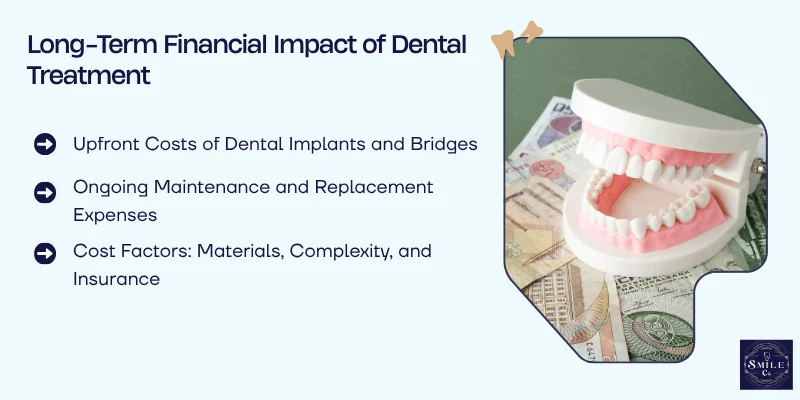
Upfront Costs of Dental Implants and Bridges
A single tooth implant typically costs between $3,000 and $5,000 for the complete treatment. This price includes the titanium post, abutment, crown, and surgical placement.
A dental bridge usually costs $1,500 to $3,000 upfront. The bridge price covers the false tooth and crowns for the two adjacent teeth that support it.
Your location affects these prices significantly. Treatment in major cities tends to cost more than in smaller towns.
What’s included in each option:
- Implant: Surgical placement, titanium post, healing abutment, custom crown, follow-up visits
- Bridge: Preparation of adjacent teeth, three-unit restoration (two crowns plus pontic), cementation
The initial bridge cost looks more attractive. But this doesn’t tell the whole story about what you’ll spend over 10 years.
Ongoing Maintenance and Replacement Expenses
Your implant requires the same care as natural teeth. You’ll pay for regular cleanings and checkups, which typically cost $75 to $200 per visit twice yearly.
Bridges need more frequent replacement than implants. Most bridges last 7 to 15 years, meaning you might need a new one during your 10-year period. That’s another $1,500 to $3,000.
The teeth supporting your bridge can develop problems. Decay or damage to these anchor teeth may require root canals ($800 to $1,500 each) or crowns ($1,000 to $2,500 each).
Dental implants can last considerably longer with proper care. The implant post itself often lasts a lifetime. You might only need to replace the crown after 10 to 15 years of wear.
Cost Factors: Materials, Complexity, and Insurance
Several factors increase your final bill beyond the base price. Bone grafting adds $300 to $3,000 if you don’t have enough jawbone. A sinus lift costs $1,500 to $3,000 when needed for upper teeth.
Price variables include:
- Crown material (porcelain, zirconia, or metal)
- Number of missing teeth
- Your jawbone density
- Dentist’s experience level
- Geographic location
Your insurance typically covers 50% of bridge costs since insurers classify them as major restorations. Most plans label implants as cosmetic, offering little to no coverage. Some newer plans now cover part of the implant cost.
Materials matter for longevity. Zirconia crowns cost more but resist staining and last longer than porcelain. High-quality materials reduce your replacement costs over 10 to 20 years.
Schedule your appointment at The Smile Company to start your journey toward a complete smile.
Longevity and Durability: How Long Do They Last?
Dental implants typically last 20 to 30 years or longer, while bridges usually need replacement every 10 to 15 years.
The difference in lifespan comes down to how each option interacts with your jawbone and the wear patterns they experience over time.
Implant Longevity and Survival Rates

Dental implants have success rates of 90 to 95 percent over 10 years, making them one of the most reliable tooth replacement options available. The implant post itself can last 25 years or more because it bonds directly to your jawbone through a process called osseointegration.
Once the titanium post fuses with your bone, it becomes a permanent part of your jaw. This stable foundation rarely fails after the first year if you maintain good oral hygiene.
The crown attached to the abutment typically needs replacement after 10 to 15 years due to normal wear from chewing. Studies show that 96.8 percent of implants survive at 10 years and 94 percent last 15 years when properly maintained.
Your implant can fail early if you develop peri-implantitis, an infection that damages the gum and bone around the implant. Regular dental checkups and daily cleaning help prevent this condition and extend your implant’s lifespan significantly.
Bridge Lifespan and Replacement Cycles
A three-unit bridge usually lasts 10 to 15 years before needing replacement. The two anchor teeth that support the bridge experience extra stress from holding the artificial tooth in the middle.
Bridges don’t prevent bone loss in your jaw where the tooth is missing. Without osseointegration like implants provide, the bone gradually shrinks over time. This bone loss can eventually affect how well your bridge fits.
Common reasons bridges fail:
- Decay forming under the bridge on anchor teeth
- Loosening of the cement holding the bridge in place
- Cracks or chips in the porcelain material
- Damage to the supporting teeth
You may need bone grafting later if you decide to switch to an implant after years of wearing a bridge.
The replacement cycle means you could need two or three new bridges over a 30-year period, while an implant post might last your entire lifetime with just one crown replacement.
Maintenance, Oral Health, and Daily Care Over the Years
Both options need regular care, but your daily routine and long-term oral health outcomes will differ significantly.
Bridges require special cleaning tools and can affect neighboring teeth, while implants need attention to prevent specific complications like peri-implantitis.

Daily Hygiene and Cleaning Requirements
Dental implants work like natural teeth when you brush and floss. You can use regular dental floss around most implants without special tools. However, you need to pay extra attention to the gum line where bacteria can build up.
Bridges demand more effort in your daily cleaning routines. You’ll need a floss threader or special interdental brushes to clean under the false tooth.
This takes more time than regular flossing because you must thread the floss beneath the bridge to remove food particles and plaque.
Water flossers help with both options. They’re especially useful for cleaning hard-to-reach areas around bridges. You should also schedule professional cleanings every six months to keep either restoration healthy.
Impact on Oral Health and Adjacent Teeth
Dental bridges require tooth reduction on the teeth next to your gap. Your dentist must file down healthy teeth on both sides to place crowns that support the bridge. This permanent change means those teeth lose enamel and structure they can never regain.
The impact on adjacent teeth continues over time. The supporting teeth bear extra chewing force, which can lead to increased wear.
Bone resorption happens under bridges because there’s no tooth root to stimulate your jawbone, causing it to shrink gradually.
Implants don’t affect your neighboring teeth at all. They stand independently and actually prevent bone loss by stimulating your jaw like natural tooth roots.
This keeps your facial structure intact and protects your overall oral health.
Bridge and Implant Complications Over Time
Bridges face several issues as years pass. The cement holding them can weaken, causing the bridge to loosen. Decay can develop under the bridge or on the supporting teeth if you don’t maintain thorough cleaning.
A temporary bridge might be needed if your permanent one requires replacement.
Implants can develop peri-implantitis, an infection in the gum and bone around the implant post. This condition happens when bacteria accumulate and cause inflammation.
Regular dental visits help catch this early before it damages the bone supporting your implant.
Common complications by restoration type:
- Bridges: Loose cement, decay on supporting teeth, bridge fracture, gum recession around crowns
- Implants: Peri-implantitis, loose crown, implant post fracture (rare), gum tissue inflammation
Both options need constant maintenance and monitoring from your dentist. Catching problems early saves you money and helps your restoration last longer.
Aesthetic, Functional, and Lifestyle Considerations
Beyond cost differences, dental implants and bridges perform differently in daily life. The way each option looks, feels, and functions can affect your satisfaction with treatment for years to come.
Aesthetic Results and Natural Appearance
Dental implants typically provide the most natural-looking results because the titanium post sits in your jawbone just like a natural tooth root. This creates proper support for the crown above and maintains your gum line.
A zirconia crown placed on an implant post matches your natural teeth in color and translucency. The crown emerges from your gums the same way your original tooth did, making it nearly impossible to spot.
Bridges can also look very natural, especially modern versions. However, they sometimes create a small gap at the gum line where the pontic (replacement tooth) sits.
This happens because bridges rest on top of your gums rather than being anchored in the bone.
Your gums may recede around bridge abutments over time. This can expose the margin where the bridge meets your prepared teeth, creating a visible line that affects appearance.
Functional Comfort and Chewing Efficiency
The implant post fuses directly to your jawbone through a process called osseointegration. This makes the dental restoration feel stable and secure when you bite down. You can eat tough foods like steak or apples without worry.
Bridges feel less secure because they rely on neighboring teeth for support. You might notice slight movement when chewing hard foods. Some people avoid certain foods to prevent damage to their bridge.
Dental implants don’t require any changes to healthy adjacent teeth. Bridges need those neighboring teeth to be filed down and capped, which permanently alters them.
This affects both tooth replacement options differently in terms of preserving your natural dental structure.
Choosing the Best Solution: Key Decision Factors
Your individual health status and specific dental needs determine which tooth replacement option works best for you.
The choice between dental implants vs bridges depends on factors like bone density, adjacent tooth condition, timeline preferences, and overall medical health.
When to Choose Implants vs Bridges
Dental implants work best when you want a permanent solution that doesn’t affect your surrounding teeth. They’re ideal if you have good jawbone density and healthy gums.
You should consider dental implants over bridges if you’re willing to invest in long-term oral health and can commit to the multi-month process.
A dental bridge makes more sense when you need faster results or when the teeth next to the gap already have large fillings or crowns.
Bridges are also a practical choice if you have insufficient bone density and don’t want bone grafting surgery. You might prefer a bridge if cost is a major concern upfront, though remember the replacement expenses over time.
Choose implants if you:
- Want to preserve your jawbone
- Have healthy adjacent teeth you want to protect
- Prefer a solution that can last 25+ years
- Can wait several months for completion
Choose bridges if you:
- Need quick tooth replacement
- Have adjacent teeth that need crowns anyway
- Want lower initial costs
- Cannot undergo surgery due to health reasons
Patient Suitability and Medical Considerations
Your overall health plays a big role in determining your tooth replacement options.
Dental implants require surgery, so conditions like uncontrolled diabetes, active cancer treatment, or certain autoimmune disorders may make you a poor candidate. Smoking can reduce implant success rates significantly.
You need adequate jawbone volume for a dental implant to succeed. If you’ve had missing teeth for years, bone loss may have occurred. Your dentist will assess whether bone grafting is necessary before implant placement.
Dental bridges have fewer medical restrictions since they don’t require surgery. However, you need healthy teeth on both sides of the gap to support the bridge.
If these neighboring teeth are weak or heavily decayed, a bridge won’t work well. Your gum health matters too, as bridges require healthy tissue to support the restoration properly.
Age isn’t necessarily a barrier for either option, though younger patients with still-developing jaws should wait for implants until growth is complete.
Frequently Asked Questions
Dental implants typically cost less over time even though they start at a higher price, while bridges need replacement every 10-15 years and can damage healthy teeth.
Most people want to know exactly how these costs break down and what hidden expenses might appear down the road.
What are the long-term costs associated with dental implants compared to bridges?
Dental implants usually cost between $2,400 and $4,400 upfront. Over 40 years, you might spend around $7,000 total because you’ll only need to replace the crown every 15-20 years at about $1,000-$1,500 each time.
Bridges start at $2,000 to $3,500 initially. But bridges typically last only 5 to 15 years before needing replacement.
Over the same 40-year period, you could spend around $12,500 on bridges. Each replacement costs more due to inflation and potential damage to the supporting teeth.
How does the cost-effectiveness of dental implants differ from bridges over a 10-year period?
At the 10-year mark, implants prove more economical even before any bridge replacement becomes necessary. Your total implant costs might reach $3,600 when you include minor adjustments.
Bridge costs over 10 years can hit $8,300 when you add maintenance, potential complications, and extra dental visits. This includes the initial bridge plus annual upkeep of about $400 per year.
Dental implants often prove more cost-effective than bridges due to their durability and minimal ongoing needs. The math changes dramatically when you factor in replacement cycles.
What maintenance costs should I expect with a dental bridge versus an implant?
Bridges require special cleaning tools like floss threaders or water flossers. You’ll need extra hygiene appointments about 3-4 times per year instead of the standard twice yearly.
Your annual bridge maintenance costs run between $200-$300 for additional cleanings. Special cleaning tools add another $50-$100 each year.
Implants need only regular brushing and flossing like your natural teeth. You can stick with standard twice-yearly dental checkups without any extra appointments or special equipment.
How do the initial investment costs compare between getting a dental implant and a bridge?
A three-unit bridge typically costs $2,000-$3,500 upfront. This includes preparing the adjacent teeth, temporary bridge, and laboratory fees across 2-3 visits over 2-4 weeks.
A single dental implant costs $2,400-$4,400 initially. This includes the implant placement surgery ($1,200-$1,800), healing abutment ($200-$300), and custom crown ($1,000-$1,500).
You might need bone grafting for an implant, which adds $400-$800. The treatment timeline stretches to 3-6 months total for complete healing.
What are the potential additional expenses related to dental bridges or implants in terms of dental hygiene?
Bridges create food traps that require meticulous daily cleaning to prevent decay. Poor cleaning can lead to cavities under the crowns, costing $200-$400 per filling to fix.
About 15% of bridge abutment teeth require root canal treatment within 10 years. Each root canal costs around $800 on top of your other expenses.
Emergency re-cementations for loose bridges run $100-$200 per incident. These unexpected costs add up when bridges start to fail.
Implants follow your normal oral hygiene routine without extra costs. You won’t need special products or additional treatments beyond what you already do for your natural teeth.
Can the choice between a dental implant and a bridge impact future dental work and associated costs?
Bridges cause damage to surrounding teeth because creating one requires grinding down healthy teeth on either side. This removes about 60-70% of their natural structure permanently.
Once you prepare teeth for a bridge, they’ll always need crowns. When a bridge fails, you might lose not just the bridge but also the supporting teeth.
A single-tooth problem can turn into a three-tooth crisis requiring multiple implants or a larger bridge. This domino effect dramatically increases your future treatment costs.
Implants preserve your healthy teeth completely. They also prevent bone loss in your jaw, which keeps all future dental options open if you ever need additional work.