


Dental implants can restore your smile and confidence, but the price tag often feels out of reach when you don’t have insurance coverage.
A single implant typically costs between $3,000 and $5,000, while full mouth restoration can reach $50,000 or more. The good news is that you have many ways to pay for dental implants without insurance.
You can finance dental implants through payment plans, medical credit cards, health savings accounts, personal loans, dental school clinics, and nonprofit programs that make treatment affordable even without traditional insurance coverage.
Many dental offices offer flexible financing that lets you spread dental implant costs into monthly payments instead of paying everything upfront. Some options even come with interest-free periods if you pay the balance within a set timeframe.
Getting dental implants doesn’t have to drain your savings or force you to delay treatment. Understanding your financing choices helps you move forward with the care you need while managing your budget.
Whether you have excellent credit, poor credit, or somewhere in between, practical solutions exist to make implants possible.
Key Takeaways
- Dental implants cost $3,000 to $50,000 depending on how many teeth you need replaced
- Payment plans and financing options let you split implant costs into manageable monthly installments
- Pre-tax accounts, dental schools, and nonprofit programs provide additional ways to reduce your out-of-pocket expenses
Understanding the Cost of Dental Implants
The average total cost for a single dental implant without insurance ranges from $3,000 to $5,000. The price you pay depends on several factors, including the complexity of your case and where you live.
Typical Expenses and Cost Breakdown
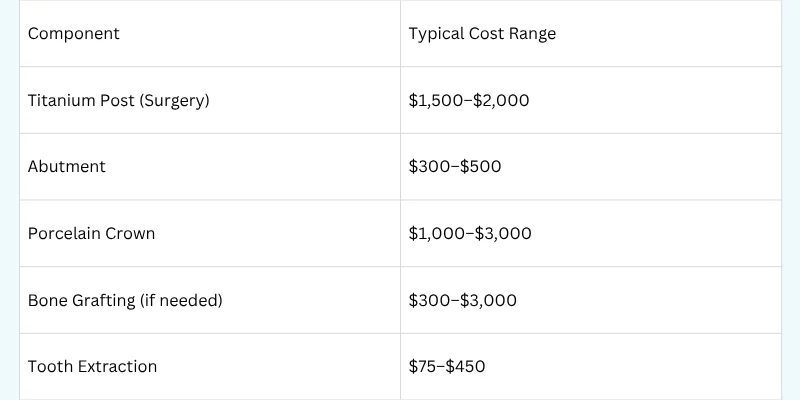
When you get a dental implant, you’re paying for three main parts. The titanium post goes into your jawbone and acts as the tooth root.
The abutment connects the post to the visible part of your tooth. The crown sits on top and looks like your natural tooth.
Each piece has its own cost. The surgical placement of the titanium post typically runs between $1,500 and $2,000. The abutment usually costs $300 to $500.
The porcelain crown adds another $1,000 to $3,000 to your total bill.
You might need extra procedures before getting your implant. Bone grafting can add $300 to $3,000 if your jawbone needs strengthening. Tooth extraction costs $75 to $450 per tooth.
Some patients need sinus lifts or other preparatory work that increases the final price.
Factors That Affect Dental Implant Pricing
Your location plays a big role in what you’ll pay for implant dentistry. Cities with higher living costs charge more than rural areas. The dentist’s experience and training also matter.
Specialists like oral surgeons or periodontists often charge higher fees than general dentists.
The type of implant you choose affects your cost. Standard titanium implants are less expensive than zirconia options. The brand and quality of materials your dentist uses can vary the price by hundreds of dollars.
Your mouth’s condition impacts the final bill. If you have gum disease or bone loss, you’ll need treatment before getting implants. Patients with good oral health typically pay less because they skip these extra steps.
Single Implant Cost Versus Multiple Implants
A single dental implant might range from $3,000 to $4,500 for the complete procedure. When you need multiple teeth replaced, the math changes. Getting several individual implants costs more than bridges or full arch solutions.
Full mouth dental implants can run from $30,000 to $50,000 or higher. However, solutions like All-on-4 use just four implants to support a full arch of teeth. This approach costs less than placing individual implants for every missing tooth.
You might save money per tooth when replacing multiple teeth at once. Dentists often offer package pricing that reduces your per-implant cost.
The surgical visit covers multiple placements, so you avoid paying separate procedure fees for each tooth.
Financing Options for Dental Implants Without Insurance
Several financing paths can help you cover dental implant costs when insurance isn’t an option.
Medical credit cards offer promotional periods, loans provide lump-sum funding, dentist payment plans keep everything in-house, and buy now pay later programs split costs into installments.

Medical Credit Cards and CareCredit
Medical credit cards like CareCredit are designed specifically for healthcare and dental care expenses. These revolving credit lines work similarly to regular credit cards but focus on medical procedures.
CareCredit and similar cards often provide interest-free promotional periods if you pay off the full balance within the term. This makes them popular for dental implant financing. However, you need to be careful with the fine print.
If you don’t pay the entire balance before the promotional period ends, deferred interest kicks in.
This interest gets charged from your original purchase date, not from when the promotion expires. Rates often exceed 25%, which can significantly increase your total cost.
Your credit score plays a major role in approval and the terms you receive. Patients with excellent credit typically qualify for the best promotional offers and lowest rates.
Dental Loans and Personal Loans
Dental loans are unsecured personal loans dedicated to healthcare expenses. You can find these through online lenders, banks, and credit unions.
They give you a fixed amount upfront to pay your dentist, then you repay the loan in monthly installments.
Personal loans for dental implants typically have repayment terms ranging from 3 to 7 years. Interest rates vary based on your credit history and the lender you choose.
Online platforms like LendingClub often process applications quickly, sometimes funding within one business day. Credit unions may offer lower rates if you’re a long-term member.
These loans work well for expensive cases like full arch implants or full-mouth rehabilitation that cost $30,000 or more.
The downside is that borrowers with bad credit face higher interest rates and origination fees. These extra costs add to the total amount you’ll pay for your dental work.
In-House Payment Plans From Dentists
Many dental offices offer their own payment plans directly to patients. These arrangements let you pay over time without involving a third-party lender.
In-house plans typically span 3, 6, or 12 months. Some dentists offer low interest or no interest options. This makes them attractive if you can’t qualify for traditional dental financing or want to avoid credit checks.
You work directly with the dental practice to set up a payment schedule. Make sure you understand all the terms before agreeing, including what happens if you miss a payment.
The main benefit is convenience and flexibility tailored to your specific situation. However, not all dental offices provide this option, and terms vary widely from practice to practice.
Installment and Buy Now, Pay Later Programs
Buy now, pay later services break your dental implant costs into smaller monthly payments. Several programs offer applications that take about 60 seconds and provide instant approval decisions.
These programs often have higher approval rates than traditional financing because they accept a wider range of credit profiles. Some qualified borrowers can access 0% APR for up to 60 months.
BNPL options let you start treatment right away without paying the full cost upfront. Loan amounts can reach $50,000, covering even complex implant procedures.
The application process typically doesn’t hurt your credit score with a hard inquiry.
Installment programs work well if you need immediate treatment but lack savings. Repayment terms are flexible, usually ranging from 12 to 60 months depending on the amount borrowed and your qualifications.
Alternative Ways to Make Dental Implants Affordable
Beyond traditional financing, you can access reduced-cost implant care through membership programs that offer discounts at participating offices, student-supervised treatment at accredited institutions, and international providers in countries with lower operating costs.
Dental Savings Plans and Discount Memberships
Dental savings plans work differently than insurance. You pay an annual membership fee, typically between $80 and $200, and receive discounted rates on procedures at participating dentists.
These plans have no waiting periods or claim forms. You can use your benefits immediately after enrollment. Dental discount memberships often reduce implant costs by 10% to 60%, depending on the provider and plan level.
Unlike insurance policies, dental savings plans don’t have annual maximums or coverage limits. You can get as many procedures as you need at the discounted rate.
This makes them particularly useful if you need multiple implants or extensive preparatory work like bone grafting.
Many plans also cover family members for a small additional fee. You’ll find both local and national networks, so compare which dentists participate before joining.
Some offices even offer their own in-house membership programs with similar benefits.
Dental School Clinics
Accredited dental schools provide implant procedures at significantly reduced prices. Students perform the work under close supervision from licensed faculty members.
Treatment at dental school clinics can cost 30% to 50% less than private practice rates. Schools like NYU College of Dentistry and UCLA Dentistry offer comprehensive implant services including diagnostics, placement, and restoration.
Appointments take longer because students work more carefully and instructors review each step. You might need more visits than at a regular office.
Availability can be limited since schools prioritize cases that match their educational curriculum.
You’ll need to meet eligibility requirements, which vary by institution. Most schools accept patients regardless of income level, though some give preference to those with financial need.
Call ahead to ask about waiting times, as popular programs may have waitlists of several months.
Dental Tourism for Cost Savings
Traveling to another country for affordable dental implants can reduce your total costs by 50% to 70%. Popular destinations include Mexico, Costa Rica, Thailand, and Hungary.
Lower labor costs and operating expenses in these countries allow qualified dentists to charge less. Many international practices cater specifically to medical tourists and offer modern facilities with English-speaking staff.
Benefits include:
- All-inclusive packages with hotel and transportation
- Same-day or next-day appointments
- Advanced technology and materials
- Vacation opportunity combined with treatment
Risks to consider:
- Limited recourse if complications arise
- Follow-up care requires additional travel
- Difficulty verifying credentials and facility standards
- Potential language barriers despite translators
Research providers thoroughly by checking reviews, requesting before-and-after photos, and verifying certifications.
Factor in travel expenses, time off work, and the cost of return trips for adjustments or repairs. Some complications might require local treatment once you’re home, which could eliminate your savings.
Nonprofit and Assistance Programs
Several nonprofit organizations provide free or reduced-cost dental implants to qualifying individuals, while community health centers offer affordable alternatives to traditional dental practices.
Dental Lifeline Network and Charitable Organizations
The Dental Lifeline Network connects you with volunteer dentists and labs across the United States who provide comprehensive dental care at no cost.
This organization specifically helps people with disabilities, the elderly, and those unable to afford treatment.
You’ll need to meet specific eligibility requirements. The program prioritizes individuals with persistent medical conditions and seniors who lack insurance coverage.
Other charitable organizations can help with implant costs. Give Back a Smile focuses on domestic violence survivors who need restorative dental work.
The American Academy of Cosmetic Dentistry Charitable Foundation assists people with dental injuries from domestic or sexual violence.
Smiles for Everyone operates in eight countries and has donated over $43 million in dental equipment. They offer implant grants to select individuals through their community smile programs.
Charitable Smiles pairs volunteer dentists with patients, though you’ll need a nomination from your current dentist to qualify.
Community Health Resources

Community health centers offer integrated care to people facing financial barriers, homelessness, or lack of insurance. These federally funded facilities provide dental services on a sliding fee scale based on your income.
Dental schools present another cost-effective option. Students perform procedures under licensed supervision, allowing you to receive implants at significantly reduced rates.
You’ll need extra time for appointments since students work more slowly than experienced practitioners.
Local hospitals partner with dental charities to provide affordable care programs. Ask about available assistance when you visit your local hospital or speak with your primary care physician about recommendations.
Mission of Mercy events organized by America’s Dentists Care Foundation bring free dental services to communities across 31 states. These temporary clinics serve hundreds of patients during each multi-day event.
Smart Strategies for Paying for Dental Implants
Tax-advantaged accounts can cut your costs by 20-30%, while direct negotiation with dental offices often results in 10-20% discounts.
Mixing different payment methods lets you spread costs across multiple resources to make treatment more manageable.
Using FSAs and HSAs
Flexible Spending Accounts and Health Savings Accounts let you pay for dental implants with pre-tax dollars. This means you avoid paying income tax on the money you use for your procedure.
An FSA allows you to set aside up to $3,200 per year from your paycheck before taxes. You need to use this money within the plan year or you lose it.
HSAs work differently because the money rolls over year after year if you don’t spend it.
Key benefits of using these accounts:
- You save 20-30% depending on your tax bracket
- The money comes straight from your paycheck
- Both accounts cover implant surgery, crowns, and related procedures
- HSAs can earn interest over time
You can contribute to an HSA only if you have a high-deductible health insurance plan. Your employer might also contribute matching funds to your HSA, which gives you even more money for your implants.
Negotiating With Providers
Many dental offices will lower their prices if you ask. Start by requesting a detailed breakdown of all costs for your implant procedure.
Ask your dentist about cash discounts if you can pay the full amount upfront. Some practices offer 5-15% off when you skip insurance billing. You can also request to have certain fees waived, like consultation charges or x-ray costs.
Try these negotiation approaches:
- Ask if the office offers package pricing for multiple implants
- Request a discount for scheduling during slower times
- See if they’ll match competitor pricing
- Ask about reduced fees for paying in full before treatment
Dental schools charge significantly less because students perform the work under supervision. You might pay 30-50% less than regular dental offices for the same implant.
Combining Multiple Payment Methods
You don’t have to rely on just one payment source. Split your implant costs across different options to reduce the burden on any single account.
Start by maxing out your FSA or HSA contribution. Then cover the remaining balance with an in-office payment plan that charges no interest. You could also put part of the cost on a 0% APR medical credit card for the first 6-12 months.
Example payment mix for a $5,000 implant:
| Payment Method | Amount | Timeline |
| HSA funds | $2,000 | Immediate |
| Office payment plan | $2,000 | 12 months, no interest |
| Medical credit card | $1,000 | 6 months, 0% APR |
This approach keeps your monthly payments low while avoiding interest charges. Make sure you pay off the credit card before the promotional period ends to avoid high interest rates.
Track all your payment deadlines carefully so you don’t miss any due dates.
Frequently Asked Questions
Patients with bad credit, limited funds, or no insurance often have questions about how to afford dental implants. Several financing companies work with lower credit scores, and some options don’t require credit checks at all.
What options are available for financing dental implants with bad credit?
You can still get financing even if your credit score isn’t perfect. CareCredit and other medical credit cards accept applicants with credit scores around 580-620, though you may get shorter promotional periods or higher interest rates.
In-house payment plans through your dental office are another good option. Many dentists offer their own financing that doesn’t require a credit check at all.
Dental school clinics can reduce your costs by 40-60%, which means you’ll need to borrow less money. This makes it easier to qualify for financing or pay out of pocket.
Are there dental financing companies that offer implant funding without a credit check?
Some financing options don’t require traditional credit checks. In-house payment plans offered directly by dental offices typically skip the credit check and let you pay over 6-24 months.
Third-party companies like LendingClub and Proceed Finance may use alternative credit scoring methods. These look at factors beyond your credit score, like income and banking history.
You can also ask family members to co-sign a loan if you have difficulty qualifying on your own. This gives you access to better interest rates and longer payment terms.
How can I find affordable dental implant financing near me?
Start by calling dental offices in your area and asking about their payment plans. Many practices now offer membership plans that give you 15-25% discounts on major procedures like implants.
Search for dental schools near you, as these provide the most significant cost savings. University programs charge $1,500-$2,500 per implant compared to $3,500-$5,500 at private practices.
Check if your employer offers HSA or FSA accounts. You can use pre-tax dollars to pay for dental implants, which saves you 22-35% depending on your tax bracket.
Is it possible to get government loans or assistance for dental work?
The federal government doesn’t offer specific loans for dental implants. However, a few state Medicaid programs provide limited implant coverage in cases of medical necessity.
Programs like Donated Dental Services offer free care to elderly, disabled, and medically fragile patients through volunteer dentists. The Dental Lifeline Network connects vulnerable populations with dentists who donate their services.
Federally Qualified Health Centers provide sliding-scale fees based on your income. While most don’t offer implants, some can help with extractions and temporary solutions while you save for implants.
What are some ways to finance dental implants if I’m located in Texas?
Texas Medicaid provides minimal adult dental coverage and doesn’t cover implants. You’ll need to look at private financing solutions like payment plans or medical credit cards.
The University of Texas Health San Antonio has a dental school with an implant program. You can get treatment at significantly lower costs with students working under faculty supervision.
Border cities like El Paso have easy access to Mexican dental clinics in Ciudad Juárez. Many Texans travel to Los Algodones or other Mexican border towns where implants cost $800-$1,500.
What strategies do people use to best manage the cost of dental implants?
Most patients combine multiple strategies to reduce their total costs. You might use an HSA to save pre-tax dollars, get treatment at a dental school, and then finance the remaining balance with CareCredit.
Ask your dentist for package pricing if you need multiple implants. Practices often give 10-20% discounts when you’re doing three or more implants at once.
Making lifestyle adjustments can free up $200-$300 per month for implant payments. Cutting expenses like dining out, subscription services, or smoking helps you pay off financing faster and avoid interest charges.