


Noticing bone graft granules coming out after surgery can be alarming, especially when you’re unsure whether it’s part of normal healing or a sign of trouble.
These small, sand-like particles may come from the graft material placed in your jaw, but what matters most is how the surgical site is healing.
A small amount of sand-like graft material can sometimes come loose during healing. This does not automatically mean the graft has failed, but persistent or significant material loss should be evaluated by your dentist.
What matters more than the granules themselves is everything else happening at the site: how your pain is trending, whether swelling is going up or down, and what the tissue around the area looks like.
Those details tell the real story, and they’re what separate a normal week of healing from something that needs a phone call.
Key Takeaways
- A few loose granules in the first week or two usually reflect normal shedding of surface graft material, not graft failure.
- Worsening pain, spreading swelling, pus, fever, or an open wound are the signals that call for prompt attention from your dental team.
- Even if a graft does fail, your path toward dental implants typically continues after the area heals and is regrafted.
Is It Normal for Bone Graft Granules to Come Out?
Yes, losing some graft particles during the first days and weeks of healing is a well-documented part of recovery. Oral surgery offices routinely warn patients ahead of time that this will happen, precisely because it looks more alarming than it actually is.
Why Can Loose Graft Particles Feel Like Sand?
Bone graft material is made of small granules packed into the socket or ridge, and its texture has been described as close to coarse sand by oral surgery practices that use it daily. The granules sitting closest to the surface aren’t yet held in place by new tissue or bone, so they can work loose with normal mouth movement, saliva, or gentle rinsing.
Deeper material stays protected under a membrane, stitches, or a layer of surgical glue. What you’re noticing on your tongue is usually just the loose top layer, not the structural core of the graft.
How Much Material Can Come Out During Healing?
A light amount over the first several days to two weeks fits within normal healing. Small granules commonly appear in the mouth during this window and shouldn’t cause alarm.
The pattern worth watching is volume and timing. A pinch of grit now and then in week one is routine; a steady stream of material still coming out well past the first week, or a sudden larger amount all at once, is a different situation and deserves a call to your dentist.
What Signs Could Point to a Complication?
Pain and swelling that move in the wrong direction, rather than the gritty bits themselves, are what usually point toward a real problem.
Most patients have some soreness and puffiness right after surgery; what matters is whether those symptoms ease up or keep building as the days pass.
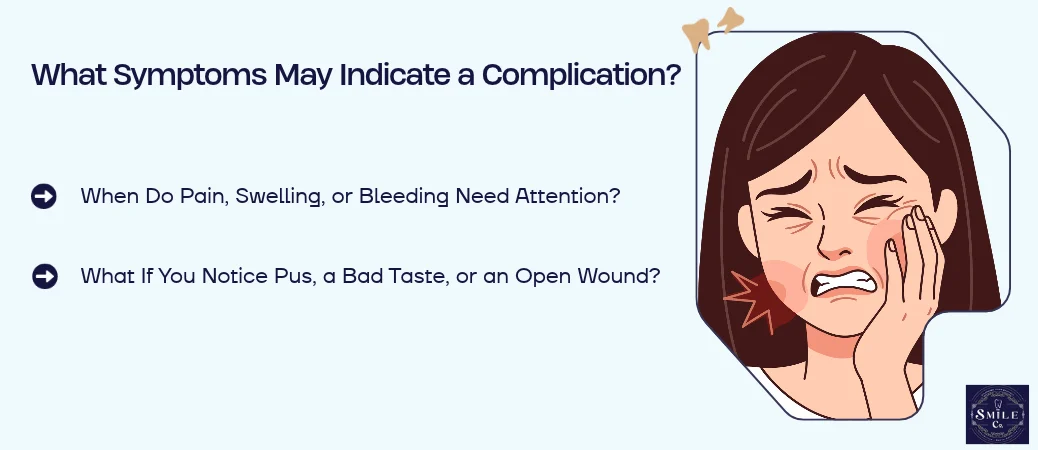
When Do Pain, Swelling, or Bleeding Need Attention?
Pain that worsens after day three or four, instead of easing, is one of the clearest warning signs.
Swelling typically peaks around 48 to 72 hours after surgery and then starts to go down; swelling that keeps growing past that window, or swelling that seems to be improving and then comes back, is worth a call.
Light pink-tinged saliva for the first day is common. Bleeding that soaks through gauze after 30 to 45 minutes of steady pressure, or heavy bleeding that restarts several days later, needs professional attention rather than more waiting at home.
What If You Notice Pus, a Bad Taste, or an Open Wound?
Pus, thick yellow-green discharge, or a persistent foul taste may indicate infection.
A fever after bone graft surgery is another reason to contact your dental team promptly, especially when accompanied by worsening pain or swelling.
An open wound where the stitch line has separated is another sign to call about, since it exposes graft material and the membrane underneath to bacteria.
None of these symptoms on their own prove the graft has failed, but each one means the site needs a professional look rather than a wait-and-see approach.
What Should You Do When Gritty Bits Come Out?
Protect the area and keep an eye on how you feel over the next day or two before deciding whether to call.
Most patients can manage a few loose granules at home with some simple precautions, while certain symptoms call for reaching out sooner.
How Can You Protect the Site Until Your Dentist Responds?
Leave the area alone as much as possible. Don’t poke it with your tongue or fingers, since the graft material stays movable during the early healing window and pressure can dislodge more of it.
Stick to a soft food diet and chew on the opposite side of your mouth. Skip straws, since the suction can disturb the blood clot protecting the graft.
Rinse gently rather than vigorously once your dentist clears you to rinse at all, usually starting the day after surgery. Avoid smoking, since it narrows the small blood vessels the graft depends on to heal.
When Should You Call Promptly or Seek Urgent Care?
Call during business hours if pain is worse on day four than it was on day two, if swelling that was going down suddenly returns, or if you notice more than a light sprinkle of granules coming out each day after the first week has passed.
Contact your dental team promptly if you develop a fever, notice visible pus, or experience worsening pain or swelling after bone graft surgery.
Seek emergency care for difficulty breathing or swallowing, rapidly spreading swelling toward your eye or neck, or heavy bleeding that won’t stop with firm gauze pressure. Do not wait for a specific fever reading if your symptoms are getting worse.
Why Might a Bone Graft Not Heal as Expected?
Most failures come down to infection, poor blood supply, or the graft shifting before it has a chance to stabilize. These causes often overlap, and several of them are within your control during recovery.
How Do Infection and Gum Disease Affect Healing?
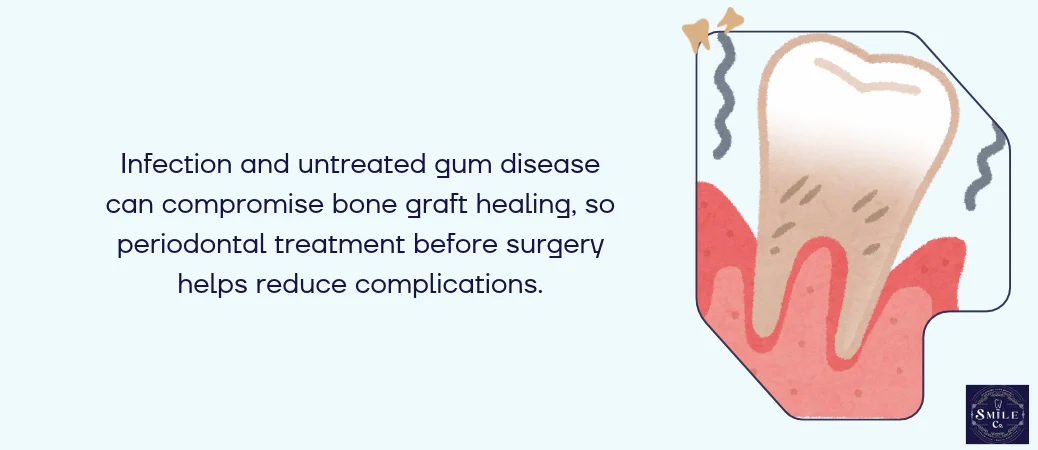
Infection can interfere with bone graft healing. If the gum tissue opens before the site has healed, bacteria may reach the grafted area and increase the risk of complications.
Active gum disease before surgery raises this risk further.
Periodontal infection in the surrounding tissue is typically treated with a deep cleaning well before grafting, since chronic inflammation nearby can undermine the graft even when the surgical site itself looks clean.
Can Pressure, Smoking, or Disturbing the Site Cause Problems?
Movement is one of the most common reasons a graft fails to integrate.
Chewing directly on the area, a denture pressing against it, or repeated tongue pressure can tear the delicate tissue forming over the graft before it matures into solid bone.
Smoking is an important controllable risk factor because it can reduce blood flow and interfere with the healing process.
Uncontrolled diabetes, long-term steroid use, and skipped follow-up visits also raise the odds of a setback, though each of these is something your dental team can help you manage ahead of your next procedure.
How Will Your Dentist Check Whether the Graft Is Healing?
A visual exam combined with imaging gives your dentist the clearest picture of whether a graft is integrating the way it should. Neither step alone tells the full story, which is why both are usually part of a follow-up visit.
What Can an Exam or Imaging Show?
At The Smile Company, follow-up evaluations help determine whether the graft site is healing as expected.
Dr. Thorpe A. Jacob can assess the surrounding gum tissue, review symptoms, and determine whether imaging or additional treatment is needed before moving forward with dental implants.
Imaging fills in what the eye can’t see. A periapical X-ray or a 3D cone beam scan shows whether the graft material has started developing the density of real bone or still looks patchy and underdeveloped, which helps confirm whether the site is ready for the next step.
What Happens If More Treatment Is Needed Before an Implant?
If the graft hasn’t taken as expected, the usual next step is cleaning out the failed material and treating any underlying infection before trying again.
A second graft is typically placed once the site has fully settled, which often takes four to eight weeks depending on the case.
Your dental team will evaluate the healing site and determine when it’s safe to move forward with dental implants. A setback doesn’t necessarily mean you have to give up on replacing your missing teeth.
It may simply mean allowing more time for healing or considering additional treatment.
A Few Granules Are Not the Whole Story
A handful of gritty bits on your tongue tells you very little on its own.
The fuller picture comes from how your pain, swelling, and the look of the tissue change over the days that follow, and that pattern is what your dentist will want to hear about if you call.
Most patients who notice some loose granules in the first week or two go on to heal without any complication.
Paying attention to the signs covered here, and reaching out when something crosses from normal into concerning, gives your graft the best chance to do its job before implant placement.
If you’re preparing for the next stage of treatment, reviewing what you should know about preparing for a dental implant can help you understand what comes after a graft heals successfully.
Frequently Asked Questions
How long can bone graft particles come out after surgery?
Small granules commonly appear in the first several days to two weeks after surgery as the loose surface layer of graft material works its way out.
Material still coming out in noticeable amounts past that window is worth mentioning to your dentist at your next check-in.
Does losing a few granules mean my bone graft failed?
No, losing a few granules in the early healing period is considered a normal part of recovery and doesn’t by itself indicate failure.
Graft failure is more closely tied to worsening pain, spreading swelling, pus, or an open wound than to the granules themselves.
What does an infected bone graft site look or feel like?
An infected bone graft site may cause thick, foul-smelling discharge, increasing redness, worsening swelling, or persistent pain.
Fever can also occur. Contact your dentist promptly if you notice these symptoms, even if your temperature hasn’t reached a specific threshold.
Can I rinse my mouth if graft particles are coming out?
Gentle rinsing is usually fine once your dentist has cleared you to begin rinsing, typically starting the day after surgery.
Avoid vigorous swishing or spitting, since forceful movement can dislodge more graft material and disturb the healing site.
Will I still be able to get a dental implant if my graft fails?
Yes, a failed graft rarely takes implants off the table for good. The site is usually cleaned, any infection is treated, and a second graft is placed once healing is complete, after which implant planning can move forward.