


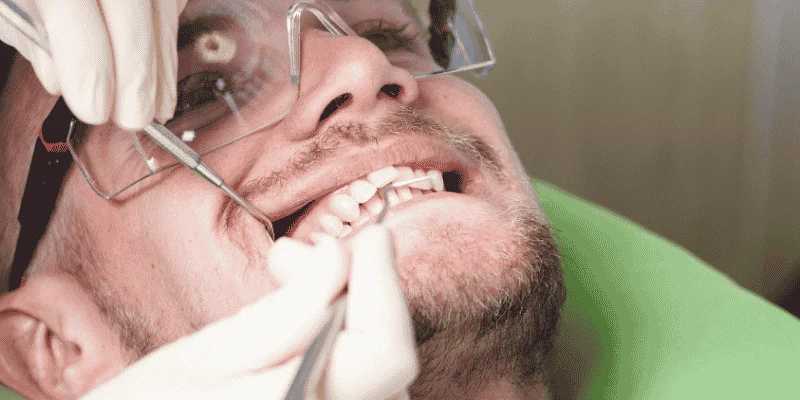
Not every damaged tooth needs to come out before getting a dental implant.
Your dentist determines if tooth extraction is necessary by evaluating factors like the severity of decay, infection levels, bone quality, gum health, and whether enough healthy tooth structure remains to support an implant.
Some teeth can be saved with treatments like root canals or crowns, while others cause more harm than good if you keep them.
Understanding when tooth extraction before implants becomes the right choice helps you avoid complications and supports long-term implant success.
A tooth with deep decay below the gum line, advanced gum disease, or a crack extending into the root typically cannot support proper implant placement.
Keeping a failing tooth often leads to bone loss and spreading infection, which makes getting an implant harder or even impossible later.
The good news is that your dental team can create a personalized treatment plan based on your specific oral health needs.
Whether you qualify for immediate implant placement on the same day as extraction or need time for healing first, knowing what to expect makes the process less stressful and helps you achieve the best long-term results.
Key Takeaways
- Tooth extraction before dental implant placement is necessary when severe decay, infection, damage, or bone loss makes saving the tooth impossible
- Your bone density, gum health, infection status, and overall medical conditions determine whether you can get immediate or delayed implant placement
- Proper evaluation, following aftercare instructions, and allowing adequate healing time improve your chances of successful implant outcomes
Key Factors That Influence Tooth Extraction Before Implants
Several conditions affect whether you need a tooth removed before getting an implant. Your dentist looks at tooth damage, gum health, positioning issues, and past treatment failures to make this decision.
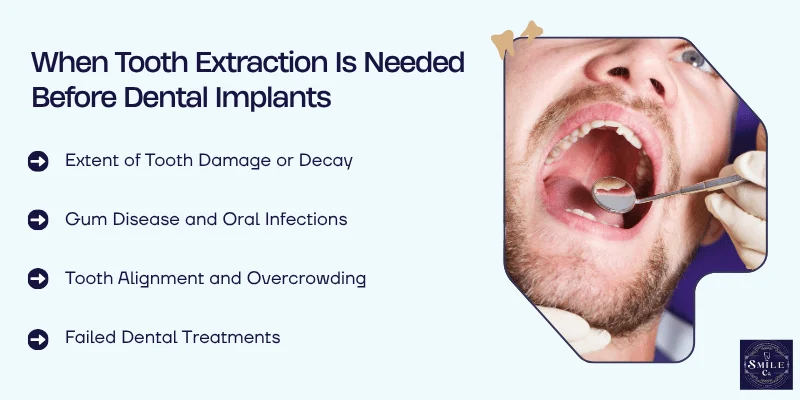
Extent of Tooth Damage or Decay
Severe decay or damage often means you need tooth extraction before implant placement. When a tooth has extensive cavities that reach deep into the root, saving it becomes impossible.
Cracks or fractures that extend below the gum line also make extraction necessary.
Your dentist checks how much healthy tooth structure remains. If more than half the tooth is damaged, an implant usually works better than trying to repair it.
Deep decay can spread to nearby teeth and bone if left untreated.
Tooth extractions become necessary when decay damages the tooth beyond what fillings or crowns can fix. A damaged tooth that stays in your mouth can harm your oral health and make future implant placement harder.
The bone may weaken over time if infection spreads from the damaged tooth.
Gum Disease and Oral Infections
Active gum disease often requires tooth extraction before you can get implants. Infections around teeth create an unhealthy environment that prevents implants from bonding properly with your jawbone.
Bacteria from periodontal disease can cause implant failure if not treated first.
Your dentist looks for signs like bleeding gums, loose teeth, or pockets of infection. These issues need treatment before implant surgery. Removing infected teeth stops the spread of disease to other areas.
Oral infections and gum disease directly impact implant success rates. Healthy gums and bone are essential for implants to last.
You may need several weeks or months of healing after tooth extractions to clear infections completely.
Tooth Alignment and Overcrowding
Poorly positioned teeth sometimes need removal to make room for proper implant placement. Overcrowding prevents implants from sitting in the correct position for good function and appearance.
Your jaw needs enough space for implants to fit without interfering with other teeth.
Teeth that lean or tilt the wrong way can block the ideal spot for an implant. Wisdom teeth often cause crowding issues that affect other tooth loss areas.
Removing problem teeth creates the space needed for successful implants.
Tooth alignment problems require careful planning before implant surgery. Your dentist measures available space and bone to determine if extractions help. Proper positioning ensures your implant works like a natural tooth.
Failed Dental Treatments
Previous dental work that fails may require tooth extraction before getting implants. Root canals, crowns, or bridges that don’t hold up leave teeth too weak to save.
Repeated treatments on the same tooth often damage it beyond repair.
Your dentist evaluates whether more conventional treatments will work or if extraction makes more sense. A tooth with multiple failed restorations typically has structural problems that won’t improve.
Missing teeth from failed treatments are prime candidates for implants.
Implants often provide a better long-term solution than trying to save a tooth with a poor track record. The cost and time spent on repeated repairs usually exceeds getting an implant from the start.
Assessing Bone and Gum Health for Implant Placement
Your jawbone needs enough density and volume to anchor dental implants securely, while healthy gums create the foundation for successful healing.
Dentists evaluate these factors through detailed examinations to determine if additional procedures are necessary before implant placement.
Bone Density and Volume Requirements
Your jawbone must be strong enough to support dental implants through a process called osseointegration. This is when the implant fuses directly with your bone tissue.
Bone density measures the mineral content and thickness of your jawbone. Dense bone provides a firm anchor that can handle the forces of chewing and speaking.
Low density weakens the bond between implant and bone, which can lead to implant failure.
Your dentist also checks bone volume, which includes height and width. The bone must be wide enough, tall enough, and architecturally suited to provide primary stability for the implant.
If you’ve had missing teeth for a while, your jawbone may have shrunk in these areas.
X-rays and CT scans show your exact bone structure. These images help your dentist measure the available bone and identify any underlying problems that could affect implant success.
Role of Bone Grafting and Sinus Lifts
When you don’t have enough bone, bone grafting procedures may be necessary before implants can be placed. A bone graft adds material to areas where your natural bone is too thin or too short.
The grafting material can come from your own body, a donor, or synthetic sources. It encourages new bone growth over several months. This process helps prevent bone loss and creates a stable base for your future implant.
A sinus lift is a specific type of bone graft for your upper back teeth. Your sinuses sit just above these teeth, sometimes leaving insufficient bone height.
During a sinus lift, your oral surgeon raises the sinus membrane and adds bone material underneath. This creates the vertical space needed for implant placement.
Both procedures require healing time before implants can be placed. Your dentist will explain the timeline based on your specific situation.
Importance of Gum Health and Healing
Your gums must be healthy and free from active infection before receiving dental implants. Periodontal health directly impacts how well your implant integrates with surrounding tissues.
Gum disease can weaken the soft tissue that supports your implant. If you have untreated periodontal problems, bacteria can spread to the implant site and cause complications.
Your dentist will treat any existing gum disease before moving forward with implant placement.
The thickness and quality of your gum tissue also matters. Thin gums may need augmentation to provide adequate coverage around the implant.
Healthy gums seal out bacteria and create a natural appearance around your new tooth.
Your healing ability plays a major role in implant success. Certain medical conditions like diabetes can slow healing, so your dentist will review your health history carefully.
Types of Tooth Extraction and Implant Placement Timing
The timing between tooth extraction and implant placement varies based on your specific dental situation.
Dentists use different approaches, ranging from placing the implant on the same day as extraction to waiting several months for complete healing.
Immediate Implant Placement After Extraction
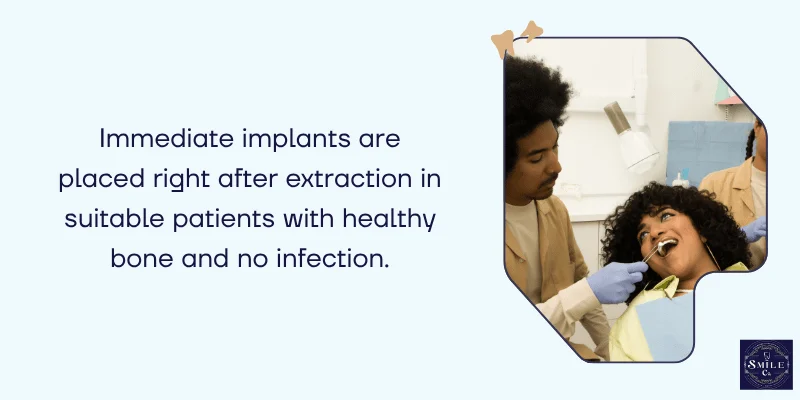
Immediate implant placement means your dentist inserts the implant directly into the socket right after removing your tooth. This happens during the same appointment, eliminating the need for a second surgery later.
You might be a good candidate for immediate implants if you have healthy gums and enough bone density around the extraction site. Your tooth also needs to be free from infection or large areas of bone loss.
Benefits of immediate placement include:
- Fewer surgical procedures and dental visits
- Shorter overall treatment time
- Better preservation of bone and gum tissue
- Reduced discomfort from multiple surgeries
However, not everyone qualifies for this approach. If you have an infection, insufficient bone, or certain health conditions, your dentist will recommend a different timeline.
Early and Delayed Implant Placement Options
Early implant placement occurs when your dentist waits 4-8 weeks after extraction before placing the implant.
This gives your gums time to heal while the socket still has good bone structure. Early implant placement within 1-2 months works well when immediate placement isn’t possible but you want to avoid long delays.
Delayed placement happens 12-16 weeks post-extraction or later. Your dentist might choose this timing if you need bone grafting or had a large infection.
The extended healing period allows your bone to fill in properly and creates a more stable foundation for the implant.
Factors that affect timing include:
- Amount of bone loss at the extraction site
- Presence of infection or gum disease
- Whether you need bone grafting procedures
- Your overall health and healing ability
When Temporary Crowns and Restorations Are Used
A temporary crown can be placed on your implant shortly after surgery to give you a functional tooth while healing occurs. This lets you eat, speak, and smile normally during the months-long process of bone integration.
Your dentist might place a temporary crown immediately after implant placement if the implant has good initial stability.
The temporary restoration is designed to look natural but won’t bear the full force of chewing until the permanent crown is ready.
Timeline for temporary and permanent restorations:
| Restoration Type | Typical Timing | Purpose |
| Temporary crown | Same day or within weeks | Aesthetics and basic function |
| Permanent crown | 3-6 months after implant | Full chewing strength and durability |
Some cases require you to avoid putting pressure on the temporary crown while the implant bonds with your jawbone. Your dentist will give you specific instructions about eating and oral care during this healing phase.
Risks and Benefits of Extracting Teeth Before Implants
Removing a tooth before getting an implant comes with both advantages and possible problems. Understanding these factors helps you make better choices about your oral health and long-term results.
Preventing Implant Failure
Getting a tooth extracted before your dental implant surgery gives your dentist a clean foundation to work with.
When damaged or infected teeth stay in place, they can harm the surrounding bone and gums. This damage increases the chance of implant failure down the road.
Dental implants work better when they’re placed in healthy bone tissue. If you have decay or infection, extracting the problem tooth removes harmful bacteria that could spread to your new implant.
Your jawbone needs to be strong enough to hold the implant in place for years to come.
Waiting to extract a failing tooth can lead to more bone loss over time. The longer an infected tooth remains, the more damage it causes to nearby structures. This makes the implant procedure harder and less likely to succeed.
Advantages of Timely Tooth Replacement
Acting quickly when you need tooth extraction and implant treatment protects your oral health. Your jawbone starts to shrink when you experience tooth loss. The bone needs stimulation from tooth roots to stay strong.
Dental implants provide this stimulation just like natural teeth do. When you replace extracted teeth promptly, you prevent the bone from deteriorating further.
This keeps your face shape normal and maintains proper bite alignment.
Benefits of quick replacement include:
- Less total bone loss
- Shorter overall treatment time
- Better long-term stability
- Lower risk of neighboring teeth shifting
Potential Complications and How to Avoid Them
Every dental procedure carries some risk. After extraction, you might experience bleeding, swelling, or discomfort. Infections can develop if you don’t follow care instructions properly.
Some people face longer healing times than expected. Your age, health conditions, and whether you smoke all affect how fast you recover. Damaged or decayed teeth sometimes leave less bone for implant placement.
To reduce complications:
- Follow all aftercare instructions from your dentist
- Don’t smoke before or after the procedure
- Keep the extraction site clean
- Attend all follow-up appointments
- Tell your dentist about medications you take
Your dentist may recommend bone grafting if extraction removes too much bone. This adds material to rebuild the area before placing your implant. While it extends treatment time, it improves your chances of success.
The Step-by-Step Process and Aftercare for Best Results
Getting a dental implant involves multiple stages that take place over several months. Proper care at each step helps your implant heal correctly and last for many years.
Tooth Removal and Healing

Your dentist will numb the area before removing your tooth from its socket. The tooth extraction procedure typically takes 20 to 40 minutes depending on the tooth’s location and condition.
After the extraction, you’ll need to bite down on gauze for 30 to 45 minutes to stop bleeding.
You should avoid rinsing your mouth, drinking through a straw, or smoking for at least 24 hours to protect the blood clot that forms in the socket.
The healing timeline varies based on your health and the extraction type. Most people need to wait 3 to 6 months before implant placement to allow the bone to heal fully.
During this time, eat soft foods for the first few days and take any prescribed pain medication as directed.
Keep the extraction site clean by gently rinsing with salt water after the first 24 hours. You can return to normal activities within a day or two, but avoid intense exercise for about a week.
Implant Surgery and Abutment Placement
Once your extraction site has healed, your dentist will place the dental implant into your jawbone during a minor surgical procedure.
The implant acts as an artificial tooth root and needs 3 to 6 months to fuse with your bone through a process called osseointegration.
After the implant bonds with your bone, your dentist will attach a small connector piece called an abutment.
This abutment placement usually requires a second minor surgery where your dentist reopens the gum tissue to expose the implant. The abutment sits above your gum line and holds your final crown.
Your gums need about 2 weeks to heal around the abutment before your dentist can attach the permanent crown. During this healing period, you might have a temporary crown to protect the area and maintain your appearance.
Long-Term Maintenance for Implant Success
Your dental implants need the same care as natural teeth to stay healthy. Brush twice daily with a soft-bristled toothbrush and floss at least once per day around the implant and abutment.
Good oral hygiene prevents gum disease, which can cause implant failure. Use a non-abrasive toothpaste and consider an antimicrobial mouthwash to reduce bacteria around your implants.
Visit your dentist every 6 months for professional cleanings and checkups. Your dentist will check that your implant remains stable and that the surrounding gum tissue stays healthy.
They’ll also examine your bite to ensure the implant isn’t experiencing too much pressure.
Avoid chewing ice, hard candy, or other very hard foods that could damage your implant crown. If you grind your teeth at night, ask your dentist about a protective night guard to prevent excessive wear on your implants.
Frequently Asked Questions
Many patients wonder how dentists make decisions about saving versus removing teeth, what damage levels require extraction, and how timing and costs play into the treatment plan.
These questions cover the key factors that shape your path from extraction to implant.
How does my dentist decide whether a tooth can be saved instead of removed before getting an implant?
Your dentist evaluates several factors to decide if a tooth is worth saving. They look at how much healthy tooth structure remains and whether the damage extends below the gum line.
The condition of the tooth’s root matters too. If you have severe decay that can’t be repaired or a failed root canal, extraction may be the better choice.
Your dentist also considers the long-term success rate. A tooth that might only last a few more years often isn’t worth keeping if an implant could serve you for decades.
What signs show a tooth is too damaged or infected to support an implant without extraction?
Deep infection or abscess around a tooth root creates a poor environment for implant placement. Active infection must be cleared before an implant can integrate properly with your jawbone.
A tooth broken below the gumline typically can’t support a crown or provide a stable base. When fractures extend into the root, extraction becomes necessary.
Persistent pain, swelling, bad taste, or drainage signal serious problems. If you notice a loose tooth or ongoing discomfort, these symptoms often mean the tooth can’t be saved.
How much jawbone loss is considered a problem, and could I need bone grafting after a tooth is removed?
You need enough jawbone height and width to hold an implant securely. Most implants require at least 10mm of bone height and 5-6mm of width, though exact measurements depend on the implant size.
Bone volume that falls below these minimums often requires grafting. Your dentist uses X-rays or CT scans to measure your bone and determine if grafting is needed.
Sometimes bone grafts are placed right when your tooth is removed. This helps build up the jaw so it can hold an implant later.
Do I always need my tooth pulled before getting a dental implant, or can an implant be placed right away?
A dental implant isn’t meant to replace a healthy tooth. You only need extraction when a tooth is failing or already missing.
Immediate placement means the implant goes in right after the tooth comes out during the same visit. This approach can work well when you have good bone volume and no active infection.
Delayed placement happens when your dentist waits weeks or months for the socket to heal first. This method is safer if infection is present or if your bone needs time to recover.
How long can I wait after a tooth extraction before it becomes harder to place an implant?
Your jawbone starts to shrink after a tooth is removed. The most significant bone loss happens in the first three to six months following extraction.
Waiting too long can reduce bone volume enough that you need grafting you might have avoided with earlier placement. Some patients wait years, but this often means more complex treatment.
The tooth extraction and implant timeline varies based on your oral health and bone density. Getting an implant within a few months helps preserve bone and keeps treatment simpler.
What factors most affect the total cost when a tooth extraction is needed before an implant?
The complexity of your extraction influences cost. Simple extractions cost less than surgical removal of broken or impacted teeth.
Whether you need bone grafting adds to the total expense. Grafts require additional materials and healing time before implant placement.
Your overall health and oral hygiene also play a role. Medical conditions that require extra precautions or longer healing periods can increase treatment costs and the number of visits needed.