

Choosing between full-mouth dentures and implant dentures affects more than just your smile. It changes how you eat your favorite foods, speak with confidence, and care for your teeth each day.
These two options work differently and require different levels of care and adjustment.
The main lifestyle difference is that implant dentures stay fixed in place and let you eat most foods, while traditional full-mouth dentures can shift during eating and speaking, requiring more daily adjustments.
Implant-supported options provide 98% chewing power, meaning you can bite into steak or apples without worry. Traditional dentures offer only 10-20% of normal chewing ability and cover the roof of your mouth, which can affect taste.
Your choice between these options will impact your daily routine, your budget, and how natural your teeth feel. Understanding the real long-term differences in comfort, chewing ability, and bone health helps you pick what works best for your life.
Both options can restore your smile, but they offer very different experiences.
Key Takeaways
- Implant dentures stay permanently fixed and restore up to 98% of chewing power, while traditional dentures which are considered to be an alternative to dental implants are removable and provide only 10-20% chewing ability
- Full-mouth dentures require daily removal and cleaning and may need adjustments over time as bone loss occurs, whereas implant dentures help prevent bone loss and need less maintenance
- The choice between these options depends on your budget, oral health, lifestyle needs, and whether you want a permanent or removable solution
Understanding Full-Mouth Dentures and Implant Dentures
Full dentures replace all your missing teeth using removable devices, while implant dentures anchor to posts placed in your jawbone for a more stable fit. Each type works differently and affects your daily life in unique ways.
What Are Full-Mouth Dentures?
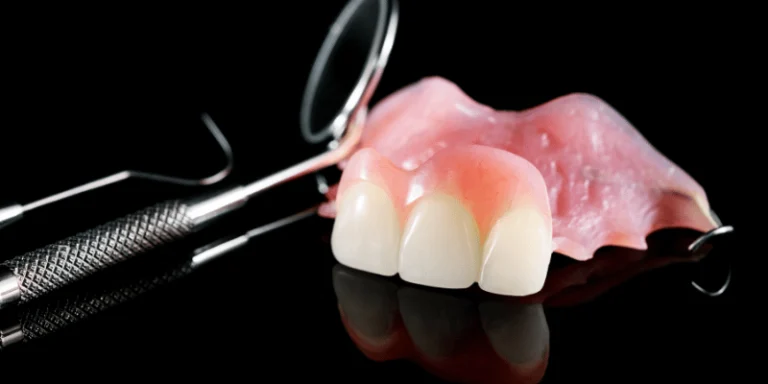
Full-mouth dentures are removable prosthetic devices that replace all your natural teeth on the upper or lower jaw. Complete dentures rest directly on your gums and stay in place through suction and sometimes denture adhesive.
You’ll need to remove conventional dentures every night for cleaning and to let your gums rest. They sit on top of your gum tissue, which means they can shift when you eat or talk.
The denture base covers the roof of your mouth if it’s an upper denture. This coverage can affect how you taste food and may feel bulky at first. Your mouth needs time to adjust to wearing them comfortably.
Types of Dentures: Complete, Partial, and Overdentures
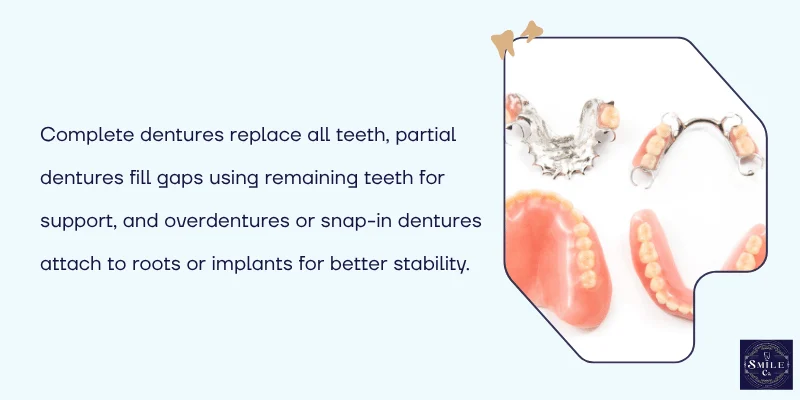
Complete dentures replace all teeth in your upper or lower arch when you have no natural teeth remaining.
Partial dentures fill in gaps when you still have some healthy teeth left, using metal clasps or attachments to hook onto your existing teeth.
Overdentures are a special type that fit over either remaining tooth roots or dental implants.
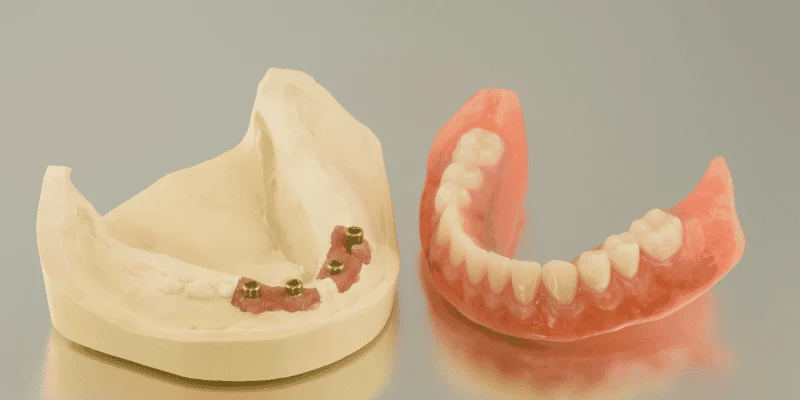
Snap-in dentures attach to implants with clips or snaps, giving you more stability than traditional dentures but still requiring removal for cleaning.
Each type serves different needs based on how many teeth you’re missing. Your dentist will help you pick the right option for your situation.
What Are Implant Dentures?
Implant-supported dentures attach to titanium posts surgically placed in your jawbone. These posts act like artificial tooth roots that fuse with your bone over time.
The dentures then connect to these implants permanently or with secure attachments.
You don’t remove implant dentures at night like traditional dentures. They stay fixed in your mouth, functioning more like natural teeth. This gives you better chewing ability and prevents the denture from slipping.
The implants also help preserve your jawbone by providing stimulation that stops bone loss. This keeps your facial structure from changing over time.
Full Mouth Dental Implants: All-on-4 and All-on-6
Full mouth dental implants like All-on-4 use four strategically placed implants to support an entire arch of replacement teeth. The back implants angle at 45 degrees to maximize contact with available bone.
All-on-6 uses six implants for even more stability and support.
These full mouth dental implants provide 98% chewing power compared to natural teeth. You can eat almost any food without worry about your dentures moving or falling out.
The procedure typically happens in one day, with temporary teeth attached immediately. Your dentist replaces these with permanent teeth after your implants fully heal. This approach costs more upfront but lasts longer than other options.
Daily Life Differences: Eating, Speaking, and Comfort
The type of denture you choose affects how you chew food, speak clearly, and feel comfortable throughout your day.
Implant dentures provide more chewing power and stability, while traditional full-mouth dentures require adjustments to your eating habits and may need adhesive for security.
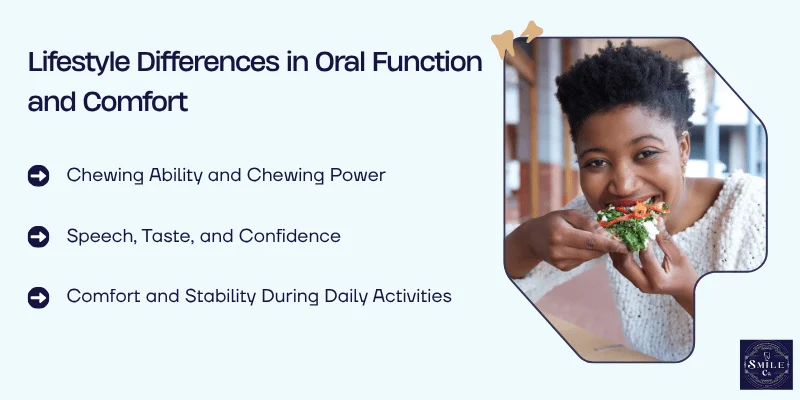
Chewing Ability and Chewing Power
Implant dentures give you significantly better chewing efficiency than removable dentures. With implants anchored into your jawbone, you can bite with about 70-80% of the force of natural teeth.
This means you can eat tougher foods like steak, raw vegetables, and crusty bread without worry.
Traditional full-mouth dentures only restore about 20-25% of your natural chewing power. You’ll need to cut food into smaller pieces and avoid sticky or hard items that could dislodge your dentures.
Foods like corn on the cob, whole apples, and tough meats become challenging.
Denture adhesive can help improve stability during eating, but it doesn’t increase your actual chewing ability.
Snap-in dentures offer a middle ground with better chewing efficiency than traditional dentures while costing less than fixed implant options.
Speech, Taste, and Confidence
Your ability to speak clearly changes with different denture types. Traditional dentures cover your entire upper palate, which can muffle taste and affect pronunciation. You might struggle with “s” and “f” sounds at first.
Implant dentures don’t cover your palate, letting you taste food fully and speak more naturally. Many people adjust to traditional dentures within a few weeks, but some never feel completely natural when talking.
Your confidence in social situations often depends on how secure your dentures feel. Fixed implant dentures stay in place, so you don’t worry about slipping while laughing or talking.
Traditional dentures may shift unexpectedly, even with adhesive, which can make you self-conscious during conversations or meals with others.
Comfort and Stability During Daily Activities
Implant dentures feel more stable during physical activity, laughing, and yawning. They don’t move or require daily removal and cleaning in the same way removable dentures do.
Traditional dentures can slip during exercise or sudden movements. You’ll need to remove them nightly for cleaning and to let your gums rest.
This affects your oral health routine and means you’re without teeth for several hours each day.
Denture adhesives help improve stability but need reapplication throughout the day for some people. The adhesive can also change how food tastes and requires thorough cleaning.
Implant-supported options eliminate the need for adhesives entirely, providing consistent comfort in daily life.
Oral Health and Jawbone Considerations
Your jawbone needs stimulation from tooth roots to stay healthy and strong. When you lose teeth, your jaw starts to change in ways that affect both your oral health and facial structure.
Bone Loss and Jawbone Density
Traditional full-mouth dentures sit on top of your gums without connecting to your jawbone. This means your jaw doesn’t get the stimulation it needs from chewing.
Over time, you’ll experience bone loss that can be quite significant.
Your jawbone can shrink by 25% in width during the first year after tooth loss. This shrinking continues throughout your life, which is why dentures need adjustments and relining every few years.
Implant dentures work differently because they’re anchored into your jawbone. The titanium posts act like tooth roots and help prevent bone loss by stimulating the bone when you chew.
Through a process called osseointegration, the implants fuse with your jawbone over several months. This keeps your jaw strong and maintains its density.
If you don’t have enough jawbone density for implants, you might need bone grafting. A bone graft adds material to weak areas of your jaw to create a stable foundation for implants.
Impact on Oral Hygiene
Cleaning full-mouth dentures requires you to remove them daily. You’ll brush them with special cleaners and soak them overnight. You also need to clean your gums and any remaining oral tissues with a soft brush.
Implant dentures stay in your mouth permanently in most cases. You care for them much like natural teeth by brushing twice daily and flossing around the implants.
This routine is simpler for many people because it matches what they’re already used to doing.
Daily care differences:
- Full-mouth dentures: Remove, brush, soak, clean gums separately
- Implant dentures: Brush, floss, rinse like regular teeth
Your gum health is easier to monitor with implant dentures since you’re not constantly removing and replacing a prosthetic.
Maintaining Jawbone Health and Preventing Bone Loss
The best way to prevent bone loss is to replace missing teeth with implants. Full mouth dental implants provide 98% chewing power, which creates strong forces that stimulate your jawbone naturally.
Traditional dentures only give you 10-20% of normal chewing ability. This weak stimulation doesn’t protect your jawbone health.
As your jaw shrinks, your dentures become loose and uncomfortable, requiring frequent adjustments.
Regular dental checkups help catch bone loss early. Your dentist can track changes in your jawbone density and recommend treatments if needed.
If you’re wearing traditional dentures and experiencing significant bone loss, switching to implant-supported options might still be possible with bone grafting procedures.
Maintenance, Durability, and Long-Term Satisfaction
The daily care needs and lifespan differ significantly between full-mouth dentures and implant dentures. These differences affect how much time you spend on upkeep and how often you need professional work done.
Cleaning and Daily Care Routine

Full-mouth dentures require removal every night for cleaning. You need to brush them with a soft-bristled brush and soak them in a cleaning solution while you sleep.
Many people who wear traditional dentures also need denture adhesive to keep them secure during the day. This adds extra steps to your morning routine and means you have to reapply it throughout the day if needed.
Implant dentures stay fixed in your mouth, so you clean them just like natural teeth. You brush twice daily and floss around the implants. No removal or soaking is required.
You don’t need adhesives with implant dentures since they attach securely to the implants in your jaw. This makes your daily routine simpler and more like what you did before losing your teeth.
Durability and Longevity
Traditional dentures typically last 5 to 7 years before needing replacement. They wear down from daily use and your jaw bone changes shape over time, which affects the fit.
Implant dentures can last 10 to 15 years or longer with proper care. The implants themselves can last a lifetime if they stay healthy. You may need to replace the denture portion eventually, but the implants usually remain stable.
Your jaw bone stays stronger with implant dentures because the implants stimulate the bone like natural tooth roots. Traditional dentures don’t stop bone loss, which continues over the years you wear them.
Adjustments, Relining, and Replacements
Full-mouth dentures need regular adjustments as your mouth changes. Most people need relines every 1 to 2 years to improve the fit as bone loss occurs.
These adjustments and relines cost money and require dental checkups. Without them, your dentures become loose and uncomfortable. You might experience sore spots or difficulty eating.
Implant dentures need fewer adjustments overall. Your dental checkups focus on keeping the implants healthy and checking the denture for wear. The implants don’t shift like traditional dentures, so major fit issues are rare.
Replacement costs are higher for implant dentures when needed, but you replace them less often. Traditional dentures cost less to replace but you do it more frequently throughout your life.
Candidacy, Procedures, and Financial Considerations
Not everyone qualifies for the same tooth replacement options, and the steps involved differ greatly between traditional dentures and implant-supported solutions.
Understanding who can get each treatment, what the processes involve, and how much you’ll need to budget helps you plan for your best tooth replacement option.
Who Is a Candidate for Each Option?
Almost anyone can wear traditional dentures since they sit on top of your gums and don’t require surgery. If you’ve lost most or all of your teeth, dentures work regardless of your bone density or overall health.
Dental implants have stricter requirements. To qualify for dental implants, you need good general and oral health plus adequate jawbone density to support the implant posts.
If your jawbone has thinned from years of tooth loss, you might need a bone graft or sinus lift to build up the area before implant placement.
Your dentist will take X-rays and CT scans to measure your bone quality. They’ll also review your medical history since conditions like uncontrolled diabetes or active gum disease can affect healing after the dental implant procedure.
Some people who smoke heavily or take certain medications may face higher risks with implants. Your dentist can explain whether these factors affect your candidacy for permanent tooth replacement.
The Dental Implant Procedure
Getting dental implants to replace missing teeth involves multiple appointments over several months. Your dentist first surgically places titanium posts into your jawbone where teeth are missing.
These posts act as artificial tooth roots.
After placement, you’ll need 3-6 months for the bone to fuse with the implants through a process called osseointegration. This creates a solid foundation for your new teeth.
Once healing completes, your dentist attaches small connector pieces called abutments to the implants. They then secure the implant crown or full arch of replacement teeth to these abutments.
The entire process takes longer than getting dentures, but the result is a stable, permanent solution.
Cost Differences and Insurance Coverage
Traditional dentures typically cost $1,000-$3,000 per arch, making them the most budget-friendly option upfront. However, they need relining, adjustments, and replacement every 5-10 years.
The cost of dental implants ranges much higher. Full mouth dental implants can run $15,000-$30,000 or more per arch depending on how many implants you need and whether additional procedures like bone grafts are necessary. Single implant crowns generally cost $3,000-$5,000 each.
Most dental insurance plans cover at least part of denture costs since they’re considered a basic necessity.
Insurance rarely covers implants since many companies classify them as cosmetic, though this is changing as implants become more common.
Many dental offices offer payment plans or financing options to make implants more accessible.
While the upfront investment is significant, implants can last 20+ years with proper care, potentially making them more cost-effective long-term than repeatedly replacing dentures.
Making Your Decision: Lifestyle Fit and Personal Preferences
Your daily routine and how you want to feel about your smile play major roles in choosing between full-mouth dentures and implant dentures.
The right choice depends on factors like your activity level, social habits, and emotional comfort with tooth replacement.
Choosing Based on Lifestyle and Needs
Your lifestyle should guide your decision between dentures vs implants. If you travel often or lead an active life, dental implants offer more stability during physical activities and meals.
You won’t worry about them slipping while you exercise or eat crunchy foods.
Traditional dentures work well if you prefer a non-surgical option and have a predictable daily routine. They require removal for cleaning and overnight soaking, which means planning around these maintenance tasks.
Consider your diet preferences too. Implant dentures let you eat almost any food without restrictions. Regular dentures limit your choices because hard or sticky foods can dislodge them.
Your budget matters when planning a full mouth restoration. Implants cost more upfront but last longer. Dentures are cheaper initially but need replacements every 5-10 years.
Think about both immediate costs and long-term expenses.
Social, Emotional, and Psychological Impacts
Your confidence in social settings often depends on how secure your teeth feel. Dental implants stay firmly in place, so you can laugh, talk, and eat without worrying about embarrassing slips during conversations or meals.
Many people feel self-conscious about removing dentures for cleaning. This affects their comfort staying overnight at someone’s home or traveling. Implants eliminate this concern since they’re permanent.
Your speech patterns may change with traditional dentures until you adjust to them.
Some people develop a slight lisp or clicking sounds that affect their confidence in professional settings. Implants feel more natural and typically don’t create speech issues.
The psychological comfort of having teeth that feel real matters to your quality of life. Implant-supported options provide the sensation of natural teeth, which helps many people feel more like themselves again.
Frequently Asked Questions
People considering dentures often have specific questions about daily life, comfort levels, and care requirements. The choice between traditional and implant-supported options affects everything from what you eat to how you clean your teeth.
What can I expect in terms of lifestyle adjustments after getting full-mouth dentures?
You’ll need time to adjust to speaking and eating with traditional dentures. The dentures cover the roof of your mouth, which can make food taste bland at first.
Chewing power drops to only 10-20% of what you had with natural teeth. This means you’ll need to cut food into smaller pieces and avoid certain hard or sticky foods.
You’ll need to remove your dentures every night for cleaning. This requires a dedicated cleaning routine with special solutions and a safe place to store them while you sleep.
How do implant dentures compare with traditional dentures regarding everyday comfort and use?
Implant-supported dentures provide 98% chewing power, letting you eat almost any food you want. They stay firmly in place without moving around in your mouth.
You don’t need to remove implant dentures at night. They function like natural teeth and don’t require adhesives to keep them secure.
Implant dentures don’t cover the roof of your mouth. This means you can taste food normally and speak more clearly from the start.
What significant lifestyle changes should one be aware of when choosing implant-supported dentures?
Your eating habits can return to normal with implant dentures. You can enjoy tough meats, crispy vegetables, and chewy foods without worry.
The initial healing period takes several months after implant placement. During this time, you’ll need to follow specific dietary restrictions and attend regular follow-up appointments.
Implant dentures help prevent bone loss in your jaw, which keeps your facial structure intact over time. Traditional dentures don’t provide this benefit.
What are the common challenges one might face with implant dentures in their daily routine?
The upfront cost of implant dentures is higher than traditional dentures. You’ll need to budget for the initial surgery and restoration work.
Some people experience temporary swelling and discomfort after implant surgery. You might need to take time off work for the procedure and initial recovery.
You’ll need to maintain good oral hygiene around the implants. While easier than managing traditional dentures, you still need to brush and clean around the implant posts daily.
Can you tell me about the maintenance requirements for full-mouth dentures versus implant dentures?
Traditional dentures require removal and soaking in cleaning solution every night. You’ll need to brush them separately and clean your gums before putting them back in.
The dentures may need adjustments, relines, or replacements over time as bone loss changes the shape of your jaw. These visits add to the long-term maintenance schedule.
Implant dentures stay in your mouth and get brushed like natural teeth. You’ll use a regular toothbrush and may need special floss or water flossers to clean around the implants.
Regular dental checkups are important for both options. Your dentist will check the fit of traditional dentures or examine the implant posts for any issues.
In terms of food and diet, are there any notable differences between living with full-mouth dentures and implant dentures?
Traditional dentures limit your food choices significantly. Hard foods like apples, nuts, and crusty bread become difficult or impossible to eat comfortably.
Sticky foods like caramel or taffy can pull traditional dentures loose. You’ll likely avoid these foods to prevent embarrassing situations.
Implant dentures let you eat virtually any food with confidence since they don’t shift or move around. Your diet can include all the foods you enjoyed with natural teeth.
You won’t need to worry about food getting trapped under implant dentures the way it can with traditional ones. This makes eating out and social dining much more enjoyable.