

Getting full-mouth dental implants changes your life, but many patients don’t realize how much the recovery demands from them.
You might think the hard part ends when you leave the dental office, but the real work is just beginning. Understanding the full mouth implant recovery time helps you prepare properly and avoid setbacks.
Most patients underestimate the total healing time, which typically spans three to six months before you receive your permanent teeth, not the few weeks many expect.
The initial healing phase after full-mouth implant surgery involves more than managing pain and swelling. Your body needs time to fuse the titanium posts with your jawbone through a process called osseointegration.
This biological process can’t be rushed, no matter how well you follow instructions.
The gap between expectations and reality causes frustration for many patients. You’ll need to adjust your diet for weeks, take time off work, and commit to careful oral hygiene during each stage of healing.
Understanding what happens during recovery from full-mouth dental implants helps you plan better and stay patient as your body heals.
Key Takeaways
- Full-mouth dental implant recovery takes three to six months for complete healing, not just a few weeks
- The first week after surgery requires strict rest, soft foods only, and careful management of swelling and discomfort
- Long-term success depends on daily oral hygiene habits and regular dental checkups after you receive your final teeth
What Patients Commonly Underestimate About Full-Mouth Dental Implants Recovery
Most people focus on the surgery itself but don’t realize how much the recovery process demands from them. The healing journey involves both visible changes in your mouth and unseen processes happening deep in your jawbone.
Expectations Versus Reality
You might think you’ll bounce back in a few days, but full-mouth dental implants recovery actually unfolds over several weeks. Many patients underestimate how tired they’ll feel after the procedure.
Common misconceptions include:
- Being able to eat normally within a week
- Returning to strenuous exercise immediately
- Experiencing minimal swelling or discomfort
- Speaking clearly right away with temporary teeth
The reality is different. Your mouth needs time to adjust to the implants. You’ll likely deal with swelling, bruising, and mild pain for the first several days.
Soft foods become your main diet for weeks, not days. Hard, crunchy, or spicy foods can damage healing tissue and compromise your implant recovery.
The Importance of Patience
Healing from dental implants can’t be rushed. Your body works on its own schedule, and trying to speed things up often backfires.
The first week requires serious rest. You need to avoid heavy lifting, skip intense workouts, and give your body energy to heal. Some patients try to return to normal activities too quickly and end up with complications.
Your jawbone needs months to fully integrate with the titanium posts. This process, called osseointegration, happens gradually beneath your gums. You won’t see it or feel it happening most of the time.
Pushing yourself too hard during implant recovery can lead to implant failure. Following your dentist’s timeline matters more than your personal schedule or preferences.
Invisible Healing Below the Surface
What you can’t see is actually the most important part. While your gums heal on the outside, your jawbone is actively fusing with the dental implants underneath.
This bone integration process takes 3 to 6 months for most patients. During this time, your implants are becoming part of your jaw structure. The titanium posts stimulate bone growth around them, creating a stable foundation.
You might feel fine after a few weeks and assume everything is healed. But the bone is still working to secure those implants firmly in place. Regular dental check-ups help your dentist monitor this hidden progress through imaging and exams.
Skipping follow-up appointments or ignoring care instructions can interfere with this crucial process. Your temporary teeth protect the implants while osseointegration completes.
Considering full mouth dental implants in Greenville, SC? Contact us to understand your recovery timeline and what to expect at every step.
Immediate Post-Surgery Period: The First 72 Hours
The first three days after dental implant surgery bring the most intense symptoms, but knowing what to expect helps you manage them effectively.
Swelling peaks around 48 hours, and your body needs proper rest and nutrition to start healing.
Managing Swelling and Discomfort
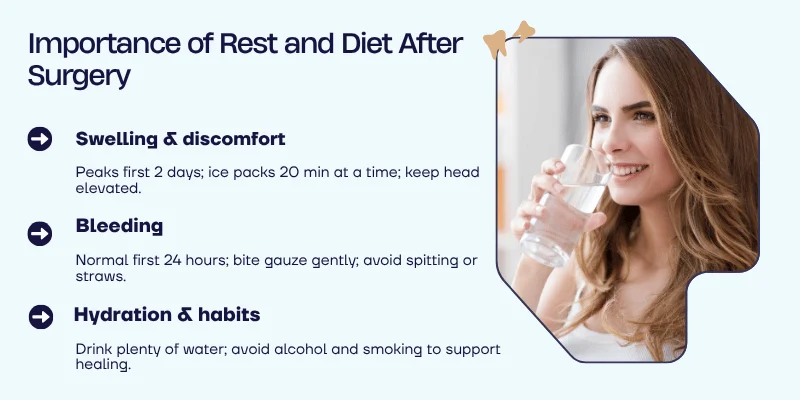
Swelling is a normal response after full-mouth dental rehabilitation. You’ll notice it increases during the first two days, then begins to decline. Your face may look puffy, especially around your cheeks and jaw.
Apply ice packs to your face for 20 minutes at a time during the first 48 hours. This reduces swelling and numbs discomfort. Keep your head elevated, even when sleeping, to minimize fluid buildup.
Your dentist will prescribe pain medication to manage discomfort. Take it as directed, not just when pain becomes severe.
Many patients find the pain and discomfort usually last only 3-5 days, though immediate post-surgery symptoms are strongest.
Minor bleeding is normal for the first 24 hours. Bite gently on gauze pads to control it. Avoid spitting forcefully or using straws, as this can disrupt blood clots forming at surgical sites.
The Role of Rest and Soft Foods
Your body uses significant energy to heal after dental implant surgery. Plan to rest for at least the first three days. Avoid physical activities, heavy lifting, and anything that raises your blood pressure.
Alt-text: importance-of-rest-and-diet-after-surgery
Stick to cold or room-temperature soft foods like smoothies, yogurt, applesauce, and broth. These foods won’t irritate your surgical sites. Avoid hot foods and drinks, which can increase bleeding and swelling.
Stay hydrated by sipping water throughout the day. Proper hydration supports healing and helps flush out anesthesia from your system. Don’t drink alcohol or smoke, as both slow down recovery and increase infection risk.
Early Healing Phase: Week One and Beyond
The first week after full-mouth dental implants sets the foundation for successful healing, with swelling and discomfort peaking in the first 72 hours before gradually improving.
Understanding what’s normal during this critical healing phase helps you stay on track and avoid complications.
Critical Milestones in the First Week
Your body responds immediately to surgery with swelling, minor bleeding, and tenderness around the implant sites. These reactions are completely normal and actually indicate your body is starting the repair process.
Expect these changes during days 1-7:
- Days 1-3: Peak swelling and discomfort that requires ice packs every 2-3 hours
- Days 4-5: Noticeable reduction in swelling and improved comfort
- Days 6-7: You can return to light activities and feel more like yourself
During the first week of implant recovery, you’ll need to stick with soft foods like smoothies, yogurt, mashed potatoes, and protein shakes. Avoid anything hot, spicy, or crunchy.
Most patients can manage pain with prescribed medications for 3-5 days before switching to over-the-counter options.
Rest is essential. Skip the gym, avoid bending over frequently, and don’t lift anything heavy.
Recognizing Signs of Healthy Healing
Knowing the difference between normal healing and potential problems saves you stress and protects your investment. Healthy dental implant healing includes gradual improvements each day.
Normal healing looks like this:
- Swelling that decreases after day three
- Pink gums that may feel tender but not throbbing
- Minor oozing in the first 24 hours that stops with gentle pressure
- Slight bruising that fades within a week
Warning signs requiring immediate contact with your dentist:
- Fever above 101°F
- Severe pain that worsens instead of improves
- Heavy bleeding that doesn’t stop
- Pus or foul odor from the surgical site
- Implant feeling loose or shifting
Safe Oral Hygiene Practices
You might worry about cleaning your mouth without disturbing the implants, but gentle care actually supports healing. Your dentist will provide specific instructions during follow-up visits, but general guidelines apply to most patients.
Start with saltwater rinses 24 hours after surgery. Mix half a teaspoon of salt in warm water and gently swish it around your mouth three to four times daily, especially after meals.
Use a soft-bristled toothbrush to clean your natural teeth and avoid the surgical sites for the first few days. By day five, you can carefully brush around the implant areas using light pressure.
Don’t use regular mouthwash containing alcohol, as it irritates healing tissue and delays recovery.
Learn the full mouth implant recovery time and what patients often underestimate. Contact The Smile Company to discuss your personalized plan.
Osseointegration and Bone Integration Timeline
The bone integration process for full-mouth dental implants takes 3 to 6 months on average, though your jawbone quality and overall health can extend this timeline significantly.
What Is Osseointegration?
Osseointegration is when your jawbone grows around and fuses directly to the titanium implant posts. This biological process creates a permanent bond that makes your implants as stable as natural tooth roots.
Your body treats the implant surface like natural bone tissue. Bone cells called osteoblasts attach to the implant and begin building new bone around it. This happens in several overlapping phases that start immediately after surgery.
The first phase involves protein absorption within minutes of placement. Then inflammation occurs for several days as your body clears debris and recruits healing cells.
New bone formation begins within 7 to 14 days, with immature woven bone appearing by week 2 to 4.
Why This Phase Takes Months
Your bone needs time to grow and mature around each implant post. The initial woven bone that forms is weak and disorganized, requiring several months to remodel into strong lamellar bone.
Dental implant recovery progresses through distinct stages. Week 1-3 often shows a temporary stability decrease as old bone breaks down faster than new bone forms.
Week 3-6 brings recovery as new bone formation accelerates. By week 6-12, your bone reaches 60 to 70 percent of its final strength.
Lower jaw implants typically integrate faster than upper jaw implants because the lower jawbone is denser. Your upper jaw has softer, more porous bone that requires an extra 1 to 2 months for adequate fusion.
Common Challenges and Risks
Failed osseointegration occurs when fibrous tissue forms around the implant instead of bone. This happens in 2 to 5 percent of cases and requires implant removal and replacement.
Several factors can disrupt the bone integration timeline:
- Smoking reduces blood flow and oxygen delivery to healing tissues
- Uncontrolled diabetes slows bone formation and increases infection risk
- Poor oral hygiene allows bacteria to compromise the healing site
- Excessive pressure on implants before fusion completes
Too much movement at the implant site (over 150 micrometers) prevents proper bone attachment.
That’s why you can’t eat hard foods or get your permanent teeth during the healing phase. Infection during this period is particularly serious because it prevents bone cells from attaching to the implant surface properly.
Transitioning to Final Restoration
After months of healing, your implants are ready for permanent teeth that look and feel natural. The crown placement process marks the final step where temporary teeth are replaced with custom-designed restorations built to last.
Preparing for Permanent Crowns
Alt-text: preparing-for-permanent-crowns
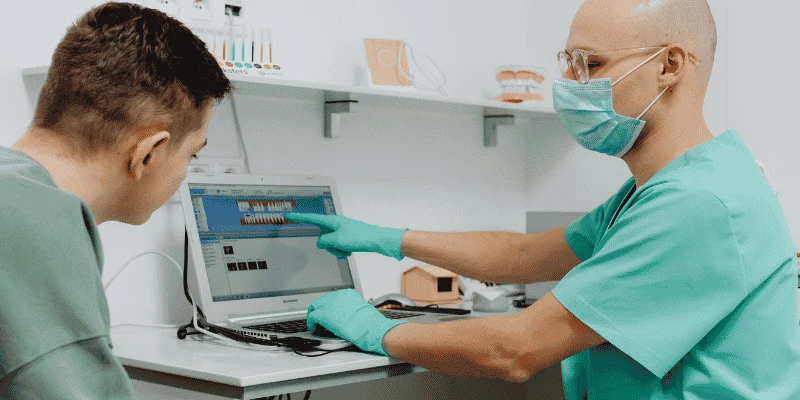
Your dentist will schedule appointments to prepare for your permanent crown installation. This involves taking detailed impressions or digital scans of your mouth to create crowns that match your facial structure and bite perfectly.
During this phase, your dental team evaluates how well osseointegration has progressed. X-rays and physical examinations confirm that the implants have fused properly with your jawbone.
The color, shape, and size of your new teeth are carefully selected to look natural.
You’ll work with your dentist to choose the shade of your crowns. Most people select a color that matches their natural teeth or opt for a brighter shade for a more dramatic transformation.
The abutment and crown are custom-made in a dental laboratory, which typically takes two to three weeks.
Crown Placement Process
The actual placement appointment usually takes one to two hours per arch. Your dentist first attaches small connector pieces called abutments to your implants.
These abutments serve as the foundation that holds your permanent crowns in place.
Once the abutments are secured, your dentist checks the fit of your new crowns. Adjustments are made to ensure proper alignment and comfortable chewing.
The permanent crowns are then carefully attached to the abutments using dental cement or small screws.
Your bite will be tested multiple times during the appointment. You’ll be asked to close your mouth and chew to make sure everything feels right. Minor modifications can be made on the spot if needed.
Adjusting to a Restored Smile
The first few days with your permanent teeth may feel strange. Your mouth needs time to adjust to the new restorations, even though they’re designed to feel natural.
Speaking and eating will gradually become easier as you get used to your restored smile.
You might notice slight pressure or sensitivity initially. This is normal and usually fades within a week. Start with softer foods and gradually introduce harder items as you gain confidence.
Your new teeth require the same care as natural teeth. Brush twice daily, floss carefully around each crown, and visit your dentist for regular checkups.
Most patients report that within two weeks, their permanent restoration feels completely natural and they forget they even have implants.
Long-Term Care for Full-Mouth Dental Implants
Your implants need consistent care to last for decades. Daily cleaning and regular dental visits protect your investment and keep your new smile healthy.
Maintaining Oral Hygiene
Brushing twice daily is essential for keeping your full mouth dental implants in good condition. Use a soft-bristled toothbrush and non-abrasive toothpaste to avoid scratching the implant surfaces.
You should brush gently around each implant post and along the gum line where bacteria can build up.
Flossing remains just as important with implants as it was with natural teeth. Special floss designed for implants or water flossers work well to clean between your prosthetic teeth and around the implant posts.
These tools help remove food particles and plaque that regular brushing might miss.
Rinsing with an antibacterial mouthwash adds another layer of protection. This step helps reduce bacteria that could lead to infection around your implants.
Proper care for full mouth dental implants requires these daily habits to prevent complications and maintain the health of your gums and bone.
Attending Regular Follow-Up Visits
Your dentist needs to check your implants every six months to catch potential problems early. These follow-up visits include professional cleanings that remove buildup you cannot reach at home.
Your dental team will also take x-rays to monitor how well your jawbone supports the implants.
During these appointments, your dentist examines the fit of your prosthetic teeth and makes adjustments if needed. They check for signs of infection, loosening, or bone loss around the implant sites.
Catching these issues early prevents more serious complications that could threaten your implants.
Missing these regular checkups puts your dental implant recovery and long-term success at risk. Your dentist can spot warning signs before you notice any symptoms.
Want to know how full mouth implant recovery time may affect your daily routine? Schedule a visit in Greenville, SC and get expert guidance from our dental team.
Frequently Asked Questions
Full recovery from full-mouth dental implants typically takes three to six months, though you’ll feel much better within the first few weeks.
Many patients don’t expect the gradual nature of healing or the specific care instructions needed during different stages.
How long does it usually take to fully recover from a full-mouth dental implant procedure?
The complete healing process for full-mouth dental implants takes between three to six months for most patients. This timeframe allows the titanium posts to fully integrate with your jawbone through a process called osseointegration.
You’ll notice major improvements much sooner than that. The first week brings the most noticeable discomfort, with swelling and tenderness being common. By week two, most of the initial swelling goes away and you’ll feel more comfortable.
During weeks three and four, you’ll start feeling more normal in your daily routine. The implants begin to stabilize, and temporary teeth feel more secure. By weeks seven and eight, you’re typically ready for your permanent prosthetic teeth.
What are some common unexpected aspects of the recovery process after getting full-mouth dental implants?
Many patients don’t expect how tired they feel during the first week after surgery. Your body uses a lot of energy to heal, which means you’ll need more rest than you might anticipate.
The amount of swelling catches some people off guard. Your face may look puffy for several days, especially around the cheeks and jaw area. This is completely normal and peaks around day three before gradually decreasing.
Speaking differently with temporary teeth surprises many patients. You might notice a slight lisp or feel awkward when talking at first. This improves as you adjust to your new teeth over the following weeks.
The length of the soft food diet also takes people by surprise. You’ll need to stick with softer foods for at least four to six weeks, which is longer than many expect.
What activities should I avoid during my recovery period to ensure the best outcome for my dental implants?
You should avoid heavy lifting and strenuous exercise for at least the first week after surgery. These activities increase blood pressure and can cause bleeding or swelling at the implant sites.
Smoking and drinking alcohol must be avoided during recovery. Smoking slows down healing and increases the risk of implant failure. Alcohol can interfere with medications and delay the healing process.
Don’t use straws for drinking during the first few weeks. The suction motion can disturb the surgical sites and cause complications. Drinking directly from a cup or using a spoon for liquids works better.
Avoid hard, crunchy, or sticky foods throughout your recovery period. These can damage the implant sites or dislodge temporary teeth. Skip foods like nuts, chips, popcorn, and chewy candies until your dentist gives you the okay.
Can you describe the typical stages of healing following full-mouth dental implant surgery?
Week one is the critical healing phase where you’ll experience the most discomfort. Swelling, minor bleeding, and tenderness are normal during this time. Your body starts the initial healing process as blood clots form around the implant sites.
During week two, your gums begin to settle down. The swelling decreases noticeably, and you’ll feel more comfortable eating soft foods. Your dentist may remove stitches during a follow-up appointment if they’re not the dissolvable type.
Weeks three and four mark the early stability phase. The titanium posts start integrating with your jawbone, and temporary teeth feel more secure. Speaking and eating become easier as you adjust to your new teeth.
Weeks five through eight bring steady progress. Your gums become firmer, and the bone-implant fusion continues. By the end of this period, you’re typically ready for your permanent prosthetic teeth.
The final stage involves osseointegration completion over the next several months. The implants fully bond with your jawbone, creating a strong foundation for your permanent teeth.
What are some signs that my recovery from full-mouth dental implants isn’t going as planned?
Severe pain that doesn’t improve with prescribed medication is a warning sign. While some discomfort is normal, intense pain that gets worse instead of better needs attention from your dentist.
Excessive bleeding beyond the first 24 hours indicates a problem. Light bleeding or oozing is normal initially, but heavy bleeding that soaks through gauze quickly requires immediate care.
Fever above 101 degrees Fahrenheit suggests a possible infection. A low-grade fever in the first day or two is normal, but persistent or high fever needs evaluation.
Implants that feel loose or move when touched aren’t healing properly. Your implants should feel firmly in place, even during the early healing stages.
Persistent swelling that doesn’t decrease after the first week or swelling that suddenly gets worse may signal infection or other complications. Pus or bad-smelling discharge from the implant sites also indicates infection.
Are there any specific dietary recommendations to follow during my full-mouth dental implants recovery?
Stick to soft foods for the first few weeks after surgery. Smoothies, broths, yogurt, and pureed soups are excellent choices that provide nutrition without stressing your implant sites.
Cold foods can help reduce swelling during the first few days. Ice cream, frozen yogurt, and chilled smoothies feel soothing and provide comfort while you heal.
Add protein-rich soft foods to support healing. Scrambled eggs, protein shakes, mashed beans, and soft fish give your body the building blocks it needs for tissue repair.
By week four, you can expand to a broader range of soft foods. Cooked vegetables, pasta, soft rice, and ground meat become options as your gums strengthen.
Avoid hot foods and drinks during the first few days because they can increase bleeding and swelling. Let everything cool to room temperature before eating or drinking.
Stay hydrated by drinking plenty of water throughout your recovery. Water helps flush out bacteria and supports the healing process without irritating surgical sites.