

Dental implants are one of the most successful tooth replacement options available, but like any surgical procedure, they can sometimes develop complications.
If you notice persistent swelling, bleeding when brushing, bad breath, pain around the implant, or pus near the implant site, these are signs that your dental implant may be painful, infected, and needs immediate attention.
Catching an infection early makes a huge difference in whether your implant can be saved.
Many people ignore mild symptoms because they think it’s just part of normal healing. But what starts as slight redness or tenderness can quickly turn into a serious problem that threatens your oral health.
Understanding the warning signs of a dental implant infection helps you protect your investment and keep your smile healthy for years to come.
The good news is that most implant infections can be treated successfully when you act fast.
Knowing what to watch for after your implant placement gives you the power to spot trouble before it becomes a bigger issue.
Key Takeaways
- Early signs of dental implant infection include swelling, bleeding, bad breath, and tenderness around the implant that doesn’t go away
- Advanced symptoms like pus, exposed implant parts, or a loose feeling require immediate professional care to prevent implant failure
- Good oral hygiene, regular dental visits, and avoiding tobacco can help prevent infections and keep your implants healthy long-term
Recognizing Early Warning Signs
Catching an infection early can save your dental implant and prevent serious complications. Pain, swelling, bleeding, and unusual tastes or odors around your implant are red flags that need immediate attention.
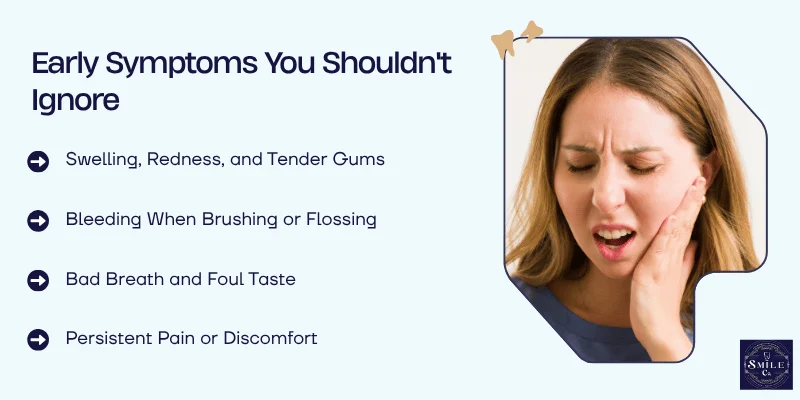
Swelling, Redness, and Tender Gums
Some swelling right after your implant surgery is normal. But if you notice swelling, redness, or tenderness weeks or months later, something might be wrong.
Your gums around the implant should look pink and healthy. Red or inflamed tissue often signals infection.
The area might feel sore when you touch it or eat.
Watch for gums that seem puffy or swollen compared to the rest of your mouth. This swelling might come and go at first. But it usually gets worse if you don’t get treatment.
If the redness spreads or the swelling increases, contact your dentist right away.
These are clear signs that bacteria might be attacking the tissue around your implant.
Bleeding When Brushing or Flossing
Healthy gums around dental implants shouldn’t bleed during your normal oral hygiene routine. Bleeding when brushing or flossing is one of the most common implant infection symptoms you’ll notice at home.
You might see pink on your toothbrush or blood in the sink when you spit. This happens because infected tissue becomes inflamed and breaks down easily.
Light bleeding once in a while might not mean much. But regular bleeding every time you clean around your implant needs attention.
The bleeding might be light at first and get heavier over time.
Don’t stop your oral hygiene because of the bleeding. Keep brushing and flossing gently. But schedule an appointment with your dentist to check what’s causing it.
Bad Breath and Foul Taste
Bad breath and a foul taste in your mouth can point to infection around your dental implant.
These signs of dental implant infection happen when bacteria build up and release waste products.
The bad breath might not go away even after brushing your teeth. You might notice a metallic or bitter taste that seems to come from the implant area.
Some people describe it as a constant unpleasant taste they can’t get rid of.
This smell and taste come from the bacteria and pus that form during an infection. Your normal oral hygiene habits won’t fix the problem if there’s an active infection.
If you experience these symptoms along with other warning signs, don’t wait. The infection could be spreading and damaging the bone that supports your implant.
Persistent Pain or Discomfort
Some discomfort after implant surgery is expected. But persistent pain weeks or months later isn’t normal and shouldn’t be ignored.
The pain from an implant infection can feel dull and achy or sharp and throbbing. It might get worse when you chew or put pressure on the implant. You might also feel pain when you touch the area around it.
Pain that wakes you up at night or interferes with eating is a serious warning sign. The discomfort might spread to your jaw, face, or nearby teeth.
Some people try to tough it out and hope the pain goes away on its own. But waiting only lets the infection get worse.
Early treatment gives you the best chance of saving your implant and avoiding bigger problems down the road.
Advanced Indicators and Urgent Symptoms
Some signs of infection require immediate dental attention because they point to serious damage around your implant.
These advanced symptoms of peri-implantitis can lead to implant failure if you don’t get treatment quickly.
Loose or Shifting Implant
A loose implant is one of the most serious warning signs you can experience. Your implant should feel stable and solid like a natural tooth.
If you notice any movement or shifting when you touch it with your tongue or finger, this means the supporting bone around it has been damaged.
The infection destroys the bone that holds your implant in place. This process can happen slowly over time or speed up if bacteria spread quickly.
A loose implant won’t get better on its own and usually means the infection has reached an advanced stage.
You need to see your dentist right away if your implant feels mobile. Waiting even a few days can make the difference between saving or losing the implant completely.
Gum Recession and Bone Loss
Gum recession around your implant exposes more of the metal post than you should see. Healthy gums should cover the connection between the implant and the crown.
When infection causes inflammation, your gums pull away and create pockets where more bacteria can collect.
Bone loss happens underneath the gums where you can’t see it at first. Your dentist will spot this problem on X-rays using advanced technology during checkups.
The infection triggers your body to break down the bone tissue that supports your implant.
Peri-implantitis with progressive bone loss is the main cause of late-stage implant failure. You might notice your implant looks longer than before or see dark gaps near the gum line.
Pus, Discharge, or Swelling
Pus around your implant is a clear sign of active infection. You might see yellow or white fluid oozing from the gums near the implant site.
Some people notice pus only when they press on the area or wake up with a bad taste in their mouth.
Swelling that doesn’t go away after a few days indicates your body is fighting an infection.
The area around your infected dental implant might feel puffy or look larger than the surrounding tissue.
Any type of discharge from the gums needs professional treatment. These fluids contain bacteria that can spread to other areas of your mouth.
Swelling combined with pus or drainage means the infection has become established and won’t clear up without antibiotics or other intervention.
Severe or Persistent Pain
Pain that gets worse over time or doesn’t respond to over-the-counter medication is not normal. You might feel a constant ache or throbbing sensation around the implant.
Some people describe it as pressure or a deep pain in the jaw.
Dental implant infections can cause pain that spreads to nearby teeth or up into your cheekbone. The discomfort often increases when you bite down or touch the area.
Pain that wakes you up at night or interferes with eating requires urgent care.
Fever along with implant pain suggests the infection has become more serious. Your body raises its temperature to fight off bacteria.
If you experience fever with any other signs of infection, contact your dentist immediately or visit an urgent care facility.
Primary Causes and Risk Factors
Dental implant infections develop when bacteria accumulate around the implant site and trigger inflammation in the surrounding tissues.
Several factors can increase your risk, from daily habits like oral hygiene practices to pre-existing health conditions that affect healing.
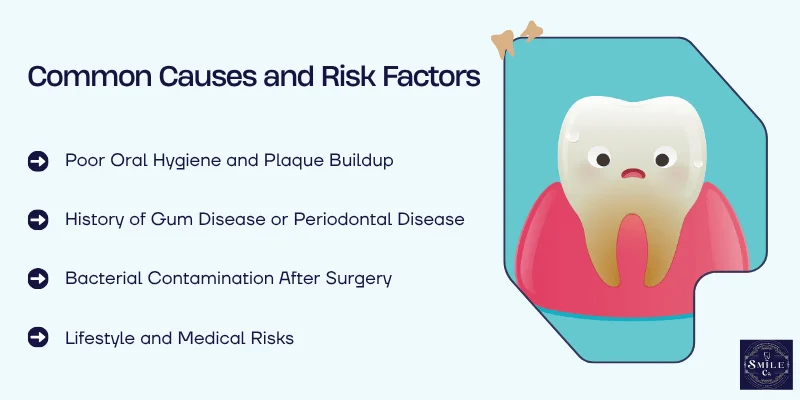
Poor Oral Hygiene and Plaque Buildup
The leading cause of implant infections is inadequate cleaning around your implant.
Bacteria in your mouth constantly form a sticky film called plaque on all surfaces, including your implant crown and the area where it meets your gums.
When you don’t remove this plaque through daily brushing and flossing, it hardens into tartar. This creates the perfect environment for harmful bacteria to multiply.
Many people wrongly believe that artificial implants don’t need thorough cleaning, but the gum and bone tissues around your implant are living and vulnerable to bacterial infection.
Your implant requires the same careful attention as your natural teeth. Without proper oral hygiene, bacteria can cause inflammation that starts in the gums and may progress to the bone supporting your implant.
History of Gum Disease or Periodontal Disease
If you’ve had moderate to severe gum disease before, you face a higher risk of developing an infection around your implant.
The same aggressive bacteria that caused your previous periodontal disease can attack the tissues surrounding your new implant.
This doesn’t mean you can’t get an implant if you’ve dealt with gum disease. However, your gum disease must be fully treated and controlled before implant surgery.
You’ll also need to be extra diligent with your cleaning routine and dental visits after receiving your implant.
The connection between past and future infections is strong because these bacteria don’t completely disappear from your mouth. They just wait for an opportunity to colonize new areas.
Bacterial Contamination After Surgery
Infections can develop during or shortly after implant placement if bacteria enter the surgical site. This can happen despite careful sterile techniques during the procedure.
During the implant procedure, the bone and soft tissues are exposed, creating a potential entry point for bacteria.
Sometimes excess dental cement used to attach the crown can get trapped under your gum line, acting as a surface where bacteria thrive and causing chronic inflammation.
The initial healing period after surgery is critical. Your body needs time to integrate the implant with the surrounding bone.
Any disruption during this phase increases infection risk.
Lifestyle and Medical Risks
Several personal health factors can compromise your body’s ability to fight infection around your implant.
Tobacco use restricts blood flow to your gum tissue and dramatically slows healing, making it one of the most significant risk factors for implant complications.
Key risk factors include:
- Smoking – Reduces blood flow and masks early warning signs like bleeding gums
- Uncontrolled diabetes – High blood sugar impairs healing and weakens immune response
- Teeth grinding – Excessive force can stress the implant and surrounding bone
- Immune system disorders – Conditions like rheumatoid arthritis make you more vulnerable to infections
Your overall health directly impacts your implant’s success. If you have any of these conditions, discuss them with your dentist before and after implant placement to minimize your risk.
How Implant Infections Are Diagnosed
Your dentist uses several tools and tests to check if your dental implant has an infection. They will examine your mouth closely, take special pictures of your jaw, and measure the spaces around your gums.
Professional Dental Evaluation
Your dentist or periodontist starts by looking at your implant and the area around it during your appointment. They check for visible signs of infection like redness, swelling, or pus coming from your gums.
During the exam, they will gently touch the area to see if you feel pain or tenderness. They also check if your implant feels loose or moves when pressed.
A healthy implant should feel solid and stable in your jaw.
Your dentist will ask you questions about your symptoms. They want to know if you have bad breath, a bad taste in your mouth, or bleeding gums.
These details help them understand what is happening with your implant.
Timely restorative treatments make it easier to catch problems early. When your dentist sees you every six months, they can spot small changes before they become serious infections.
Dental X-rays and Imaging
X-rays show what is happening under your gums where you cannot see. Your dentist takes pictures of your implant and the supporting bone around it.
These images reveal if the bone is breaking down or if infection has spread.
Sometimes your dentist needs more detailed pictures. They might use a special 3D scan called a cone beam CT scan.
This scan shows your jaw from all angles and helps them see the full extent of any damage.
The x-rays also help when diagnosing implant infection by showing how much bone loss has occurred. Healthy bone should wrap tightly around your implant.
If you see dark spaces on the x-ray between the bone and implant, this often means infection is present.
Measuring Gum Pocket Depths
Your dentist uses a small ruler called a probe to measure the spaces between your gums and implant. They gently slide this tool along your gum line to see how deep the pockets are.
Healthy gums have shallow pockets of 3 millimeters or less.
Deep pockets mean your gums are pulling away from the implant. This happens when infection destroys the tissue that holds everything in place.
Pockets deeper than 5 millimeters usually signal a problem that needs treatment.
The probe also checks if your gums bleed easily when touched. Bleeding during this test is another sign of infection.
Your dentist records these measurements at each visit to track changes over time.
Treatment Options and Recovery
Getting the right treatment quickly can save your dental implant and prevent serious complications.
Your dentist will choose from several approaches based on how severe the infection is, ranging from simple cleaning to surgical procedures.
Professional Cleaning and Deep Cleaning
Your dentist will likely start with professional cleaning if the infection is caught early. This involves removing plaque and bacteria buildup around your implant using special tools.
Deep cleaning goes further by reaching below the gum line to clean areas you can’t access with regular brushing.
The process is similar to what you’d get for treating gum disease. Your dentist uses ultrasonic tools to break up bacterial buildup without damaging the implant surface.
Most people need only local numbing for comfort during the procedure.
You might need multiple cleaning sessions depending on how much infection is present. Your dentist will check your progress at follow-up visits to make sure the inflammation is going down.
Antibiotic Therapy and Antibacterial Mouthwash
Your dentist may prescribe antibiotics to fight the bacterial infection directly. Common options include amoxicillin or other medications that target the specific bacteria causing your infection.
These work best when combined with professional cleaning rather than used alone.
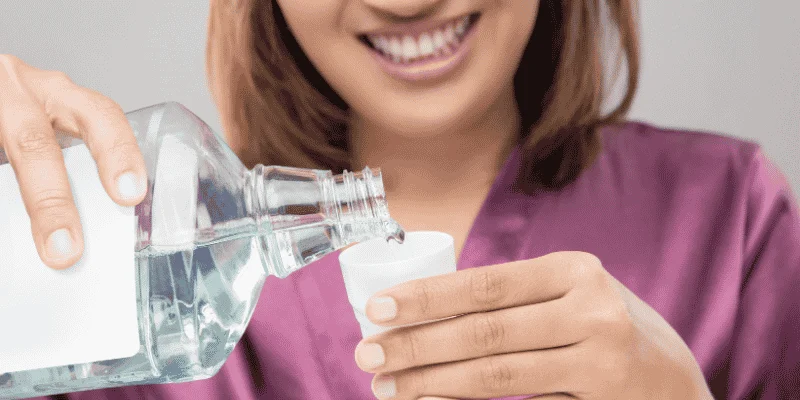
Antibacterial mouthwash plays a key role in your recovery. Your dentist will likely recommend a prescription-strength rinse containing chlorhexidine.
You’ll use this several times daily to keep bacteria levels low while your gums heal.
The combination of antibiotic therapy and mouthwash helps control infection in the early stages. You’ll typically use the mouthwash for several weeks even after symptoms improve.
Surgical Cleaning and Implant Removal
More serious infections require surgical treatment to access and clean the affected area thoroughly. Your periodontist will open the gum tissue to remove infected material and clean the implant surface completely.
This procedure allows them to see the full extent of damage and treat it properly.
Implant removal becomes necessary when the infection has caused significant bone loss or the implant has become loose. Your dentist will take out the failed implant and clean out all infected tissue.
This gives your jaw bone time to heal before considering a replacement.
Recovery from surgical cleaning takes several weeks. You’ll need to follow strict care instructions and attend regular checkups.
Bone Grafting and Implant Replacement
If you’ve lost bone around your implant due to infection, you’ll need bone grafting before getting a new one. Your surgeon places bone material in the damaged area to rebuild a strong foundation.
This process takes several months as the graft integrates with your natural bone.
Implant replacement can happen once your bone has fully healed from the infection and any grafting procedures. The timeline varies from person to person, but most people wait at least three to six months.
Your dentist will use X-rays to confirm the bone is healthy and strong enough to support a new implant.
The success rate for replacement implants is high when the infection is fully cleared first.
Following your dentist’s aftercare instructions carefully gives you the best chance of long-term success.
Prevention and Long-Term Implant Care
Preventing dental implant infection requires daily attention to oral hygiene and professional monitoring.
The steps you take at home and during regular dental visits work together to protect your investment and keep your implant healthy for years.
Daily Implant Care at Home
Your daily cleaning routine is the foundation of preventing dental implant infection. You should brush twice a day using a soft-bristled toothbrush to avoid damaging the tissue around your implant.
Hard bristles can scratch the implant surface and irritate your gums.
Clean around your implant with floss or special interdental brushes designed for implants. These tools remove food particles and bacteria from areas your toothbrush can’t reach.
A water flosser can also help flush out debris without putting pressure on the implant site.
Use an antimicrobial mouthwash if your dentist recommends it. This adds an extra layer of protection against bacteria that cause infection.
The key to long-term implant success is staying consistently clean without being too aggressive with your brushing or flossing technique.
Importance of Regular Dental Checkups
Professional dental checkups catch problems before they become serious. Your dentist can spot early signs of inflammation or infection that you might miss at home.
These visits typically include professional cleaning to remove hardened plaque that regular brushing can’t eliminate.
Most people with implants should schedule checkups every six months. Your dentist may recommend more frequent visits if you have risk factors like diabetes or a history of gum disease.
During these appointments, your dental team will check the stability of your implant and examine the surrounding gum health.
X-rays taken during regular dental checkups help identify bone loss around the implant before it causes visible symptoms.
Early detection means simpler treatment and better outcomes for your implant.
Avoiding High-Risk Behaviors
Certain habits significantly increase your risk of implant infection and failure. Smoking is one of the biggest threats to implant health because it restricts blood flow and slows healing.
If you smoke, quitting dramatically improves your chances of keeping your implant infection-free.
Uncontrolled diabetes can also compromise your immune system and make infections more likely. Work with your doctor to manage your blood sugar levels.
Poor diabetes control affects how well your body fights bacteria around the implant.
Grinding your teeth puts excessive pressure on implants and can create openings where bacteria enter.
If you grind your teeth at night, ask your dentist about a protective mouthguard.
When to Contact Your Dental Specialist
Don’t wait if you notice warning signs of infection around your implant.
Contact your dental specialist immediately if you experience increasing pain after the first few days of healing, swelling that spreads or gets worse, or pus around the implant site.
A foul taste in your mouth or bad odor coming from the implant area requires prompt attention. So does any bleeding that doesn’t stop or an implant that feels loose when you touch it with your tongue.
Fever combined with implant discomfort suggests infection may be spreading. This situation needs same-day evaluation.
Remember that symptoms getting worse instead of better always warrant a call to your dentist, even if you’re not sure whether it’s serious.
Frequently Asked Questions
Dental implant infections can cause confusion and worry. Knowing what to look for and when to seek help makes a big difference in protecting your implant.
What are the most common warning signs that a dental implant might be infected?
The most common signs of dental implant infection include red, swollen, or tender gums around the implant site. You might notice bleeding when you brush or floss near the implant.
Bad breath that won’t go away or an unpleasant taste in your mouth can signal a problem. Pain or discomfort around the implant that doesn’t get better is another red flag.
In more advanced cases, you might see pus or discharge coming from the area. The gum tissue may start to pull away from the implant, making it look exposed.
Some people feel like their implant is loose or shifting.
How can I tell the difference between normal healing and an early implant infection?
Normal healing after implant surgery includes some swelling and mild discomfort for the first few days. This should steadily improve over the first week or two.
With an infection, symptoms get worse instead of better. The pain becomes more intense rather than fading. Swelling increases or doesn’t go down after several days.
Normal healing might involve some light bleeding right after surgery. However, ongoing bleeding when brushing or flossing is not normal and suggests inflammation or infection.
If your symptoms aren’t improving or they start getting worse, you should contact your dentist.
Can an infected dental implant show up on an X-ray, and what would my dentist look for?
Yes, dental X-rays can show signs of implant infection, especially when bone loss has started. Your dentist looks for dark areas around the implant that indicate missing bone.
Early infections might not show up clearly on X-rays yet. The damage has to reach the bone before it becomes visible on imaging. This is why your dentist also does a physical exam of your gums.
Your dentist will measure the depth of pockets around your implant. Deeper pockets can mean the gum tissue is pulling away from the implant due to infection.
They’ll also check how stable your implant feels.
What should I do right away if I notice swelling, pus, or a bad taste around an implant?
Contact your dentist or periodontist as soon as you notice these symptoms. Don’t wait to see if they go away on their own.
Keep the area as clean as possible by gently brushing and rinsing with warm salt water. Avoid touching or pressing on the infected area. Don’t try to drain any pus yourself.
Early treatment improves your chances of saving the implant. The sooner you get professional care, the less likely you are to experience serious complications like bone loss.
What can happen if an implant infection is left untreated?
Untreated infections cause progressive bone loss around your implant. As the bone breaks down, the implant loses its support and stability.
The implant may become loose or fail completely. You might need to have it removed. The infection can spread to nearby teeth and gum tissue, causing more damage.
Severe bone loss can make it harder or impossible to place another implant in that spot later. You would need bone grafting procedures to rebuild the area first.
This makes treatment more complex and expensive than dealing with the infection early.
What treatments do dentists typically use for a dental implant infection, including antibiotics or cleaning procedures?
For early-stage infections, your dentist will do a deep cleaning around the implant to remove bacteria. They may use special instruments or antimicrobial rinses. You’ll also get instructions on how to keep the area clean at home.
Antibiotics might be prescribed to help fight the infection. These work best when combined with professional cleaning rather than used alone.
Advanced infections need more involved treatment. Your dentist may need to surgically clean the implant surface and remove infected tissue. Bone grafting might be necessary if significant bone loss has occurred.
The specific treatment depends on how far the infection has progressed and how much damage has happened.