

If your dentist mentioned a bone graft before implant treatment, you probably have questions about what that actually means for you.
The type of dental bone graft you need almost always comes down to three things: whether you’re missing bone height, bone width, or you’re dealing with a fresh extraction socket, and whether that site sits near the sinus.
A sinus lift, ridge augmentation, and socket preservation are not competing treatments you choose between at random.
They solve different anatomical problems, and understanding which one applies to your jaw takes some of the mystery out of the plan your dentist recommends.
Missing teeth change your jawbone over time. Once a tooth is gone, the bone that used to support it starts to shrink, and within the first year you can lose up to 25% of the bone width at that spot.
That shrinkage is exactly why so many people considering dental implants get told they need some form of bone graft first.
This guide focuses on how dentists tell these three procedures apart and how to know which one fits your situation.
Key Takeaways
- The right bone graft depends on whether you’re missing bone height, bone width, or dealing with a healing extraction socket.
- A sinus lift is a specific type of bone graft used only in the upper back jaw, not a separate category of treatment.
- CBCT imaging lets your dentist measure your bone precisely, so the recommendation is based on your anatomy rather than guesswork.
Table of Content
- How Dentists Match the Graft to Your Implant Site
- When a Sinus Lift Is the Right Choice
- When Ridge Augmentation Rebuilds the Better Foundation
- When Socket Preservation Is Worth Considering
- What to Expect Before and After Bone-Building Treatment
- Choosing the Graft That Fits Your Jaw and Implant Plan
- Frequently Asked Questions
How Dentists Match the Graft to Your Implant Site
Your dentist matches the graft to whatever your jawbone is actually missing, whether that’s height, width, or density, not a one-size-fits-all default.
Bone loss shows up differently depending on where a tooth is missing and how long ago it was lost, so the first step is always figuring out exactly what kind of shortfall you’re working with.
The upper jaw and lower jaw behave differently, too. The upper jaw tends to lose bone height faster near the back teeth because of the sinus above it, while the lower jaw more often loses width along the ridge.
Your dentist looks at bone volume, bone height, bone width, and bone density together before recommending anything.
Is the Problem Bone Height, Bone Width, or a Fresh Extraction Socket?
These three problems call for three different fixes. A ridge that’s too short needs added height.
One that’s too narrow needs width. A socket left behind after a recent extraction needs protection so it doesn’t collapse while it heals.
Your dentist identifies which of these applies through a physical exam and imaging, since the visible gum line doesn’t always tell the full story about what’s happening in the bone underneath.
Why the Location of Missing Teeth Changes the Treatment
Where a tooth is missing changes everything about the plan. Upper back teeth sit close to the maxillary sinus, so bone loss there often calls for a sinus lift instead of a standard graft.
Front teeth and lower jaw sites don’t have that sinus concern, so treatment usually centers on ridge width or height instead.
This is part of why two people missing a tooth can walk away with completely different grafting plans. Location, not just the fact that a tooth is gone, drives the decision.
How CBCT Scans and 3D Imaging Guide the Decision
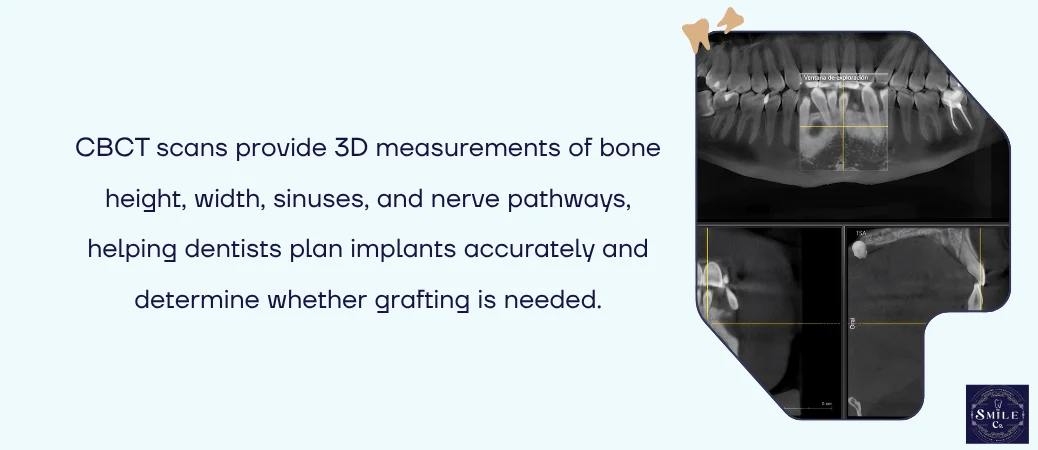
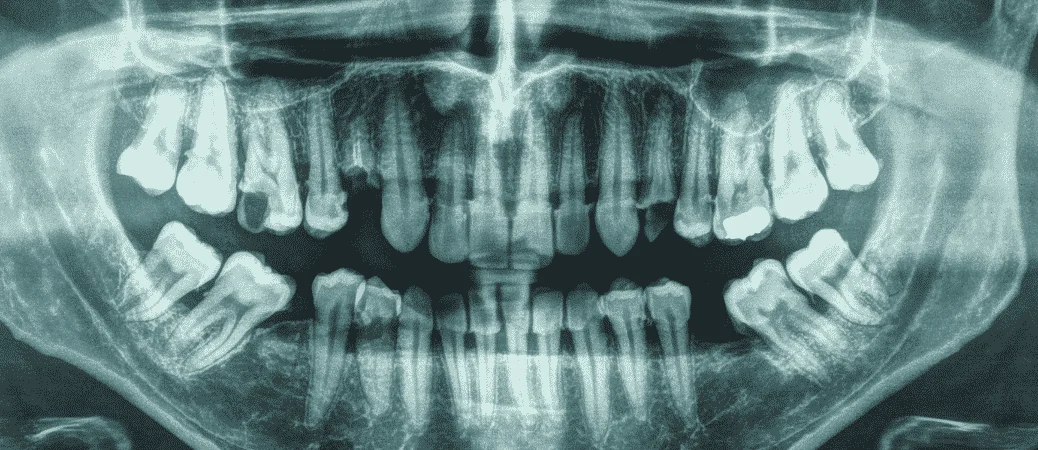
Using advanced technology, a CBCT scan (a type of 3D imaging, sometimes just called a CT scan in dental offices) gives your dentist precise measurements of your bone in three dimensions, not just a flat picture like a regular x-ray.
Traditional x-rays show shape and shadow. A CBCT scan shows exact bone height, width, and the position of structures like the sinus floor and nerve pathways.
This kind of detailed imaging is standard in modern implant dentistry because it removes guesswork. If you’re weighing dental implants after tooth loss, ask whether your treatment plan includes a CBCT scan.
It’s one of the clearest ways to know exactly what your jaw needs before any grafting decision is made.
When a Sinus Lift Is the Right Choice
A sinus lift makes sense when you’re missing an upper back tooth and the bone beneath your sinus isn’t tall enough to hold an implant securely.
This procedure, also called sinus augmentation, is a specialized bone graft performed only in the upper jaw, not a separate alternative to grafting.
A sinus lift is “a specific type of bone graft” done near the molars and premolars, since it involves lifting the sinus membrane to make room for new bone.
Why Upper Molars and Premolars Are Different
Upper molars and premolars sit directly beneath the maxillary sinuses, a pair of air-filled spaces in your skull.
When these teeth are lost, or if the sinus has naturally expanded with age, the bone separating your mouth from the sinus cavity can become too thin to anchor an implant safely.
This doesn’t happen with lower back teeth or upper front teeth, which is why molar implants in the upper jaw need this extra evaluation step that other implant sites don’t.
What Happens During Sinus Augmentation
During sinus augmentation, your surgeon carefully lifts the sinus membrane away from the floor of the sinus cavity and places graft material into that newly created space.
Over several months, that material integrates with your natural bone, building enough height to support an implant.
The procedure is performed under local anesthesia, sometimes with sedation, and is a routine part of implant dentistry for the upper back jaw.
Crestal Approach vs. Lateral Sinus Lift
There are two main techniques, and the difference comes down to how much bone height you’re starting with:
| Feature | Crestal Approach | Lateral Sinus Lift |
| Access point | Small opening at the top of the ridge | Small window on the side of the jaw |
| Best for | Mild height shortage | More significant height shortage |
| Invasiveness | Less invasive | More involved surgery |
| Healing before implant | Shorter | Longer, often 6-8 months |
A lateral sinus lift is typically used when very little bone remains in the upper back jaw, with the graft placed through a small opening in the side of the jaw beneath the sinus.
The crestal approach works well for smaller height deficits and can sometimes be combined with implant placement in the same visit.
When Ridge Augmentation Rebuilds the Better Foundation
Ridge augmentation rebuilds a jaw ridge that has lost height, width, or both, giving an implant enough solid bone to anchor into.
Unlike a sinus lift, this procedure can be used anywhere in the upper or lower jaw and doesn’t involve the sinus at all.
It’s often the answer when a ridge has flattened or thinned out after a tooth has been missing for a while.
What Makes an Implant Ridge Too Narrow or Too Short?
A ridge becomes too narrow or short mainly through the natural bone loss that follows tooth extraction, gum disease, or years of wearing a denture that doesn’t stimulate the underlying bone.
Without a tooth root to keep it active, the bone gradually resorbs, narrowing the ridge from the sides or flattening it from the top.
Your dentist measures this loss using CBCT imaging to see exactly how much width and height remain before recommending an implant.
How Block Grafts and Guided Bone Regeneration Work
Two main techniques rebuild a deficient ridge: block grafts and guided bone regeneration.
A block graft uses a solid piece of bone, shaped to fit the defect and secured with small screws, to rebuild larger areas of missing width or height.
Guided bone regeneration uses granulated bone graft material covered with a protective membrane, encouraging your body’s own bone regeneration process to fill in smaller gaps.
The graft material itself can come from a few sources:
- Autograft: bone taken from your own body, often the chin or jaw
- Allograft: processed bone from a human donor source
- Xenograft: processed bone from an animal source, commonly bovine
- Alloplast: a synthetic, lab-made bone substitute
Each material has different healing properties, and your periodontist or oral surgeon will recommend one based on the size of the defect and your health history.
Can Ridge Augmentation Be Done With Implant Placement?
Ridge augmentation can sometimes be done at the same time as dental implant placement, but this depends on how much bone is missing and how stable the implant would be on day one.
When there’s enough existing bone to hold the implant securely while the graft heals around it, combining the steps saves time.
When the defect is larger, your surgeon will likely graft first, wait for the site to heal, then place the implant into a fully rebuilt ridge.
When Socket Preservation Is Worth Considering
Socket preservation is worth considering any time a tooth is being extracted and you plan to replace it later with an implant, bridge, or denture.
This graft is placed directly into the empty socket at the time of extraction, and it’s the most common grafting scenario in implant dentistry.
What Happens to Bone After Tooth Extraction?
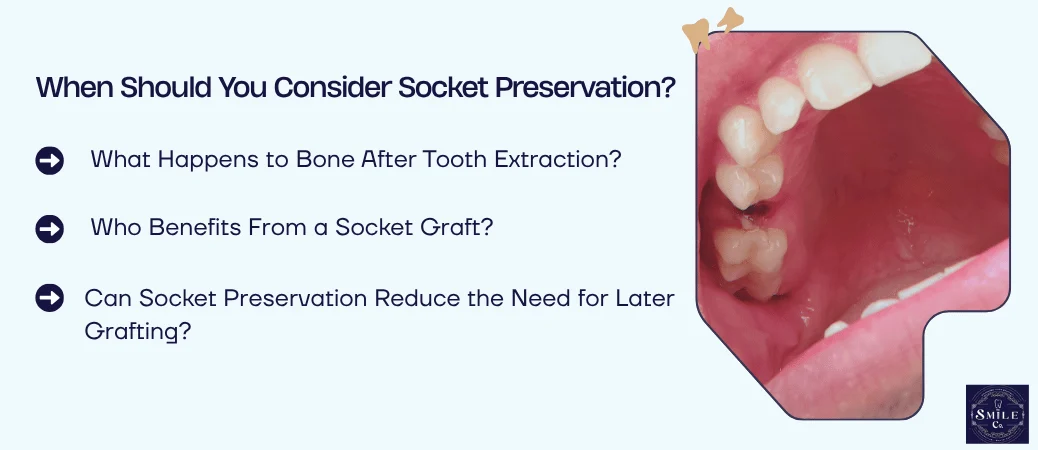
Bone loss after extraction starts almost immediately and continues over the following months.
The socket that once held a tooth root begins to collapse inward without something to maintain its shape, and you can lose up to 25% of that bone’s width within the first year.
Left alone, this shrinkage can make later implant placement more complicated.
Who Benefits From a Socket Graft?
Anyone extracting a tooth with a future implant in mind benefits from a socket graft, especially people with a history of gum disease, prior infection, or thinning bone linked to aging.
If gum disease has already weakened the bone around the tooth, the socket is more likely to collapse quickly once the tooth is out.
A socket graft fills that space with graft material right away, giving your body a scaffold to preserve the bone’s natural shape while it heals.
Can Socket Preservation Reduce the Need for Later Grafting?
Socket preservation can reduce or eliminate the need for a larger graft down the road. By protecting bone volume at the time of extraction, it often keeps the ridge wide and tall enough that a separate ridge augmentation isn’t needed before implant placement.
Skipping this step doesn’t rule out an implant later, but it can mean a more involved rebuilding procedure is needed to make up for lost ground.
What to Expect Before and After Bone-Building Treatment
Bone-building treatment is done under local anesthesia in an outpatient setting, usually by a periodontist or oral surgeon, and healing time depends on the type and size of the graft.
Knowing the general order of events (imaging, grafting, healing, then implant placement) helps make the whole process feel less unfamiliar.
Will You Need a Graft Before or During Implant Surgery?
Whether your graft happens before or during implant surgery depends on how much bone is present at the start. Socket preservation happens at the moment of extraction.
Ridge augmentation and sinus lifts can sometimes be combined with implant placement when there’s enough bone for initial stability, or staged beforehand when there isn’t.
Your surgeon decides this based on your CBCT measurements and the stability the implant would have on day one.
How Long Does Healing and Osseointegration Take?
Healing times vary by procedure, but there are useful general ranges. Socket preservation adds no extra timeline since it happens at extraction, with implant placement proceeding at the normal 3 to 4 months.
Horizontal ridge augmentation typically needs 4 to 6 months of graft consolidation, while a lateral sinus lift can take 6 to 8 months before implant placement.
After the implant is placed, osseointegration (the process where the implant fuses with your jawbone) adds more healing time before a permanent crown is attached.
What Risks and Recovery Steps Should You Discuss?
Every bone grafting procedure carries a small risk of infection, graft failure, or slower-than-expected healing, and your surgeon should walk you through these before you consent to treatment.
Recovery steps usually include a soft-food diet for a few days, avoiding pressure on the graft site, and following any prescribed rinses or medications closely.
Ask your provider directly about their experience with your specific procedure and what their personal complication rates look like.
Choosing the Graft That Fits Your Jaw and Implant Plan
The right bone graft is the one that matches exactly what your CBCT scan shows about your bone height, width, and volume at the specific site where you need an implant. There isn’t a single “best” graft across the board.
A sinus lift addresses upper back jaw height limits caused by the sinus. Ridge augmentation rebuilds width or height anywhere else in the upper or lower jaw.
Socket preservation protects bone right after extraction so a bigger rebuild isn’t needed later.
Dental providers like The Smile Company use that imaging alongside a physical exam to build a plan around your actual anatomy, rather than applying the same solution to every implant case.
Frequently Asked Questions
Do I need a bone replacement graft for ridge preservation?
Not every extraction requires a graft, but a bone replacement graft placed at the time of extraction (ridge or socket preservation) is one of the most effective ways to protect the bone you’ll need for a future implant.
Your dentist will look at the extraction site, your bone density, and your future replacement plans before recommending it.
Is socket preservation worth it if I want an implant later?
Socket preservation is generally worth it if an implant is part of your plan, since it protects bone volume that would otherwise shrink during healing.
Skipping it doesn’t rule out an implant, but it can mean needing a larger ridge augmentation later to make up for lost bone.
What is the success rate of a sinus lift bone graft?
Sinus lifts are considered a well-established procedure for rebuilding bone in the upper back jaw before dental implant placement.
Your individual outcome depends on factors such as available bone, overall health, healing, and the complexity of the procedure.
What is the downside of a sinus lift?
The main downside is time: a lateral sinus lift can require 6 to 8 months of healing before an implant can be placed, longer than most other graft types.
There’s also a small risk of sinus membrane puncture or infection, which your surgeon should discuss with you beforehand.
Can a dental implant be placed at the same time as a bone graft?
Yes, in some cases a dental implant can be placed at the same time as a bone graft, particularly with socket preservation or smaller crestal sinus lifts where there’s enough existing bone for stability.
Larger defects usually need the graft to heal first before an implant is placed into a fully rebuilt site.
How do dentists decide between a sinus lift and ridge augmentation?
Dentists decide based on location: a sinus lift applies only to the upper back jaw near the molars and premolars, where the maxillary sinus limits bone height.
Ridge augmentation applies to width or height problems anywhere else in the upper or lower jaw, unrelated to the sinus.