



When you choose dental implants, you expect a strong and lasting fix for missing teeth. Most procedures go well, but you should understand the risks before you move forward.
One of the most serious risks is nerve damage.
Nerve damage during dental implant surgery can happen if the implant is placed too close to a nerve, which may cause numbness, tingling, or pain in your lips, chin, or tongue.
This problem is uncommon, but it can affect how you speak, eat, and feel on one side of your mouth.
You can lower your risk with careful planning, proper imaging, and an experienced dental professional.
Knowing the warning signs and acting fast if you notice changes can also protect your long-term oral health.
Key Takeaways
- Dental implants can affect nearby nerves if placed too close to them.
- Early symptoms include numbness, tingling, or ongoing pain in your mouth or face.
- Careful planning and prompt treatment help reduce and manage complications.
Table of Content
- How Dental Implants Can Affect Nerves
- Common Causes of Nerve Injury During Implant Placement
- Symptoms of Nerve Damage and Early Warning Signs
- Prevention Strategies and Advanced Imaging Techniques
- Managing and Treating Nerve Injury Complications
- Frequently Asked Questions
How Dental Implants Can Affect Nerves
Dental implants can come very close to important nerves in your lower jaw. When this happens, you may feel numbness, tingling, or pain that can last weeks or longer if the nerve is irritated or injured.
Understanding the Inferior Alveolar Nerve
The inferior alveolar nerve runs inside your lower jaw through a space called the mandibular canal. It gives feeling to your lower lip, chin, and lower teeth.
During dental implant surgery in the lower jaw, your dentist must measure the exact distance between the implant site and this nerve. If an implant goes too deep or sits too close, it can press on the nerve.
This pressure may cause numbness, tingling, burning, or sharp pain.
In some cases, symptoms improve after the swelling goes down. In more serious cases, nerve problems may last longer.
Research on inferior alveolar nerve injury linked to implant placement shows that this is one of the most serious complications in lower jaw procedures. You should report any unusual feeling in your lip or chin right away.
Mandibular Implant Challenges
A mandibular implant is placed in your lower jaw, which creates more nerve risk than the upper jaw. The mandibular canal sits inside this bone and carries the inferior alveolar nerve.
Your lower jaw bone can vary in height and thickness. If bone is thin or has shrunk after tooth loss, the nerve may sit closer to the surface. That makes precise planning critical.
Dentists use 3D imaging, such as CBCT scans, to map the nerve before surgery. Careful planning lowers the chance of direct contact.
Surgeons also adjust implant length and angle to stay clear of the canal.
Even with good planning, you should know that nerve injury is a recognized risk of lower jaw implants. Most cases involve temporary numbness that improves over time.
Overview of Dental Implant Surgery
Dental implant surgery replaces a missing tooth root with a small titanium post. Your dentist places the implant into your jawbone and allows it to fuse with the bone over time.
In the lower jaw, the main concern is how close the drill and implant come to the mandibular canal. If the drill extends too far, it may disturb the nerve.
Even slight pressure can change how your lip or chin feels.
You may notice symptoms such as:
- Numbness in the lower lip
- Tingling in the chin
- Altered sensation in the gums
- Persistent pain
Understanding the symptoms of nerve damage from dental implants helps you act quickly if something feels wrong.
Clear imaging, precise measurements, and careful technique all reduce your risk during dental implant surgery.
Common Causes of Nerve Injury During Implant Placement
Nerve injury during implant placement usually happens when the implant touches, presses on, or sits too close to a nerve.
Careful planning and a clear view of your jaw anatomy lower this risk.
Direct Nerve Contact or Compression
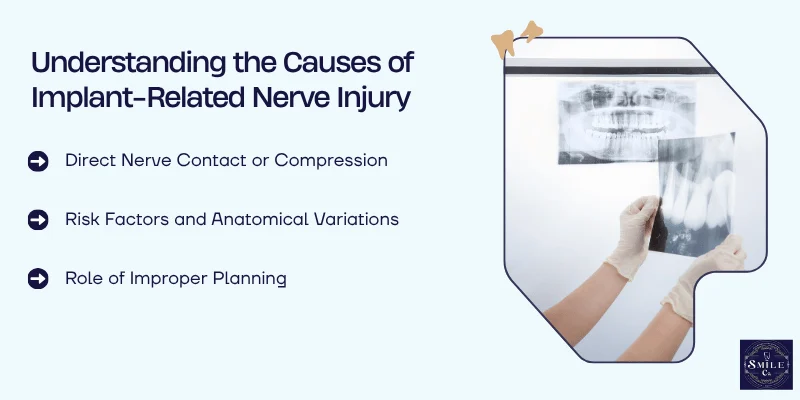
Direct contact with a nerve is one of the most serious causes of nerve damage from dental implants. In the lower jaw, the inferior alveolar nerve runs inside a bony canal.
If an implant goes too deep, it can touch or enter this canal.
You may feel a sharp electric pain during surgery if this happens. Afterward, you might notice numbness, tingling, or burning in your lower lip or chin.
The inferior alveolar nerve and lingual nerve are the two nerves most often affected during dental procedures.
Compression can also occur without full contact. If the implant sits very close to the nerve, swelling or pressure may irritate it.
Even small pressure can lead to temporary or, in rare cases, long-term nerve injury.
Risk Factors and Anatomical Variations
Your unique jaw shape plays a big role in your risk. Some people have a shallow jawbone above the nerve canal. Others have a nerve canal that sits higher than expected.
These anatomical variations increase the chance of inferior alveolar nerve injury during implant placement.
Research on risk factors for inferior alveolar nerve injury associated with implant placement shows that patient-related factors can affect outcomes.
Common risk factors include:
- Limited bone height in the lower jaw
- Bone loss from missing teeth
- Previous oral surgery
- Unusual nerve position
Age and long-term tooth loss can also reduce bone volume. When bone shrinks, the nerve sits closer to the surface. This makes careful measurement critical.
An experienced oral and maxillofacial surgeon checks these details before surgery. You benefit when your provider studies your anatomy instead of relying on average measurements.
Role of Improper Planning
Poor planning remains a preventable cause of nerve injury. If your provider skips detailed imaging or misreads scans, the implant may be placed too deep or at the wrong angle.
Modern treatment plans often use 3D scans to measure the exact distance between the implant site and the nerve canal.
When this step is rushed, the risk of nerve damage increases.
A review on the prevalence and management of neuropathic injury caused by dental implant placement notes that nerve injuries can occur when clinicians fail to fully assess anatomy before surgery.
You should expect:
- Clear imaging before surgery
- Precise measurements of bone height
- A plan that protects the nerve canal
When your provider follows these steps, you lower your risk of nerve damage and improve the safety of your implant placement.
Symptoms of Nerve Damage and Early Warning Signs
Nerve injury symptoms can appear right after implant surgery or develop over several days. You need to know what feels normal during healing and what may signal a problem.
Numbness and Tingling After Surgery
You may notice numbness in your lower lip, chin, gums, or tongue after surgery. Local anesthesia can cause this at first, but it should fade within a few hours.
If numbness lasts beyond the first day or feels intense, pay close attention. Ongoing tingling, often described as “pins and needles,” may point to nerve irritation.
The lower jaw carries the inferior alveolar nerve and lingual nerve. When an implant sits too close to these nerves, you can develop lasting numbness or altered feeling.
Common nerve injury symptoms include:
- Partial or complete numbness in the lip or chin
- Tingling that does not improve after 24 hours
- A “thick” or swollen feeling in the tongue without visible swelling
- Trouble sensing temperature on one side of your mouth
Pain and Abnormal Sensations
Some soreness is normal after implant placement. You should expect mild to moderate pain that improves each day.
Nerve-related pain feels different. You may feel sharp, shooting, or burning pain in your lip, chin, or tongue. This pain can come and go without warning.
Other abnormal sensations include:
- Electric shock–like feelings
- Increased sensitivity to light touch
- Pain from normal activities like brushing or speaking
In some cases, you may feel pain even when nothing touches the area. This type of discomfort may signal nerve irritation or injury.
Most implant patients heal without long-term issues. Still, nerve damage is a known risk in lower jaw procedures.
If pain feels unusual or worsens instead of improves, contact your dental office right away.
Differentiating Normal Recovery From Complications
Normal healing follows a clear pattern. Swelling peaks within two to three days, then slowly goes down. Discomfort should lessen each day.
Use this simple comparison:
| Normal Healing | Possible Nerve Injury |
| Numbness fades within hours | Numbness lasts days or weeks |
| Soreness improves daily | Pain stays the same or worsens |
| Even sensation on both sides | One-sided numbness or tingling |
If you still feel numbness, tingling, or burning after several days, do not ignore it. Early evaluation supports better outcomes.
Quick action may help prevent long-term changes in sensation.
Prevention Strategies and Advanced Imaging Techniques
You can lower your risk of nerve injury with careful planning, precise imaging, and the right surgical skill.
Each step before and during implant placement helps protect the nerves in your jaw.
Personalization of Implant Placement
Your dentist should plan your implant based on your exact jaw shape, bone height, and nerve location. No two mouths are the same.
Personalization reduces the chance that the implant will press on or damage the inferior alveolar nerve.
During planning, your provider measures the distance between the planned implant site and nearby nerves. They also check bone width and density.
These details guide the length, width, and angle of the implant. Careful pre-surgical planning lowers complications.
In more complex cases, your surgeon may use computer-guided templates. These guides help control depth and direction during implant placement.
This added precision supports safer outcomes, especially in the lower jaw.
Importance of 3D Imaging
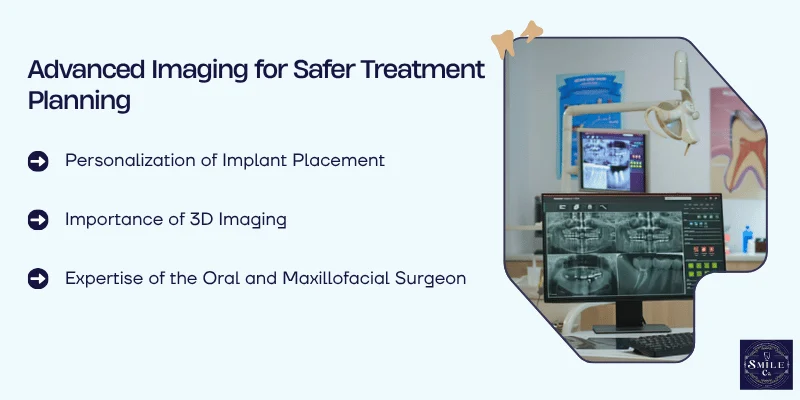
Traditional two-dimensional X-rays can miss important details. 3D imaging, such as cone beam CT scans, shows the full shape of your jaw in three dimensions.
This scan allows your provider to:
- See the exact path of the inferior alveolar nerve
- Measure bone height and thickness
- Identify sinus position in the upper jaw
- Plan the safest implant angle
Radiographic imaging plays a key role in implant planning because it provides critical diagnostic information.
Research highlights the role of adequate radiographic imaging techniques in successful implant outcomes.
With 3D imaging, your surgeon can avoid placing the implant too deep or too close to a nerve canal. That level of detail helps reduce the risk of numbness, tingling, or pain after surgery.
Expertise of the Oral and Maxillofacial Surgeon
Skill and training matter. An experienced oral and maxillofacial surgeon understands jaw anatomy and nerve pathways in detail.
Nerve injury is uncommon, but it remains a known risk, especially in the lower jaw. Most cases involve temporary numbness that improves over time.
Choose a provider who:
- Regularly performs implant placement
- Uses 3D imaging for planning
- Discusses nerve location before surgery
- Explains warning signs after the procedure
An experienced surgeon recognizes risk factors before surgery begins. That knowledge, combined with precise imaging and personalized planning, helps protect your nerves during implant placement.
Managing and Treating Nerve Injury Complications
Fast action improves your chances of recovery after nerve damage from dental implants. Clear testing, early referral, and realistic cost planning help protect implant success and limit long‑term problems.
Immediate Actions and Specialist Consultation

If you feel numbness, tingling, burning, or sharp pain in your lip, chin, or tongue after surgery, contact your dentist at once.
Early signs can point to inferior alveolar or lingual nerve injury, which are known dental implant complications.
Your dentist should document symptoms and perform basic neurosensory tests. These tests check light touch, pinprick, and two‑point discrimination to measure changes.
If symptoms appear right after placement, the dentist may adjust or remove the implant to reduce pressure on the nerve.
Quick action can lower the risk of permanent damage and dental implant failure.
Ask for referral to an oral and maxillofacial surgeon or nerve specialist if symptoms persist beyond a few days.
Persistent trigeminal nerve injuries need structured follow‑up and may require imaging such as CBCT to assess nerve position and implant location.
Studies on inferior alveolar nerve injury associated with implant placement show that early management affects sensory outcomes.
Recovery and Prognosis
Most cases of nerve damage from dental implants improve within weeks to months. Mild injuries often resolve as swelling decreases and the nerve heals.
Recovery depends on:
- Type of injury (compression vs. partial tear)
- Time to treatment
- Your age and health status
Research on neuropathic injury caused by dental implant placement notes that temporary sensory changes are more common than permanent loss. However, severe injuries can lead to long‑term numbness or altered taste.
During recovery, your provider may suggest anti‑inflammatory drugs, vitamin support, or medications for nerve pain.
In rare cases, microsurgery may help if there is no improvement after several months.
Nerve problems do not always mean implant failure. If osseointegration remains stable and symptoms improve, your implant can still succeed.
Cost Considerations for Treatment
Treatment costs vary based on severity and timing. Early implant removal or adjustment usually costs less than delayed nerve repair surgery.
You may face charges for:
- Follow‑up visits and sensory testing
- CBCT imaging
- Specialist consultation
- Medication for nerve pain
- Possible surgical repair
Insurance coverage differs. Some plans classify nerve injury care as treatment for implant complications, while others limit benefits.
Preventive imaging reduces financial risk. Research highlights that proper radiographic planning lowers nerve injury rates, especially in higher‑risk patients.
Careful planning protects both your health and your long‑term investment in implant success.
Frequently Asked Questions
Nerve problems after dental implant surgery can cause numbness, tingling, or pain in your lip, chin, or tongue. Knowing when symptoms start, why they happen, and what steps to take can help you act quickly.
What are the common signs that a dental implant may have affected a nerve?
You may notice numbness in your lower lip, chin, gums, or tongue that does not fade after the anesthetic wears off. Tingling or a “pins and needles” feeling is also common.
Some people feel burning, sharp, or electric-like pain. In lower jaw cases, these symptoms often relate to pressure on the inferior alveolar nerve.
You might also have trouble speaking clearly or controlling food in your mouth if your tongue feels numb.
How soon after implant surgery can nerve-related symptoms start to show up?
Symptoms often begin within hours after surgery, once the local anesthetic should have worn off. If numbness lasts more than 24 to 48 hours, you should call your surgeon.
In some cases, tingling or unusual pain appears over the first few days as swelling increases. Nerve injuries most often occur during implant placement or other jaw procedures.
Quick evaluation allows your dentist to check implant position and decide if changes are needed.
Is nerve injury more likely with implants placed in the lower jaw than the upper jaw?
Yes. The lower jaw has a large nerve that runs inside the bone, which makes it more at risk during drilling and implant placement.
Nerve damage is considered uncommon, but it is a known risk for lower jaw implants. In the upper jaw, the main concern is usually the sinus, not major nerve trunks.
What can cause nerve pain to appear months after getting a dental implant?
Late nerve pain can happen if scar tissue forms around the nerve. Ongoing pressure from an implant placed too close to the nerve can also trigger symptoms later.
In rare cases, bone loss around the implant changes how pressure spreads in your jaw. You may feel new tingling, burning, or shooting pain weeks or months after surgery.
If pain starts long after healing, ask your dentist for imaging to check the implant’s position.
What should I do if my dental implant feels like it’s pressing on a nerve?
Call your implant surgeon right away. Do not wait to see if it improves on its own.
Your dentist may order a 3D scan to check how close the implant sits to the nerve. Early action can include adjusting or removing the implant to reduce pressure.
Prompt care gives you the best chance of limiting long-term symptoms.
Can nerve damage from a dental implant be repaired or improve over time?
Many cases improve on their own, especially if the injury is mild. Temporary numbness or tingling often fades over weeks to months.
More severe injuries may need medication, monitoring, or referral to a specialist. In select cases, microsurgery may repair the nerve, but results vary based on how soon treatment begins.
The sooner you report symptoms, the better your chances for recovery.