

A low advertised price for dental implants might seem like a smart way to save money. Many people choose the cheapest option they can find, hoping to get the same results for less.
Low-cost dental implants often lead to frequent repairs and replacements, infections, and additional surgeries that can cost far more than choosing quality treatment from the start.
The difference between a budget implant and a quality one goes beyond the initial bill. Cheaper options may use inferior materials, skip important planning steps, or come from less experienced providers.
These shortcuts create problems that show up months or years later.
This article explains the hidden expenses, health risks, and long-term complications that make cheap dental implants cost more over time.
You’ll learn what to watch for when comparing treatment options and why investing in the right implant protects both your smile and your wallet.
Key Takeaways
- Low-cost implants often require expensive repairs, replacements, and corrective procedures that exceed initial savings
- Poor materials and inexperienced providers increase your risk of infection, bone loss, and implant failure
- Comprehensive planning, quality materials, and experienced professionals deliver better long-term value and fewer complications
The Real Cost of Cheap Dental Implants
A low advertised price for dental implants rarely tells the complete financial story.
Hidden costs of cheap dental implants often include additional procedures, frequent follow-up visits, and potential replacements that push the final bill far beyond the initial quote.
Upfront Prices vs. Hidden Expenses
The headline price you see advertised for cheap dental implants usually covers only the titanium post itself. This number might look appealing at first glance, but it leaves out most of what you actually need.
A $799 implant doesn’t include the crown that sits on top, which typically adds $1,000 to $1,500.
You’ll also pay separately for the abutment connector piece, which runs $300 to $500. Deals for cheap implants dental can save money up front but sometimes cost more in the long run due to added procedures and complications.
Most low-cost offers skip required imaging and planning. A CBCT 3D scan adds $250 to $400, while digital treatment planning costs another $200 to $350.
What Low-Cost Offers Often Exclude
Cheap implants often require bone grafts, sinus lifts, or extractions that aren’t mentioned in the advertised price. These procedures add $500 to $3,000 depending on complexity.
Many budget clinics don’t include anesthesia fees in their quotes. Local anesthesia might be covered, but sedation options cost $300 to $800 extra. Follow-up appointments, adjustments, and temporary teeth also appear as separate charges.
Low-cost dental implants can hide extra costs or cut corners in materials and experience. Warranty coverage is another common gap—if your implant fails within the first few years, you might pay the full price again to replace it.
Replacement Parts and Availability
Budget clinics frequently use lesser-known implant brands that make finding replacement parts difficult years later. If you need a new abutment or crown, your dentist might not be able to source compatible components.
Major implant systems like Straumann, Nobel Biocare, and Zimmer have global networks and guaranteed part availability. Generic or discount implant brands may disappear from the market entirely, leaving you without repair options.
When replacement parts aren’t available, you’ll need complete implant removal and replacement. This means paying for a new surgery, new post, new crown, and potential bone grafting—easily $3,000 to $6,000 per tooth.
Choosing recognized implant brands upfront protects you from this expensive scenario.
Hidden Long-Term Costs and Complications
Low-cost dental implants can trigger a cycle of repairs, extra procedures, and surprise bills that add up quickly. These expenses often exceed what you would have paid for quality treatment from the start.
Frequent Repairs and Replacements
Cheap implant components break down faster than quality alternatives. You might face loose abutments, cracked implant crowns, or even complete implant failure within just a few years.
Each repair means paying for professional time, lab fees, and replacement parts. You’ll need multiple appointments for adjustments, temporary crowns, and eventually full component replacement.
When dental implant failure occurs, the implant fixture may need complete removal. This creates additional costs for extraction, bone grafting to rebuild the site, and placing a new implant.
The replacement process is often more complex than your original procedure because bone loss has already occurred.
Common repair needs include:
- Loose or stripped abutment screws
- Fractured porcelain crowns
- Worn connecting components
- Failed osseointegration requiring implant removal
Additional Dental Procedures
Substandard dental implants increase your risk of infections and bone problems. Peri-implantitis, an infection around the implant, requires deep cleaning, antibiotics, and surgical treatment to remove diseased tissue.
Bone loss around a failing implant often demands bone grafting and membrane placement before any new tooth replacement can be attempted. These procedures add months to your treatment timeline and thousands to your total cost.
If implant removal becomes necessary, you’ll also need ridge preservation surgery to maintain jaw structure for future implants.
Unexpected Out-of-Pocket Payments
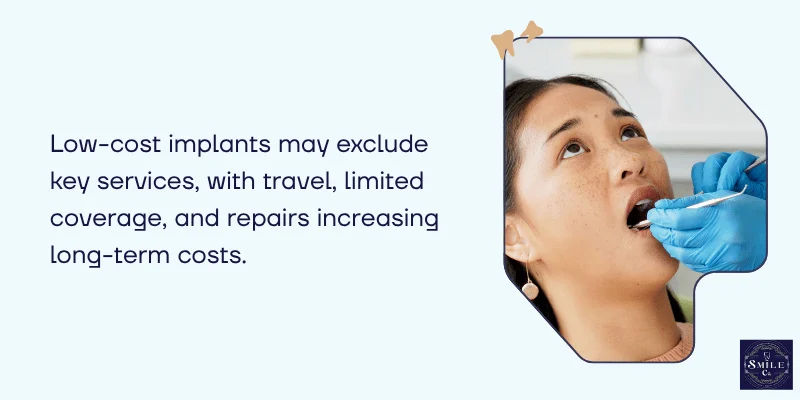
Advertised low prices rarely include essential services. You’ll pay separately for CT scans, surgical guides, temporary prosthetics, and anesthesia.
Travel to bargain clinics adds hotel and transportation expenses. If complications develop after you return home, local dentists may charge premium rates to fix work they didn’t perform.
Insurance coverage and warranties may be limited with cheaper implant systems and non-accredited providers.
This leaves you responsible for emergency visits, follow-up imaging, and any corrective treatments your implants require over their lifetime.
Health Risks of Low-Quality Dental Implants
Choosing low-quality implants puts your mouth at serious risk for complications that can damage your bone, gums, and nerves.
These cheaper materials often fail to integrate properly with your jawbone and leave you vulnerable to infections that can spread throughout your mouth.
Material Quality and Bone Integration Issues
The materials used in discount dental implants directly affect how well they fuse with your jawbone. High-quality implants use medical-grade titanium that your bone naturally accepts and grows around.
Cheap implants often use lower-grade metals or alloys that your body may reject. This creates a weak foundation that can’t support the replacement tooth properly.
When bone integration fails due to poor materials, your implant becomes loose or falls out completely. You’ll then need removal surgery and potentially a bone graft before trying again with a quality implant.
Increased Risk of Infection and Peri-Implantitis
Low-quality implants have rough or porous surfaces where bacteria can hide and multiply. This makes you more likely to develop peri-implantitis, a serious infection around the implant.
Peri-implantitis causes your gums to become inflamed and pull away from the implant. The infection can spread to your jawbone and destroy the bone tissue that holds the implant in place.
Implant infections from cheap materials require antibiotics and deep cleanings. In severe cases, you’ll need to have the implant removed entirely to save your surrounding teeth and bone health.
Poor Osseointegration and Implant Failure
Osseointegration is the process where your jawbone grows around and bonds with the implant post. This takes several months and requires precise placement and quality materials.
Budget clinics sometimes skip necessary procedures like bone grafting to cut costs. Without enough healthy bone, failed osseointegration becomes almost certain.
When osseointegration fails, your implant won’t stay stable. You’ll experience pain, difficulty chewing, and eventually complete implant failure that requires expensive corrective surgery.
Potential for Nerve Damage or Gum Recession
Inexperienced dentists working with cheap implants may place them incorrectly and damage the nerves in your jaw. This causes lasting numbness, tingling, or pain in your lips, gums, or tongue.
Nerve damage from poorly placed implants can make eating and speaking difficult. Some patients experience ongoing discomfort that affects their daily life.
Gum recession happens when low-quality implants irritate your soft tissue or when infections spread.
Your gums pull back and expose the metal post, creating an unattractive appearance and making the area vulnerable to more bacteria and decay.
Planning, Diagnostics, and Surgical Precision Matter
Proper planning and precise placement directly affect how long your implant lasts and whether you’ll need costly repairs later. Advanced imaging and careful positioning help prevent bone loss, nerve damage, and implant failure.
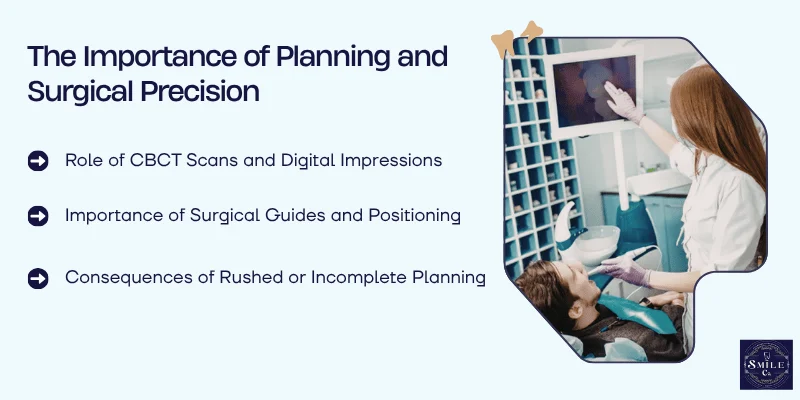
Role of CBCT Scans and Digital Impressions
CBCT scans give your dentist a 3D view of your jaw bone, nerves, and sinuses before surgery. This imaging shows exactly where your bone is thick enough to support an implant and where critical structures need to be avoided.
Digital impressions create accurate models of your mouth for custom planning. When combined with CBCT scans, your dentist can plan the exact angle, depth, and position of each implant before making any cuts.
Practices that skip diagnostic imaging or use older 2D X-rays miss important details. You might end up with an implant placed too close to a nerve or in bone that’s too thin.
These mistakes often require additional procedures to fix or lead to complete implant failure within a few years.
Importance of Surgical Guides and Positioning
A surgical guide is a custom template that fits over your teeth or gums during surgery. It directs the drill to the exact spot planned on your digital treatment planning software.
Key benefits of guided surgery:
- Implants placed at the correct angle for proper force distribution
- Less risk of damaging nerves or blood vessels
- Better support for the final crown or bridge
- Fewer post-surgery complications
Implant positioning affects more than just appearance. When an implant sits at the wrong angle, it creates uneven pressure when you chew.
This stress can cause the bone around the implant to break down over time, leading to loose implants that need replacement.
Practices offering cheap dental implants often skip surgical guides to cut costs.
Consequences of Rushed or Incomplete Planning
Rushed planning means your dentist spends less time analyzing your bone structure and bite. They might place the implant in a spot that’s convenient during surgery but creates problems later.
Incomplete planning often skips the step where your dentist designs your final crown first and works backward.
Without this approach, your implant might end up in a position where the crown looks fake or doesn’t line up with your bite properly.
The specialists who use advanced planning tools may charge more upfront, but their precision lowers your chance of needing corrective surgery.
Fixing a poorly placed implant typically costs more than paying for proper planning from the start. You might need bone grafts, soft tissue repair, or complete implant removal and replacement.
Experience, Aftercare, and Longevity
The dentist you choose and the follow-up care you receive directly affect how long your implants last and how much you’ll spend over time.
Proper maintenance prevents problems that lead to expensive repairs or replacement.
Importance of Experienced Dental Professionals

You need a provider who has completed advanced training in implant dentistry and placed hundreds of successful implants.
Experienced dental professionals understand proper placement angles, how to avoid nerves and sinuses, and when you need bone grafting before the implant can be placed.
An oral surgeon or periodontist brings specialized skills to complex cases. They can handle difficult extractions, perform sinus lifts, and manage complications during the procedure.
That expertise reduces your risk of nerve damage, infection, or implant failure that requires corrective surgery later.
Look for board certifications and ask how many implant cases the dentist completes each year.
Providers who work with a team of specialists coordinate your care better and catch potential problems early, saving you time and money down the road.
Value of Post-Operative Care and Maintenance
Your healing period requires careful monitoring to ensure the implant bonds properly with your jawbone.
Good aftercare includes follow-up appointments where your dentist checks for signs of infection, measures implant stability, and adjusts your temporary crown if needed.
Quality providers include these visits in their treatment plan and give you clear instructions for wound care, diet restrictions, and medications.
Post-operative care that catches problems early prevents small issues from becoming expensive failures that need implant removal and bone grafting.
You should expect imaging at key healing milestones to confirm osseointegration is progressing normally. Providers who skip these steps to cut costs leave you vulnerable to hidden complications.
Ongoing Maintenance Schedules
Your implants need regular professional cleanings and examinations just like natural teeth.
A proper maintenance schedule includes visits every three to six months where your hygienist removes plaque from hard-to-reach areas around the implant and your dentist probes for early signs of peri-implantitis.
Early detection of bone loss or soft tissue inflammation lets your dentist treat the problem with deep cleaning or antibiotics before you need surgery.
Skipping these appointments increases your risk of infection-driven bone loss that can lead to implant failure.
Your dentist should also check your bite alignment and the condition of crowns or abutments at each visit.
Regular monitoring catches loose screws, worn components, or cracked porcelain when repairs are simple and inexpensive rather than waiting until you need full replacement.
How to Recognize Value Over Price
Smart implant shoppers look beyond the initial price tag to examine the dentist’s expertise, materials used, and what’s actually included in the quoted cost.
Understanding implant brands, reading treatment plans carefully, weighing dental tourism risks, and exploring financing can help you make decisions based on true value.
Evaluating Implant Brands and Systems
Not all dental implants are created equal. Premium brands like Nobel Biocare, Straumann, and Zimmer Biomet have decades of research backing their products and success rates above 95%.
These established implant brands invest heavily in testing and quality control. Their implants are made from highly biocompatible materials that integrate better with your jawbone.
You’ll also find replacement parts more easily if you need repairs years down the road.
Lesser-known or generic implant systems might save you money initially. But they often lack long-term clinical data. If your dentist moves or retires, finding someone familiar with that system becomes harder.
Ask your dentist which brand they use and why. A quality practice will explain the benefits of their chosen system. They should show you documentation about the implant’s track record and FDA approval status.
Understanding Written Treatment Plans
A detailed written treatment plan protects you from surprise costs. Your plan should list every procedure needed, from tooth extraction to the final crown placement.
Look for these specific items in your cost breakdown:
- Initial consultation and imaging (X-rays or CT scans)
- Surgical placement fee for the implant post
- Bone grafting or sinus lift if needed
- Abutment (the connector piece)
- Crown fabrication and placement
- Follow-up visits and adjustments
Some clinics quote only the implant post price to appear cheaper. Then they add fees for the abutment, crown, and other necessary steps. This practice inflates your final bill significantly.
Compare written treatment plans from multiple dentists. Make sure each quote includes the same procedures. Ask questions about anything unclear before you commit.
Dental Tourism and Its Considerations
Traveling abroad for cheaper implants sounds tempting. Countries like Mexico, Costa Rica, and Thailand offer prices 50-70% lower than U.S. rates.
But dental tourism carries serious risks beyond cost savings. Different countries have varying safety standards and sterilization protocols. If complications arise after you return home, your local dentist may refuse to fix another provider’s work.
Implant placement requires multiple visits over several months. Flying back and forth for adjustments becomes expensive and impractical.
You also can’t easily verify the credentials of overseas dentists or the quality of materials they use.
Consider these factors before booking:
- Total travel costs including flights and hotels
- Language barriers affecting communication
- Legal recourse if something goes wrong
- Follow-up care once you’re back home
Financing Options and Cost Breakdown
Quality dental implants typically cost $1,500 to $6,000 per tooth in the United States. Rather than choosing cheap materials, explore financing options that make quality care affordable.
Many dental offices offer payment plans that spread costs over 6-24 months. Third-party healthcare financing companies like CareCredit provide longer terms with low or zero interest if paid within the promotional period.
Check your dental insurance policy too. Some insurers now provide partial coverage for implants, recognizing their long-term benefits over bridges or dentures.
Even if implants aren’t covered, you might receive an allowance equal to what they’d pay for traditional tooth replacement.
Compare these financing approaches:
| Option | Best For | Typical Terms |
| In-office payment plans | Short-term financing | 3-12 months, often interest-free |
| Healthcare credit cards | Larger procedures | 12-24 months promotional rates |
| Personal loans | Full-mouth restorations | 2-5 years with fixed rates |
| Dental savings plans | Multiple procedures | Annual membership with discounts |
Request an itemized cost breakdown showing exactly what you’re financing. This transparency helps you understand the long-term value versus initial investment.
Frequently Asked Questions
Low-cost implants may appear to save money upfront, but they often come with repair bills, health complications, and material quality issues that add up over time.
Understanding these factors helps you make informed decisions about your dental care budget and long-term oral health.
What hidden costs may be associated with low-priced dental implants?
Low advertised prices often exclude essential services you’ll need. You may pay separately for CT scans, lab work, surgical guides, temporary crowns, and anesthesia that weren’t included in the initial quote.
Frequent repairs and replacements become necessary when cheap implants use lower-grade materials. Each repair requires professional time, lab fees, and new parts, which can mean multiple visits for adjustments and eventual full component replacement.
If complications develop, you’ll face additional expenses for treatments like deep cleaning, antibiotics, or surgical procedures.
Insurance and warranties may be limited or voided by cheaper implant systems, leaving you responsible for long-term monitoring and emergency visits.
Are there any health risks with choosing more affordable dental implants?
Budget implants carry higher risks of mechanical failure and infection. If an implant doesn’t bond properly with your jawbone, it may loosen or tilt within months, requiring removal and additional bone grafting before you can try again.
Increased likelihood of infection occurs when providers cut corners on sterility or surgical planning. Infections present as pain, swelling, or progressive bone loss and often require antibiotics, debridement, or implant removal.
Poor surgical technique can lead to nerve damage, sinus issues, or injury to adjacent teeth. These complications cause physical discomfort and require further dental or medical treatments that escalate both financial and emotional costs.
What factors contribute to the long-term success of dental implants?
The experience and training of your dental provider plays a major role in implant success. Look for clinicians with board certifications, continuing education in implantology, and before-and-after photos that match your case type.
Comprehensive treatment planning using CBCT scans and digital impressions maps bone volume and ideal implant position before surgery. This reduces complications that require additional procedures and helps your implants perform better over time.
Quality materials and precise placement angles affect how well the implant integrates with your bone. Experienced teams coordinate with specialists when needed for complex extractions or grafting, which lowers the risk of revisions and infections.
How might maintenance and follow-up care impact the overall value of budget-friendly dental implants?
Budget providers sometimes skip follow-up imaging and probing that catch problems early. Without regular monitoring, infections can become chronic and harder to resolve, increasing the probability of permanent implant loss.
You’ll need ongoing maintenance to keep implants healthy, including professional cleanings and periodic X-rays. If your original provider doesn’t include these services, you’ll pay separately or find a local dentist willing to manage work they didn’t perform originally.
Local dentists may charge premium rates to handle complications from bargain clinics. Travel costs for follow-up visits add up if you chose a distant provider, and emergency care becomes more expensive when you’re away from the original treatment site.
Could choosing inexpensive dental implants affect my eligibility for dental warranty or insurance coverage?
Many insurance plans have specific requirements about provider credentials and implant systems. Off-brand or non-certified implants may not meet coverage standards, leaving you to pay the full cost out of pocket.
Warranties from budget providers often have strict limitations or exclusions. You might discover the warranty doesn’t cover common issues like component wear, screw loosening, or complications from poor-quality materials.
If you need corrective work, your insurance may deny claims related to pre-existing conditions or substandard initial treatment. This means you’ll be personally responsible for repairs, replacements, and any additional procedures needed to fix problems.
Is the quality of materials used in less expensive dental implants typically lower, and why might that matter?
Low-cost providers sometimes use off-brand or inferior-grade titanium that shows inconsistent tolerances. Components with poor fit create gaps where bacteria accumulate and mechanical stress concentrates, leading to faster wear and potential failure.
Substandard abutments and crowns fracture more easily or strip screws, forcing early replacement. Non-medical-grade alloys can cause local irritation or accelerated corrosion that undermines stability and may require full-system replacement with certified parts.
High-quality implant materials resist corrosion and integrate with bone more predictably than cheaper alternatives.
Premium prosthetic materials also maintain aesthetics and wear properties longer, which decreases the chance you’ll need replacements or treatments for infection down the road.